AMAZING CONNECTIONS
LENTEN AND
HOLY WEEK EMAILS
FROM MAHONY AND HIS INNER CIRCLE
March 13, 2002
— April 3, 2002
The Complete Text in
Chronological Order with Commentary
Reading Copy—Preliminary
Draft
July 18, 2003
Links Enhanced
on January 30, 2009
A Production of
BishopAccountability.org
This edition of the Mahony
emails
is dedicated to the “anonymous individual”
who made them public.
And whosoever shall offend one of these little ones that believe in me,
it is better for him that a millstone were hanged about his neck,
and he were cast into the sea.
Mark 9:42
TABLE OF CONTENTS
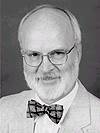
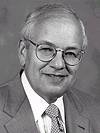
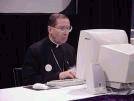
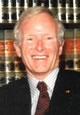
Photographs of Some Email Writers
The Emails
March
13, 2002
1. PR
Challenges of the Haigh Settlement, Goldberg
2. Reporting
Laws, Nussbaum
3. Scheduling
a Meeting to Discuss Reporting, McNicholas
4. Scheduling
a Meeting to Discuss Reporting, Goldberg
5.
Scheduling a Meeting
to Discuss Reporting, McNicholas
March
14, 2002
6. Arranging
Call to Discuss Fr. Tony McDonnell, Goldberg
7.
More on Tony McDonnell,
McNicholas
March
19, 2002
8.
Fr. Dominic Savino & Fr. Peter
Luizzi, Loomis
March
20, 2002
9. Background
on Savino & Luizzi, Murphy
10. Responding to Delgadillo on Training,
Mahony
11. Problems of Delgadillo Training,
McNicholas
12. Whether to Remove Luizzi,
McNicholas
13. Selecting Delgadillo Trainees,
McNicholas
14. Response to Delgadillo (No Training),
McNicholas
15. “Safe Folks” for Delgadillo Training,
Mahony
March
21, 2002
16. Reporting Savino & Adding to
the Rucker File, Murphy
March
22, 2002
17. Bishop Arzube’s Quiet Handling of
Savino (?), Mahony
18. Summaries of Fr. McGowan & Fr.
Hill, Cox
19. Carmelite’s Lawyer in Savino Case,
McNicholas
20. Fr. Kearney of St. Francis High Removed,
Loomis
21.
St. Francis High School: No Message,
McNicholas
March 24, 2002
22. Fr.
Granadino Accused and Removed, Cox
23. More
Detail on Granadino’s Removal, Cox
24. Mahony Reacts to News About Granadino,
Mahony
March
25, 2002
25. Likely Turnout for 3/25 Chrism Mass,
Loomis
26. Parishes & Removed Priests at
3/25 Press Conference, Cox
27. Feedback on Prep for Chrism Mass,
Cox
28. Only the Facts in Meeting with Sheriffs,
Murphy
March
26, 2002
29. Thank You After Meet with Sheriffs,
Cox
30. Press Reaction to Exchange with DA,
Mahony
March
27, 2002
31. Big Mistake of Not Pretending on
3 Priests, Mahony
32. Individual Reporting: How to Tell
Parks, Mahony
33. Making Transcript in Hickman Accusation,
Arviso
34. Plan for Responding to Hickman Accusation,
Mahony
35. Message to Fresno PD on Hickman,
McNicholas
36. Instruct Parks & He Will Leak
the Letter, Mahony
37. Planning Letter to Parks, McNicholas
38. One Change to Parks Letter, McNicholas
39. Instructing and Leaking Again,
Mahony
40.
Teachable Moment for Parks,
Mahony
March
28, 2002
41. Planning Fresno
PD’s Interview with Mahony, Mahony
42. Releasing the
Parks Letter Ahead of the Curve, Mahony
43. Parks
Letter on How We Act Now, Mahony
44. Clarification
for Mixed-Up Media, Mahony
45. Reporting
Wasn’t Contemporaneous, Cox
46. Warning
Priests Who Were Reported to LAPD, Mahony
47. Cardinals’
Confidential Call with Gregory, Mahony
48. Priests
Reported “Previously” Not “Duly,” Goldberg
49. Letter to Parks
Is Excellent, McNicholas
March
29, 2002
50. Talking
with Fr. Gael Sullivan, Loomis
51.
Sullivan Says No
Arrest at St. Dominic Savio, Cox
March 30, 2002
52. Meeting Victims: Spiritual
Victims’ Group? Mahony
53. Making Sure That All 8 Priests
Were Referred, Mahony
54. Handling an Accusation of
Priest with History, Loomis
55.
Forgetting an Abuser; Feeding
the LAPD; Baker, Murphy
March
31, 2002
56.
Excuses for Forgetting; Numbers;
the Dear Sheriffs, Murphy
April
1, 2002
57. Stonewalling
on Names Until Interest Wanes, Mahony
58. Informing
Pat H Before Reporting Him, Mahony
59. Passing
Along Baker’s Info, Cox
60. Evaluating
Pat H and Putting Him in a Parish, Cox
61.
Contacting Pat H,
Cox
April
2, 2002
62. Transcript
Is Complete in Hickman Case, McNicholas
63. Reminder:
Transcript Complete in Hickman Case, McNicholas
64.
Fresno, Fundraising,
Confirmations, and R&R, Mahony
April
3, 2002
65. Interview
with Stammer of the LA Times,
Mahony
66. Msgr.
Matt Kelly’s Past Difficulties, Mahony
67. Fr.
Michael Wempe at Cedars-Sinai Hospital, Miller
68.
Priests As Mandated
Reporters, Miller
APPENDIX
OF RELEVANT DOCUMENTS
A. Mahony
Ousts Priests, Stammer and Lobdell, LA Times, 3/4/02
B. Simple
Suggestions for Mahony, Lopez, LA
Times, 3/13/02
C. Chrism Mass Homily,
Mahony, 3/25/02
D. Rip the Veil of Secrecy,
Editorial, LA Times, 3/27/02
E. LAPD
Already Has Facts on Priests, Mahony Says, Winton, LA Times, 3/29/02
F. Victims
Crushed in a Priestly Silence, Lopez, LA
Times, April 3, 2002
G. Mahony
Says Victims' Requests Led to Secrecy, Larry B. Stammer, LA
Times, 4/3/02
H. Mahony
E-Mail Talks of ‘Our Big Mistake,’ Garrison, LA Times, 4/5/02
I. Mahony
E-Mails Cite Fears Over Scandals, Stammer and Winton, LA
Times, 4/6/02
J. Sheriff's
Department Set to Wrap Up Azusa Priest Investigation, NBC4.TV, 4/12/02
Gov. Frank Keating’s criticism of Cardinal Roger
M. Mahony in a Los Angeles Times
interview (6/12/03) and Keating’s subsequent resignation should prompt a fresh
look at a batch of chancery emails that were leaked to a Los Angeles radio
station in April 2002. The emails are of
enduring interest for several reasons.
Keating got on Mahony’s bad side recently by
calling him a bishop “who listen[s] too much to his lawyer and not enough to his
heart.” Sure enough, the leaked emails
show Mahony intensely engaged with not one or two but five lawyers, and their
exchanges are not motivated by a concern for the victims of sexual abuse. The emails illustrate Mahony’s early efforts
“to suppress the names of offending clerics, to deny, to obfuscate, to explain
away,” as Keating would later say in his resignation letter. After some of the emails were read on the air
by talk show hosts John Kobylt and Ken Champou, in a broadcast from the
sidewalk in front of Mahony’s offices, the cardinal went to extraordinary
lengths to suppress the documents, arranging a quixotic late-night hearing
(4/4/02) with Superior Court Judge David P. Yaffe.
When the judge refused to find for prior
restraint and the emails were published, Los Angeles got an un-spun look at a
diocesan administration famous for its devotion to PR. Although the emails were written during Lent
and Easter, religious feeling is surprisingly absent. Instead, Mahony and his inner circle seem
consumed by a desire to game and one-up the prosecutors and manipulate the
press. Mahony happily describes in one
email his use (so he seemed to think) of the very reporter to whom Keating would give
his defiant last interview. Most
depressing of all is the complete indifference shown toward the victims of
abusive priests.
The
emails are no longer available on the KFI Web site at www.kfi640.com/media/mahony%20e-mails1.pdf,
but we have posted the original
PDF of the emails. It is not an easy read.
The messages are not in chronological order, and many emails
are nested in reverse chronological order within subsequent replies.
Lines are broken and the email addresses are difficult to keep
straight. In order to help people read these important
exchanges, the staff of BishopAccountability.org has produced a reading
copy of the file. We have placed
the messages in chronological order and supplied cross-references to
the original KFI file, so that our work can be easily checked.
We have also removed the prevalent “reply” marks (<<<)
and replaced the various email addresses with the last names of the
participants. Titles have been added for the reader’s convenience,
and the messages have been numbered. Our bracketed comments are carefully distinguished
from the text, and an appendix of relevant documents is provided. We hope that the result is a readable and informative
version. This is a preliminary
edition—as questions are answered and documents released, BishopAccountability.org
will issue a fuller commentary. Please contact us with corrections and explanations
at staff@bishop-accountability.org.
The KFI emails span a three-week period, beginning on March
13 and ending on April 3, the Wednesday after Easter. A Chrism Mass for priests, held on March 25,
the day after Palm Sunday, figures in the exchange. See Appendix
Document C for Mahony’s homily at the Mass, and Appendix
Document D for the response in the LA
Times.
On March 4, 2002, Larry Stammer and William Lobdell wrote
in the LA Times that Mahony
had removed six to twelve priests in February for sexual abuse allegations
(see Appendix
Document A). The Geoghan and Shanley cases had just broken
in Boston, and the LA Times revelation prompted law enforcement authorities
to press the archdiocese for an accounting of the priests involved. Reporting of such cases is governed in California
by a 1997 statute, and several of the Mahony emails are dedicated to
answering a request from Bernard C. Parks, the LA Chief of Police, who
was concerned about compliance with that law.
Mahony and most of his advisors want to “instruct” Parks that
the statute mandates reporting by individuals, not by institutions like
the archdiocese. Besides the
1997 reporting statute, the archdiocese was committed to a 1988 abuse
policy, and Mahony was also bound by an agreement he was compelled to
sign as part of the 2001 DiMaria settlement.
See Appendix
Document A for more on this background, and Appendix
Document E for a description of the letter that was
ultimately sent to Parks.
Some of the emails introduce the reader to priests like Baker
and Wempe, whose cases would soon become huge problems for Mahony.
Messages 59, 60,
and 67, seem like routine communications that
pass along contact info, summarize a reassignment, and communicate a
phone message. But the routine
they document served to hide abusers, transfer them with terrible consequences,
and expose children to harm during hospital stays. Other abusive priests mentioned in the emails
(Pat H. and Tony McDonnell) still remain unidentified, as Mahony continues
to stonewall on the release of names, nearly a year later. This silence has likely prevented some victims
from learning that their perpetrator has other victims, and is exposing
others to harm. Mahony’s refusal
to release names is related to his conviction that as time passes, interest
in the crisis will wane. He expects
that will happen by May 2002 (Message 65).
Or July 2002 (Message 57).
The KFI emails revealed a false accusation of Mahony himself,
which is treated almost boyantly by Mahony and his advisors, presumably
because it poses no threat. The
contrast is stark between Mahony’s eagerness to be questioned on the
subject of the Hickman accusation and his general counsel’s “just the
facts” advice, when detectives come to call at the chancery about the
priests whom Mahony removed back in February.
The emails also show the involvement of Mahony and his advisors
in responding to accusations that come through on the new help line.
See, for example, the Granadino investigation, which comes up
in several messages; see also Appendix Document
J.
On April 3, the last day of the emails, the Haigh case against
John Lenihan was settled (see Appendix
Document F). The
settlement had been imminent all through the emails, and the very first
email contains PR advice on the Haigh settlement from one of Mahony’s
lawyers.
For reporters’ assessments of the emails at the time they
first appeared, see Appendix
Documents H and I.
[Notes in brackets describe how email addresses
were translated into last names by the editor.]
Craig
A. Cox - A canon lawyer and the archdiocese’s Vicar for
Clergy. He was formerly (through June
2000) the archdiocese’s Judicial Vicar. [Cox = MsgrCACox@la-archdiocese.org
Charles
Goldberg - Partner with Rothgerber Johnson & Lyons
in Denver (www.rothgerber.com);
former Denver District Court judge (1974–78) and head of RJ&L’s Religious Institutions
practice. (See their resource library at
www.churchstatelaw.com.) Goldberg has been the general counsel for the
Archdiocese of Denver since 1982 and became the general counsel of the Diocese
of Fargo in 2001. [Goldberg = CGoldberg@rothgerber.com]
Richard
A. Loomis - Monsignor and director of the archdiocese’s Secretariat
for Administrative Services. Formerly
the archdiocese’s Vicar for Clergy (1995–2000) [Loomis = FrDick@aol.com and MsgrRALoomis@la-archdiocese.org
and FrDick@la-archdiocese.org]
Roger
Mahony - Archbishop of Los Angeles
(www.la-archdiocese.org) since 1985 and cardinal since 1991. Formerly bishop of Stockton (1980–85) and
auxiliary bishop of Fresno (1975–80). [Mahony = Cardrmm@aol.com]
John
P. McNicholas - Partner with McNicholas & McNicholas in
Los Angeles (www.mcnicholaslaw.com), a
firm that specializes in personal injury work.
He taught at Loyola Law School, and his clients include the Holy See,
the Apostolic Vatican Library, the Archdiocese of Los Angeles, and the
Archdiocese of Milwaukee. John Paul II
gave McNicholas the Pontifical Order of St. Gregory the Great. McNicholas is a member of the Knights of
Malta. [McNicholas = jpm@mcnicholaslaw.com]
Judith
Anne Murphy - A sister of the Congregation of St. Joseph
and general counsel for the archdiocese. [Murphy =
SrJMurphy@la-archdiocese.org]
Tod M.
Tamberg - Director of the archdiocese’s Office of Media Relations.
[Tamberg = tamberg@la-archdiocese.org
and media@la-archdiocese.org]
accmed14@hotmail.com - Unidentified
addressee on a number of emails from Mahony and several replies from
others. No emails in the PDF
are from this person; s/he listens but doesn’t talk.
Paul M.
Albee - Secretary to the cardinal (appointment announced 9/8/98).
Recipient of one email from Mahony, asking that someone check
the back files of Fr. Matt Kelly. [Albee
= FrPMAlbee@la-archdiocese.org
and MsgrPAlbee@aol.com]
Paula Arviso
- Employee of McNicholas & McNicholas whose assistant keyboarded
the Pat Gordon transcript. [Arviso
= pma@mcnicholaslaw.com]
LMN@mcnicholaslaw.com
- Unidentified employee of McNicholas & McNicholas, copied on a 3/13
scheduling email sent by John P. McNicholas.
Lucille
Miller - Executive assistant to Craig A. Cox in the
Office of Vicar for Clergy. Informed Loomis of two calls while Cox was away.
 |
 |
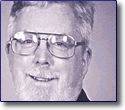 |
| L. Martin Nussbaum | Charles Goldberg | Msgr. Richard Loomis |
 |
 |
|
| Roger M. Mahony | John P. McNicholas | |
1.
PR CHALLANGES OF THE HAIGH SETTLEMENT
[A very interesting email from Goldberg on the “public relations
challenges” of the imminent Haigh settlement. Indents and bullets are supplied by the editor.]
[From:]Goldberg
03/13/02 12:09PM
[To: Tamberg]
[No
Subject] [WKFI PDF p. 30]
Hello Tod,
What follows is obviously highly confidential at
this moment in time:
It appears that we will soon (Friday is the
target) accept the outstanding offer to settle the Haigh matter for $1.2
million dollars in exchange for a complete, comprehensive release of all
claims. As of this moment, there is no reason to believe that this settlement
will be confidential. The settlement sum will be paid 80% by the Diocese of
Orange and 20% by the Archdiocese of Los Angeles.
Subject to our self insured retention
obligation, the Archdiocese of Los Angeles' portion of the settlement will be
paid by our insurers who insured the Archdiocese in 1978-1979. The same carrier
insured us post 1979 until The Ordinary Mutual was formed.
Here are the public relations challenges:
1. At the moment we have not asked that this
settlement remain confidential. Unless there is a strong contrary view, we do
not anticipate asking for confidentiality.
2. Regarding the 80/20 split, the question
arises whether we inform Ms. Freberg at the time of acceptance of her offer
(which will likely occur on Friday, March 15th) of the precise split? Do we
hold that information and release it to her later when the releases are
prepared and executed? Do we keep the 80/20 confidential. We are leaning toward
disclosing the split in the acceptance letter to Ms. Freberg subject, of
course, to your advice from >>> a p.r. perspective.
3. Here
are some the questions that come to mind that the press will likely raise:
·
Why is the Archdiocese of Los Angeles
("ADLA") contributing at all to this settlement?
·
Who is the ADLA priest who is accused of
sexually molesting Ms. Haigh? Where is he now?
·
If he is not in ministry, why not?
·
When was he removed from ministry?
·
What were the reasons for his removal?
·
Tod, we think we know who he is but, at
this moment, are not absolutely certain who it is. Further, we have never
indicated to Ms. Freberg that we know who he is although she has asked
repeatedly?
·
Why is Ms. Haigh receiving $1.2 MM when
the victims in Boston may receive less than $300,000 per victim? Did you report
Ms. Haigh's allegations to the police under the Child Abuse Reporting Statute?
·
Why are you paying so much money when her
claim appears to be so old? Where is Fr. Lenihan now?
·
When was he removed?
·
Is he going to be laicized by Rome?
·
Is this settlement being paid by
insurance?
·
4. Note that Ms. Freberg could go public upon
receipt of our letter and prior to any releases being executed. These are some
of the issues that we need to conference with everyone about between now and
Friday. Please let us now when we can all gather fo discuss these sensitive
p.r. issues.
Chuck
Charles Goldberg, Esq.
Rothgerber Johnson & Lyons LLP
1200 17th Street, Suite 3000
Denver, Colorado 80202
303-628-9609
303-623-9222
CGoldberg@rothgerber.com
The information contained in this electronic
communication and any document attached hereto or transmitted herewith is
attorney-client privileged, work product, or otherwise confidential and
intended for the exclusive use of the individual or entity named above. If the
reader of this message is not the intended recipient or the employee or agent
responsible for delivering it to the intended recipient, you are hereby
notified that any examination, use, dissemination, distribution, or copying of
this communication or any part thereof is strictly prohibited. If you have
received this communication in error, please immediately notify the sender by
telephone or reply e-mail and destroy this communication. Thank you.
[A very useful summary of the reporting laws, which disparages
Lopez but described his 3/13 “screed” as an “overly lenient description
of the Archdiocese’s reporting duties.” For the “screed” itself, see Appendix Document B.
Compare Mahony on individual reporting in Message 32.]
From: Nussbaum
Date: Wed, 13 Mar 2002 14:32:27 -0700
To: Mahony,Loomis, Tamberg, Cox, Murphy,
McNicholas, Goldberg
Subject: Press
& Reporting Issues Related to Haigh Settlement [WKFI PDF p. 27]
Privileged Attorney-Client Communication
In addition to the possible public relations
issues identified by Chuck, I would suggest we need to put on the agenda
discussion of the additional issues below related to the Haigh settlement. As
suggested by Chuck, I think we would benefit from several or all of us
convening a meeting to discuss how to handle these issues. Tod, will you
attempt to convene a meeting of the appropriate set of people. (I have a court
appearance on Friday morning which will occupy me from 7:30 a.m. to 10:00 a.m.
(Pacific time). Otherwise, I am available on both Thursday and Friday of this
week.
1. Should ADLA announce the settlement in
advance of Ms. Freberg and thereby, get in front of her on this story?
2. When and how should ADLA coordinate with the
Diocese of Orange re PR issues and the settlement?
3. Other questions which may come from the
press:
a. Who is the ADLA priest mentioned in the
complaint? What has been done to find him?
b. Has ADLA reported the ADLA priest mentioned
in the complaint to law enforcement? Has ADLA complied with the reporting law
as regards Lenihan and the un-identified ADLA priest?
c. Is the ADLA priest mentioned in the complaint
still in service?
4. I would also note that Steve Lopez's screed
in today's LA Times, while predictable in its criticism of the Church, is
really rather surprising in his overly lenient description of the Archdiocese's
statutory reporting duties. He contends that the statute:
a. Does not require clergy to report instance of
child abuse which occured before 1987 (we think the correct date is 1996 , when
the legislature added clergy to the list of mandatory reporters);
b. Does not require clergy to report if the
victim is an adult when the cleric learns of the earlier abuse (Lopez says that
a prosecutor told him that this is how the statute reads. I think that this is
only a possible interpretation of the statute which requires "mandated
reporter" to report whenever he or she "has knowledge of or observes
a child whom the mandated reporter knows or reasonably suspects has been a
victim of child abuse . . . "); and
c. Does not require clergy to report unless
"a minor makes a complaint (I see no support in the statute for this
interpretation. Accordingly, I read the statute as requiring clergy to report
regardless whether a minor complains.
5. With all the vultures circling, we should
continue to closely analyze whether ADLA's personnel are complying with the
reporting statutes:
a.
See paragraph 3(b) supra.
b. Does ADLA, for example, require its mandated
reporter employees to sign the statutorily-prescribed form which puts the
employee on notice of his statutory duties. Section 11166.5 requires this. Does
ADLA maintain copies of these forms?
c. When ADLA's mandated reporters report, do
they do so both verbally and in writing. (A written report is good risk
management and is also required by 11166(a). In fact, the written report must
be on the state-prescribed form. See Section 11168.)
6. As a point of information, I would note that
even if ADLA were inclined to release information about previous reports to law
enforcement, any such actions would violate the statute which makes the release
of any such reports a criminal misdemeanor punishable by not more than 6 mos.
in jail and a fine of $500 or both. See Section 11167.5. Further, if ADLA had
made reports to the three sheriffs mentioned in the LA Times' articles and
editorials, the sheriffs would violate the statute if they released the names
of any individual or entity which had made a report. Section 11167(d)(1) which
states: "The identity of all persons who report . . . shall be
confidential and disclosed only among agencies receiving or investigating
mandated reports, to the district attorney . . .", etc. It also states
that "No agency or person listed in this subdivision shall disclose the
identity of any person who reports under this article." Section
11167(d)(2).
7. Finally, I continue to fear that the next
wave of this press feeding frenzy may well focus on clerics who have had
romantic or sexual liaisons with other adults. I think it prudent to begin
reviewing personnel disciplinary files to assess the scope of any such problem.
[RL&S confidentiality statement; see
Message 1.]
3. SCHEDULING
A MEETING TO DISCUSS REPORTING
[From:] McNicholas
03/13/02 03:41PM
[No
Subject] [WKFI PDF p. 26]
All,
I am available Thursday 9:00 am -11:00 am and
from 2:00 PM until the end of the day.
I am travelling on Friday.
Regards,
John
4. SCHEDULING A MEETING TO DISCUSS REPORTING
From: Goldberg
Date: Wed, 13 Mar 2002 18:05:11 -0700
To: McNicholas, LMN@mcnicholaslaw.com
Subject: Re:
Press & Reporting Issues Related to Haigh Settlement [WKFI PDF p. 25]
As for me, I am available anytime Friday and
tomorrow from 1 P.M. (PDT) and thereafter.
Chuck
[Goldberg contact info.]
[RL&S confidentiality statement; see
Message 1.]
5. SCHEDULING A MEETING TO DISCUSS REPORTING
[Teleconferencing is a pricey option.]
[From:] McNicholas
03/13/02 06:09PM
[No
Subject] [WKFI PDF p. 25]
All,
Can we teleconference Thursday at 2:00pm?
John
6. ARRANGING CALL TO DISCUSS Fr. TONY McDONNELL
[McDonnell is an as-yet unidentified priest.]
From: Goldberg
Date: Thu, 14 Mar 2002 09:49:10 -0700
To: McNicholas
Cc: Mahony,Tamberg, Loomis, Murphy, Nussbaum
Subject: Re:
Press & Reporting Issues Related to Haigh Settlement [WKFI PDF p. 24]
John,
Hi.
I just received a call from Tod who is in the
midst of some training exercises with priests; he told me he and Fr. Dick will
be calling me at 3:30 P.M. (PDT). He gave me no options. Are you available. If
so, I'll see you are tied in. Let me know.
Most importantly, does the description of the
priest you interviewed, Rev. Michael Anthony McDonnell provided by Katherine
Freberg in her letter dated March 12, 2002 (Martin faxed this to you
yesterday). Does Rev. McDonnell fit the description of one, 20 years ago who
was short, stocky, possibly in his 40's, tight curly hair? Please let us know
ASAP by e-mail in advance of our call today so we can begin to think of how we
craft our p.r. responses.
Thanks.
Chuck
[Goldberg contact info.]
[RL&S confidentiality statement; see
Message 1.]
From: McNicholas
To: Goldberg
Cc: Mahony, Tamberg, Loomis, Murphy, Nussbaum
Sent: 3/14/2002 11:24 AM
Subject: Re:
Press & Reporting Issues Related to Haigh Settlement [WKFI PDF p. 24]
Chuck,
1. I'm on for 3:30 PM today.
2. It is possible that Tony McDonnell could have
fit that description 20 years ago. I repeat, "possible." He told me
very forcefully that he was never involved with minors. Lets discuss.
Regards,
John
8.
Fr. DOMINIC SAVINO & Fr. PETER LUIZZI
From: Loomis
To: Murphy, McNicholas
Sent: 3/19/2002 9:27 PM
Subject: Storm
on the horizon [WKFI PDF p. 35]
PRIVILEGED ATTORNEY-CLIENT COMMUNICATION
Sister & John,
I have learned that the Carmelites at Crespi
High School are currently preparing an announcement for faculty, parents and
students concerning Father Dominic Savino's removal from active ministry.
Father Savino is the President of Crespi HS. I do not know when the
announcement will be made but it will
undoubtedly draw a great deal of public attention. The Carmelites are
introspective as an order and may not think to warn us before notifying the
school community.
Also, though hearsay has it that these
allegations are from years ago and all alleged victims are now adults, I
certainly hope they have thought of obtaining legal advice regarding the
reporting laws.
If Monsignor Cox is not in direct communication
with the Provincial, I suggest that he ought to speak with Father Quinn Connors
at tomorrow's workshop and establish direct communication on this matter. Since
Father Connors was out here for our workshops and is himself a former
Provincial, he was delegated by the current Provincial to confront Father
Savino with the allegations. If you agree with my concerns, would a call from
legal counsel to Monsignor Cox be better than one from me to set this in
motion?
A complicating fact: I believe that Father Peter
Liuzzi is being assigned to Crespi Carmelite HS as a faculty member. A
representative of the "Lay Catholic Mission" has approached a
Carmelite priest who occasionally helps here at Saint Charles to question
"the wisdom of assigning Father Liuzzi to an all-boy school." On top
of that, Father Liuzzi and Father Savino have lived in the same community house
for as long as I have worked at the ACC -- not quite seven years. They are
close friends. I am not sure how many people know these facts and I would not
want to tip my hand.
Everything in this "complicating fact"
paragraph would be tracked right back to me. I would not want it made public if
it can be avoided. But my thought is that one issue might ignite the other in
the press, both secular and retro-Catholic.
Dick
Rev. Msgr. Richard A. Loomis
Director, Secretariat for Administrative
Services
3424 Wilshire Boulevard
Los Angeles, CA 90010
Voice: 213 637-7890
Fax: 213 637-6890
9.
BACKGROUND ON SAVINO & LUIZZI
From: Murphy
Date: Wed, 20 Mar 2002 07:10:38 -0800
To: McNicholas
Subject: RE:
Storm on the horizon [WKFI PDF p. 35]
John,
Please put a call into Msgr. Cox. He is in santa
Barbara today with the last Boundaries Workshop. The carmelite priest below is
well know in the Valley and is a therapist. Presently, some of our priests go
to him. An adult came forward and made a complaint that he was molested as a minor.
The priest denied this charge but from what I know admitted another which
happened years ago. When you reach Msgr. Cox, see if you can find out who their
lawyer is and deal with him\her. For the Carmelites (and ours) best interest,
they should call this in to law authorities. If the Order does not have some
police contact, then suggest Detective Barraclough. As to the other priest, he
is the priest who ministered at the ACC to gay and lesbian Catholics. He stayed
on the narrow line until he wrote his book. He is gay and the Catholic Mission
(the off the wall right wing throw-away newspaper) has been gunning for him for
years.
Thank you,
Sister Judy
10.
RESPONDING TO DELGADILLO ON TRAINING
From: Mahony
Date: Wed, 20 Mar 2002 10:16:56 EST
To: Nussbaum, Murphy, McNicholas, Goldberg,
Loomis, Tamberg, accmed14@hotmail.com
Subject: Delgadillo
letter [WKFI PDF p. 33]
Privileged Client--Attorney Communication
All:
I would appreciate your drafting a response to
Delgadillo for me. We should take him up on his offer to assist training
sessions--we will need those for teachers, parish staffs, youth folks, etc.
That would give us the opportunity to give them
the summary of the law and to have them sign that form which the Act requires
anyway.
I say--let's go for it!
Thanks.
+RMM
11.
PROBLEMS OF DELGADILLO TRAINING
[McNicholas is concerned that if the city
attorney gets involved in training, Q&A sessions could open the church to
“uncontrolled ‘free’ discovery” like that of a grand jury. McNicholas also raises the Constitutional
issue of the city attorney’s involvement in an “ecclesiastical function.”]
From: McNicholas
Date: Wed, 20 Mar 2002 10:13:49 -0800
To: Mahony
[forwarded by McNicholas to Loomis on 3/20/2002
1:13 PM]
Subject: Re:
Delgadillo letter [WKFI PDF p. 32]
Cardinal,
I am working on a draft. However, I think we
should discuss his offer in the third paragraph. We have taken the position
that we have complied with the statutory reporting laws and continue to do so.
We are, even now, cooperating with investigations initiated by the Los Angeles
Police Department and by the Los Angeles Sheriff's Office. Sr. Judy, as you
know, has met with both agencies and has established a god working relationship
with them.
So, what am I worried about having the City
Attorney ("C.A.") conduct training sessions with clergy, et al.? I am
concerned about direct contact with our clergy and lay personnel. For example,
training sessions usually have a question and answer period. Judging from the
reception of Di Maria settlement, the monetary amount and the non-monetary
terms, a question and answer period could be problematic and
"misunderstood" by the Deputy City Attorneys providing the training.
The third paragraph is, in my opinion, the kind of investigation done by Grand
Juries. In essence, the third paragraph provides the C. A.'s office with
uncontrolled "free" discovery.
Martin [Nussbaum] called me as I was preparing
the e-mail. He agrees with the above and sees a Constitutional issue as well:
this is an ecclesiastical function; we should not hand over our authority to
the C. A.
We suggest that we provide him with our policies
and welcome suggestions. . [sic] We then can make a choice to include them or
not. If we include them we have the imprimatur of the City Attorney.
Best regards
John
[Note that the Carmelites fail to report because
it’s out of SOL.]
From: McNicholas
To: Murphy
Cc: Loomis
Sent: 3/20/2002 1:03 PM
Subject: Re:
Storm on the horizon [WKFI PDF p. 34]
Dear Sister,
I spoke with Msgr. Cox. On the subject of who
should report the matter to the authorities, he wants to talk to you first. He
is of the opinion that you should be the one to report it because of your working
relationship with Det. Barraclough. I disagreed but acquiesced to his
request--there being no choices. He also said that you and he agreed that this
is not reportable under the statute.
The Carmelite's attorney is Jim Geoly, Warren,
McKay & Serentella in Chicago. (I got this from Fr. Kevin McBrien, O.
Carm., whose name was given to me by Msgr. Cox. Fr. McBrien told me that the
Carmelites did not report it because of the statute of limitations.)
Msgr. Cox is opposed to the removal of Fr.
Liuzzi who teaches a one hour course once a week at Crespi reasoning that if he
was good enough to be on the Cardinal's staff, he is OK to teach at Crespi H.S.
(Disagree.) All homosexuals are not pedophiles. (Agree.) If the Cardinal was to
tell the Carmelites to remove Fr. Liuzzi, that is his decision. There has never
been a claim about Fr. Liuzzi.
I left a short version of the above on your
Audex.
Let's discuss.
John
13.
SELECTING DELGADILLO TRAINEES
From: McNicholas
To: Mahony
Cc: Murphy, Loomis; Nussbaum
Sent: 3/20/2002 3:02 PM
Subject: Response
to Delgadillo letter [WKFI PDF p. 38]
Cardinal,
As I draft a reply, the thought occurs to me
that perhaps we could designate someone or a few select individuals for the
training suggested by Delgadillo in the third paragraph of his letter(?).
Let's discuss.
Regards,
John
14.
RESPONSE TO DELGADILLO (NO TRAINING)
From: McNicholas
To: Mahony
Cc: Murphy, Loomis, Nussbaum
Sent: 3/20/2002 4:25 PM
Subject: Reply
to Rockard Delgadillo, L.A. City Attorney [WKFI PDF p. 37]
Dear All,
I offer the enclosed draft reply to Mr.
Delgadillo's letter for your suggestions.
In the interest of consistency I have borrowed
generously from the Pastoral Statement and from the March 13, 2002 letter to
the District Attorney, Steve Cooley.
I did not include a paragraph accepting in part
Mr. Delgadillo's training offer. In my last e-mail I suggested a partial
acceptance by designating someone or a trusted select few to receive the
training and then to train others. Such a paragraph is easily grafted onto this
or whatever letter you decide to send.
Regards,
John
<<Delgadillo 03/20/02>>
15.
“SAFE FOLKS” FOR DELGADILLO TRAINING
[Mahony suggests using “’safe’ folks” from the archdiocese
to go through a “dry run” of the training that Delgadillo proposes,
with those “folks” leading the real training for others. This so that “it doesn't sound as if we are
rebuffing him.”
From: Mahony
To: McNicholas
Cc: Murphy, Loomis, Nussbaum
Sent: 3/20/2002 8:11 PM
Subject: Re:
Response to Delgadillo letter [WKFI PDF p. 14]
John,
Yes, we could take some "safe" folks
from the AD, maybe at the ACC, and have them go through their session to see
what it's like.
We could tell him that his staff could do a dry
run for us, and we in turn, could then do the training for the rest of our lay
employees.
I like the idea. It doesn't sound as if we are
rebuffing him.
+RMM
16.
REPORTING SAVINO & ADDING TO THE RUCKER FILE
[Murphy’s email arranges to have a copy of Rucker’s police
report put in his file -- at this late date?! Murphy paraphrases Tammy Helm’s mother on the
case: “the mother of Tammy references her phone calls with Bishop Manning.
The gist of the phone conversations is that Bishop Manning wanted the
church to take care of the matter, and he would see that it was done
properly. It appears that based on this representation, the mother refused
to press charges and wrote: ‘I just want the Father helped and feel
the Church can best do it.’"
From: Murphy
Date: Thu, 21 Mar 2002 19:33:44 -0800
To: Mahony
Cc: McNicholas, Loomis, Cox
Subject: Update
[WKFI PDF p. 38]
Attorney-Client Privileged Communication
Cardinal,
1. I made contact with Detective Barraclough and
told him to expect a call from a Fr. McBrien about a complaint from an adult
victim re a Carmelite priest that happened over 20 years ago. The priest at
that time had been a teacher at Crespi High School. I said the complaint had
come through our hotline and referred to the Carmelites. Although this
complaint does not fall under the mandating reporting law, I wanted our lines
of communication to stay open. I then contacted Fr. McBrien and encouraged him
to contact Detective Barraclough. Hopefully contact was made.
2. John had been in contact with the Carmelites
attorney in Chicago. Comments were made re their proposed letter to the
Carmelite High School Family. In conversation, John was told that the priest in
question had molested a teenager when he was a parish priest at St. Jane
Frances de Chantal Parish in 1979. This is a parish staffed by the Carmelites.
The matter was handled quietly, the priest was sent for treatment, and the
Archdiocesan contact was Bishop Azube. John, if you could follow up with this
with the attorney to see if they have anything in writing. Msgr. Cox can you
check to see if anything in the Carmelite files. It is amazing the connections.
3. John retrieved his old file in the Tammy Helm
civil litigation against us and sent me a copy of the police report I will make
you a copy, Msgr. Cox, to place in Fr. R's file. Throughout the El Segundo
Police report, the mother of Tammy references her phone calls with Bishop
Manning. The gist of the phone conversations is that Bishop Manning wanted the
church to take care of the matter, and he would see that it was done properly
.It appears that based on this representation, the mother refused to press
charges and wrote: "I just want the Father helped and feel the Church can
best do it."
All for now.
Sister Judy
17.
BISHOP ARZUBE’S QUIET HANDLING OF SAVINO (?)
[Note Mahony’s jokey comment on yet another
report of abuse: “Never a dull moment!!”]
From: Mahony
To: Murphy
Cc: McNicholas, Loomis, Cox
Sent: 3/22/2002 6:59 AM
Subject: Re:
Update [WKFI PDF p. 13]
Privileged Client--Attorney Communication
Sr. Judy:
Many thanks for the update. Sad to learn of the
St. Jane Frances de Chantal connection, as well as Bp Arzube.
We need to investigate fully to see what is
there in the files. John may need to interview Bp Arzube.
Never a dull moment!!
+RMM
18.
SUMMARIES OF Fr. McGOWAN & Fr. HILL
From: Cox
To: Loomis
Sent: 3/22/2002 10:03 AM
Subject: Fathers
McGowan and Hill [WKFI PDF p. 23]
Dick,
Would you please be so kind as to print out (or
email) and supply me the summary you did of the records of these two priests?
The Cardinal and I meet with Tim on Monday of Easter week. I am trying to
schedule a trip to see Pat in the near future.
Thanks.
Craig
19.
CARMELITE’S LAWYER IN SAVINO CASE
From: McNicholas
To: Murphy, Mahony
Cc: Loomis, Cox
Sent: 3/22/2002 11:55 AM
Subject: Re:
Update [WKFI PDF p. 38]
All,
I have calls into Jim Geoly, the attorney who is
handling this matter for the Carmelites.
Regards to all,
John
20.
Fr. KEARNEY OF St. FRANCIS HIGH REMOVED
From: Loomis
Date: Fri, 22 Mar 2002 12:45:53 -0800
To: Murphy, Tamberg
Cc: McNicholas
Subject: St.
Francis High School [WKFI PDF p. 40; appears twice in PDF]
PRIVILEGED ATTORNEY-CLIENT COMMUNICATION
Sister, John & Tod,
Father Chris Kearney (sp?), OFM Cap., a former
faculty member at St. Francis High School (not the principal), has been removed
from his position at San Lorenzo Seminary, due to allegations of past abuse of
minors.
From what I found out from Msgr. Cox, he was
discussed on one of the talk shows and the Capuchins did a quick check. Also,
an anonymous complaint came in on Orange's 800-line about a Father Chris, but
there was no last name and no further reference as to what school. Due to
whatever they found out, Father Chris has been removed by the Capuchins. Msgr. Cox
sais that this Father Kearney used to supervise Saturday detention. Kids could
get leave early if the would wrestle with him. The winner was the one who could
grab the other's testicles while wrestling.
:-P
Msgr. Cox told me that the Capuchins were
supposed to be sending us a copy of whatever they were going to announce this
weekend. (The "this weekend" reference came from Bishop Curry who was
told they were announcing it this weekend.)
That's all I know at this point. Msgr. Cox will
call the Capuchins this afternoon and see what their plans are.
RAL
Rev. Msgr. Richard A. Loomis
Director, Secretariat for Administrative
Services
3424 Wilshire Boulevard
Los Angeles, CA 90010
Voice: 213 637-7890
Fax: 213 637-6890
21. St. FRANCIS HIGH SCHOOL: NO MESSAGE
From: McNicholas
To: Loomis, Murphy, Tamberg
Sent: 3/22/2002 2:32 PM
Subject: Re:
St. Francis High School [WKFI PDF p. 40; appears twice in PDF]
[No message - perhaps McNicholas’s message (a
reply to “St. Francis High School”?) was redacted before the PDF was made.]
22.
Fr. GRANADINO ACCUSED AND REMOVED
From: Cox
To: Mahony
Cc: Loomis, Murphy
Sent: 3/24/2002 3:11 PM
Subject: Allegation
Against Rev. David Granadino [WKFI PDF p. 22]
Roger,
As I believe Sr. Judy Murphy communicated to
you, on late Friday afternoon an anonymous complaint came in our 800 number
alleging that Fr. David Granadino was abusing altar servers. As you are also
aware, the L.A. County Sheriff's Office has been investigating an unnamed
priest at St. Francis of Rome, Azusa.
Given that the hotline message provided the name
of apriest, Monsignor Loomis and I arranged to meet with Fr. Granadino at 2:15
p.m. today. In accord with his duty as Auditor, Monsignor Loomis is preparing
his formal report to you and will communicate that to you on Monday.
In summary, I can say that Fr. Granadino denied
forcefully any misconduct. He was shocked and chagrined by the allegations.
When asked to provide for us a roster of the altar servers in order to asisst
the Sheriff in their investigation, he showed no hesitancy whatsoever. He will
fax that to me right away, andI will have Sr. Judy provide that to the Sheriff.
I will ask Sr. Judy to communicate with the Sheriff to stress the need for them
to act quickly.
Fr. Granadino reluctantly accepted the need for
him to move out of the parish for a brief time while the investigation is
underway. Given that it is Holy Week and with Easter around the corner, this
was agonizing for him. I offered several options, and he agreed to go to St.
Andrew's Abbey, Valyermo. I was particularly pleased with that. It is a
supportive environmnet, with good spieritual directors he can consult, and if
he has to stay there through Holy Week and Easter will enable him to take part
in the liturgies of the Triduum. I have already spoken with Abbot Francis and
made the arrangements for Fr. Granadino to go there Monday afternoon.
Obviously, Fr. Granadino is hurting. We both
encouraged him to be in touch with his counselor and spiritual director.
I will keep you posted.
Craig
23.
MORE DETAIL ON GRANADINO’S REMOVAL
From: Cox
To: Murphy
Cc: Loomis
Sent: 3/24/2002 3:18 PM
Subject: Fr.
David Granadino [WKFI PDF p. 22]
SisterJudy,
You should have received a copy of my email to
theCardinal on this.
Fr. Granadino firmly denies any misconduct. He
will be faxing me the server roster on my confidential fax. I'll have that to
you ASAP Monday morning. Monsignor Loomis will have his summary of the
conversation with you.
When you communicate the roster to the Sheriff,
I'd appreciate it if you could strss the urgency that they act quickly and
discreetly. This is Holy Week and Easter. Fr. Granadino's absence is
paerticularly noticeable and creates burdens on others in our most sacred and
busiest of times. If there is something to the allegations, then we want to be
sure he is removed from ministry. But if the allegations are unfounded, the
sooner that can be established and he restored to ministry, the better. If he
is innocent, I am most concerned that his reputation not be damaged more than
it will already be by having things drag on and on and on. I know we cannot
require the Sheriff to act promptly, but if we can at least
communicate the importance that they act
promptly that would be appreciated.
If the Sheriff's office needs to speak with Fr.
Granadino, he will be at St.
Andrew's Abbey, Valyermo, and available to them.
The phone there is (661)
944-2178. In fact, my sense is that he will be
eager to tell his story to the
investigators.
I'll keep you posted.
Craig
24.
MAHONY REACTS TO NEWS ABOUT GRANADINO
From: Mahony
To: Cox
Cc: Loomis, Murphy
Sent: 3/24/2002 3:44 PM
Subject: Re:
Allegation Against Rev. David Granadino [WKFI PDF p. 13]
Privileged Client--Attorney Communication
Craig,
Really sad news. I am pleased with his openness
to the process, and his willingness to provide the altar server list, etc.
Let's hope that the investigations can proceed
quickly so that this can be finalized as early as possible. The Sheriff's dept
will want to speak to each altar server, I presume.
It's too bad that the allegation did not at
least specify a name or two--someplace to begin with.
Thanks for your work on this!
+Roger
25.
LIKELY TURNOUT FOR 3/25 CHRISM MASS
From: Loomis
Sent: Monday, March 25, 2002 9:33 AM
To: Cox, Murphy, Tamberg
Subject: LBPD
[WKFI PDF p. 20]
We have the Long Beach police on board for this
evening's Chrism Mass. I explained that there would be a large contingent of
clergy, including 400 to 500 priests, five bishops and the Cardinal. They also
know that lay people from all over the Archdiocese will be there representing
their parishes. ’’I also informed them
that media coverage will be heavy due to the announced topic of the sermon: the
child abuse scandals in the Church -- and that there would almost certainly be
demonstrators from SNAP or other victim organizations, as well.
My contact is Lt. Jerry Gadbaw, who is the
assistant to the Chief of Police in Long Beach. If he does not command the
operation himself, he will make sure that someone competent is in charge and
will make sure we have open lines of communication.
RAL
26.
PARISHES & REMOVED PRIESTS AT 3/25 PRESS CONFERENCE
[Prepping Mahony for the 3/25 press conference after the
Chrism Mass. Cox is concerned
that Mahony avoid saying that “none of the ‘priests removed’ were in
parish ministry.” First, that
would allow “news organizations” to narrow the search for names.
Some [does Cox contradict himself?) were in “parish ministry,”
others were “assisting in parishes,” some were “resident in parishes,”
and all were "doing Sunday supply at times.”
Second, for those in “predominantly parish ministries” whose
ministries were “restricted,” Mahony will be attacked by the press. Cox recommends Mahony avoid any reference to
type of ministry, saying instead that “no priest was put into any ministry
where we had any concern that he would be a danger to young people.
If asked to say more than that, you can respond by going back to your
principles about not disclosing names.”]
From: Cox
To: Mahony
Cc: Loomis, Tamberg, Murphy
Sent: 3/25/2002 10:14 AM
Subject: Press
Conference [WKFI PDF p. 21]
I just finished meeting with Tod and we spoke
about the press conference you will be having this evening. You are in my
prayers.
Tod has briefed me with regard to the kinds of
dialogue about questions and advice that you have received up to this point. I
want to add one comment that is -- to my way of thinking -- very important. To
say or even give the impression that none of the "priests removed"
were in parish ministry creates multiple problems. First, it "narrows the
search" for any news organizations that are trying to ferret out names. It
would realistically almost certainly "out" one or more. Even those
not in parish ministry were assisting in parishes, and you could be challenged
about that. Some were resident in parishes. Not being assigned full time to
parishes does not mean there was no parish ministry. If you say something that
the press later decides was inaccurate, they will be merciless in attacking.
All the men involved were doing Sunday supply at times. In the popular mind set
that will be seen as parish ministry. Secondly, should some names be
"outted" of men who were in predominantly parish ministries, even if
restricted, the distinction will not carry any weight in the press. You will
again be attacked mercilessly.
I recommend that in your press conference you
make no indication whatsoever of the "type" of ministry involved, but
indicate that no priest was put into any ministry where we had any concern that
he would be a danger to young people. If asked to say more than that, you can
respond by going back to your principles about not disclosing names.
I will be arriving at the parish around 3:15 today
and will remain there through the time of the press conference in case I will
be needed.
Craig
27.
FEEDBACK ON PREP FOR CHRISM MASS
From: Cox
To: Loomis
Sent: 3/25/2002 10:22 AM
Subject: RE:
LBPD [WKFI PDF p. 20]
Dick,
Well done. Thanks.
Craig
28.
ONLY THE FACTS IN MEETING WITH SHERIFFS
From: Murphy
Sent: Monday, March 25, 2002 5:58 PM
To: Cox, Loomis
Cc: Mahony
Subject: 8:00
AM visit [WKFI PDF p. 19]
Attorney-Client Privileged Communication
Well, Men, here's the drill. William Bevins to
be known as Bill and Thomas McNeil to be known as Tom will be at the ACC at 8AM
to interview Msgr. Cox and Msgr. Loomis. Badges are down at the mezz. level and
instructions left was for them to call you Msgr. Cox when they arrive and you
will direct them from there. Your extension is on the badges. I will leave the
tape of the anon. call on your chair Msgr. Cox to be given to the Sheriffs. The
addresses were faxed to Sergeant Boyett. As to the interview, remember Sergeant
Joe Friday - "Only the facts sir, only the facts." Listen to their
questions and take your time answering. Do not volunteer information. This is
not a session to be chatty. I am not sure if you will inteviewed together or
separate. I believe in the spirit of cooperation, therefore, I will not be
present and besides 8AM is against my religion. You both will be fine. I'm
afraid this investigation will take some time. I was asked when Easter vacation
began, etc. If they decide to go the school route, I see no activity until
April 8th. Sergeant Boyett interviewed a victim today for this case. The DA's
office is involved but a specific DA has not been appointed. Sergeant Boyett
said this is happening because the Sheriffs want to avoid mistakes. It will not
be inappropriate to push for a speedy investigation at the end of the
interview. The number 94 has them scrambling. At the end of the day, Sergeant
Boyett left a long message on my audix which will be typed out tomorrow
praising our cooperation and how happy the Captain is. I guess they figured out
that honey works better than vinegar.
All for now.
Sister Judy
29.
THANK-YOU AFTER MEETING WITH SHERIFFS
To: Murphy
Cc: Loomis
Sent: 3/26/2002 7:32 AM
Subject: RE:
8:00 AM visit [WKFI PDF p. 19]
Attorney-Client Privileged Communication
Sister Judy,
Thank you for the advice, and all your
extraordinary efforts in these months. I haven't taken the time to express my
appreciation and admiration for all you have done.
Msgr. Loomis and I will keep you posted.
Craig
30.
PRESS REACTION TO EXCHANGE WITH DA
From: Mahony
To: Tamberg, Loomis, Murphy, Cox
Sent: 3/26/2002 5:13 PM
Subject: Re:
Letters [WKFI PDF p. 12]
Tod,
No problem with releasing the DA letter
exchange.
Yes, the media will be disappointed! But they
will also be disappointed with the Parks letter and our response--since no
names will be given out.
We can chat tomorrow.
+RMM
31.
OUR BIG MISTAKE OF NOT PRETENDING ON 3 PRIESTS
[The “big mistake” isn’t lying about Baker and transferring
abusers. Mahony is criticizing
Murphy for not “consulting” quickly with the police about three unreported
priests, so that Mahony could claim that all 8 priests had been properly
reported “over the years,” which of course is not true. Mahony fears “that [otherwise] I will get hauled
into a Grand Jury proceeding and I will be forced to give all the names,
etc.” For the Parks letter, first
mentioned here and in Message 30, see Appendix
Document E.]
From: Mahony
To: Murphy, McNicholas, Nussbaum, Goldberg,
Loomis, Cox
Sent: 3/27/2002 7:00 AM
Subject: Our
Big Mistake [WKFI PDF p. 11]
Privileged Client--Attorney Communication
Sr. Judy,
As the drum beats continue from every side for
us to release the "names," I must still point to what I consider our
greatest tactical mistake of the past few weeks.
If I recall, of the 8 priests involved, 5 had
already been reported to local law enforcement agencies. That leaves 3.
Recall also that I pressed for you to meet with
Det Barraclough and "consult" him about the other 3 so that we could
state without hesitation that all priests no longer in service had been
reported to various law enforcement agencies.
You resisted quite strongly that suggestion.
I hope you have changed your mind by now! By
doing it back then, we would not appear to be crumbling under public pressure.
It was a huge mistake on our part.
If we don't, today, "consult" with the
Det. about those 3 names, I can guarantee you that I will get hauled into a
Grand Jury proceeding and I will be forced to give all the names, etc.
I must now insist that this matter is no longer
open for discussion. You must consult with the Det. about those 3 cases.
In my response to Parks, I want to state that
every single case of the few priests was reported to the appropriate law
enforcement agency over the years.
I must be able to state that--even publicly. And
soon.
I'm not sure you grasp the gravity of the
situation and where this is heading--not only with the media, but with the law
enforcement and legal folks.
The best place to state it would be in my letter
to Parks, and then in a follow-up letter to Cooley.
If we don't take immediate, aggressive action
here--the consequences for the AD are going to be incredible: charges of
cover-up, concealing criminals, etc., etc.
PLEASE make this task your highest priority this
morning! I have reached the point where if I cannot guarantee that all 8 have
been appropriately reported, then I will have to call the Det. and do it
myself--today.
There is no middle ground on this one; we are
losing the battle because we are somehow "hiding" those 3. The best
way is to "consult" with the Det. about them, and let them decide
what needs to be done next.
Thanks for listening. This public media pressure
will never stop until we can announce that those few priests have all been
reported to the appropriate authorities over the years.
+RMM
32.
INDIVIDUAL REPORTING: HOW TO TELL PARKS
[Mahony outlines the picture that he wants to
present - the cases are few and old.]
From: Mahony
To: Murphy, McNicholas, Loomis, Loomis, Cox,
Goldberg
Sent:
3/27/2002 9:33 AM
Subject: Re:
Our Big Mistake [WKFI PDF p. 1]
Privileged Client--Attorney Communication
Sister Judy,
Thanks so very much! I truly appreciate your
getting this task done.
John: when drafting the letter to Parks, we need
to state very clearly something along these lines: "In those few old cases
involving allegations of the sexual abuse of a minor, each case has been
referred to the appropriate law enforcement agency for their review and
investigation. We have no cases, old or new, that have not been referred
appropriately."
I think we also need to refresh Parks' memory
about other aspects of the statute, including the fact that the responsibility
for mandated reporting is an individual mandate, that the statute states
clearly that confidentiality must be maintained [11167.5 (a) and (b)].
Since we have only 2 cases of the 8 that fall
within the LAPD, I think our best approach is to tell him that and give him the
LAPD case numbers for those two cases. We need to inform him that since they
investigated the cases, they would have all the information, even more, than we
would have.
We need to review a draft of that letter today,
if at all possible.
Many thanks to all! What a Holy Week--filled
with Good Fridays, no Easter Sundays!!
+RMM
33.
MAKING A TRANSCRIPT IN HICKMAN ACCUSATION
From: Arviso
Date: Wed, 27 Mar 2002 11:08:23 -0800
To: McNicholas
Subject: Phone
message - Pat Gordon [WKFI PDF p. 43]
Phone message on 3/27/02 at 11:06 am:
Pat Gordon Message: My assistant is working on the transcript
as I speak. It may take her all day and tomorrow to complete the tapes.
I should be able to get the statement to you by tomorrow some time.
Any questions call me.
34.
PLAN FOR RESPONDING TO HICKMAN ACCUSATION
From: Mahony
To: Tamberg, accmed14@hotmail.com, Murphy,
McNicholas, Loomis
Sent: 3/27/2002 11:26 AM
Subject: Fresno
Statement [WKFI PDF p. 10]
Privileged Client--Attorney Communication
Tod:
I am sending along an updated possible press
release/statement.
I agree fully with you: should we get any
inquiries from the media about the Fresno matter, I need to hold a press conf.
The press conf would do two things:
1. I would read the
statement about Fresno, and respond to questions. Hopefully, we would have more
info about what the Fresno PD is doing, as well as a transcript of the
interview to hand out.
2. I would also state
that with regards the small group of priests no longer carrying on priestly
ministry, each and every case was duly reported to the appropriate law
enforcement agency over the years.
Please review the updated Statement and make suggested
changes.
Thanks.
+RMM
<<hickman Statement march 02.doc>>
35. MESSAGE TO FRESNO PD ON HICKMAN
From: McNicholas
To: Mahony, Murphy
Cc: Loomis, Tamberg
Sent: 3/27/2002 2:09 PM
Subject: FW:
Phone message - Pat Gordon [WKFI PDF p. 42]
Cardinal,
The message (infra) from Pat Gordon is a
follow-up to my voicemail message left earlier today. Transcript tomorrow. When
I receive it I will distribute it to the team and then send a copy to Chief
Dyer, Fresno P.D. (see, infra). I have just learned from Sr. Judy (who received
the information from Det. Barraclough) that this matter has been reported to
Jerry Dyer, Chief of Police, Fresno. I called Chief Dyer. He is out for the
rest of the day. I told Debra, who took the call in the Chief's absence, the
following:
(1) that the LAPD had referred a matter relating
to a claim by Flora Mae Hickman of Fresno against you;
(2) that you self-reported the matter to Det.
Barraclough, LAPD;
(3) that you followed up that report with a
letter to Det. Barraclough;
(4) that I thought that LAPD had probably
forwarded a copy of your letter to them;
(5) that the Fresno Police Dept. has a file for
Flora Mae Hickman relating to a stolen baby; and,
(6) that Pat Gordon, H. R., Diocese of Fresno,
has a two hour tape of his interview with Flora Mae.
It is problematic how much of this Derba wrote
down. She said that she will have the Chief call me tomorrow.
I will keep all posted.
Regards,
John
36.
INSTRUCT PARKS & HE WILL LEAK THE LETTER
From: Mahony
To: Loomis,Goldberg,Cox,Murphy,McNicholas
Cc: Nussbaum
Sent: 3/27/2002 2:46 PM
Subject: Re:
Initial Draft Response to the Chief Parks letter [WKFI PDF p. 10]
Privileged Client--Attorney Communication
Msgr. Loomis and all:
I agree with Msgr. Loomis' points. Chief Parks
needs some instruction on the Act and how it works. I think we need to give it
to him--and by so doing, will be giving it to the media since he will surely
make sure the media gets it.
Let's take a crack at a new draft that
incorporates these various points.
Thanks.
+RMM
From: McNicholas
To: Mahony, Loomis, Goldberg, Cox, Murphy
Cc: Nussbaum
Sent: 3/27/2002 3:17 PM
Subject: Re:
Initial Draft Response to the Chief Parks letter [WKFI PDF p. 45]
Dear Cardinal,
I agree . . . working on it.
John
38.
ONE CHANGE TO PARKS LETTER
From: McNicholas
To: Mahony, Murphy, Goldberg, Nussbaum, Loomis,
Tamberg, accmed14@hotmail.com
Sent: 3/27/2002 4:50 PM
Subject: Re:
Parks Response [WKFI PDF p. 44]
Dear Cardinal,
Excellent letter. Need to change
"identify" to "identity" on line 72.
Regards,
John
39.
INSTRUCTING AND LEAKING AGAIN
From: Mahony
Date: Wed, 27 Mar 2002 17:46:29 EST
To: Loomis, Goldberg, Cox, Murphy, McNicholas
Cc: Nussbaum
Subject: Re:
Initial Draft Response to the Chief Parks letter [WKFI PDF p. 45]
Privileged Client--Attorney Communication
Msgr. Loomis and all:
I agree with Msgr. Loomis' points. Chief Parks
needs some instruction on the Act and how it works. I think we need to give it
to him--and by so doing, will be giving it to the media since he will surely
make sure the media gets it.
Let's take a crack at a new draft that
incorporates these various points.
Thanks.
+RMM
40. TEACHABLE MOMENT FOR PARKS
[The patronizing tone of “we need to make this a teachable
moment for Parks” is characteristic of Mahony. Mahony’s sarcasm about leaks from Parks’s office
is bizarre in an email leaked from Mahony’s offices.]
From: Mahony
Date: Wed, 27 Mar 2002 18:56:53 EST
To: Murphy, McNicholas, Goldberg, Nussbaum,
Loomis, Tamberg, accmed14@hotmail.com
Subject: Parks
Response [WKFI PDF p. 44]
Privileged Client--Attorney Communication
All:
I have tried to take all the suggestions and
have crafted a response to Parks.
I agree with Loomis: we need to make this a
teachable moment for Parks. He and his staff obviously don't understand the
Act. Since this will end up in the hands of the media, maybe they will learn
something along the line!!
I would like to finalize the letter by noon on
Thursday, if possible, and then have it delivered to Parks' office.
I have placed it in double-spaced, numbered
lines, format.
Sr. Judy: do we have the LAPD case numbers I
refer to in line 69? Were both prosecuted and served probation? I don't know
the precise facts here.
Thanks to all!!
+RMM
41.
PLANNING FRESNO PD’s INTERVIEW WITH MAHONY
From: Mahony
To: McNicholas, Murphy
Cc: Loomis, Tamberg
Sent: 3/28/2002 7:01 AM
Subject: Re:
Phone message - Pat Gordon [WKFI PDF p. 9]
Privileged Client--Attorney Communication
John,
Good work! It will be key to get the Flora Mae
transcript into the hands of both the Fresno PD and the LAPD.
They should then interview her themselves.
I would find it difficult to drive up to Fresno
during these days for an interview, but would gladly do so on the telephone.
Would that work for them?
With all the Holy Week services, Easter, etc.,
these days are busy. On April 3 I have to go to Dallas, back on the 4.
But the Fresno PD can call me anytime for a
telephone interview; they can tape record the interview, and I don't need an
attorney on the line. Since I have no recollection of every meeting the lady, I
welcome the interview.
Please give them my home number if they wish to
call during these days of Holy Week or over the weekend.
Thanks!
+RMM
42.
RELEASING THE PARKS LETTER AHEAD OF THE CURVE
From: Mahony
To: Murphy, McNicholas, Goldberg, Nussbaum,
Loomis, Tamberg, accmed14@hotmail.com
Sent: 3/28/2002 7:04 AM
Subject: Re:
Parks Response [WKFI PDF p. 9]
Privileged Client--Attorney Communication
Sr. Judy and all:
Sister has good suggestions. I'm incorporating
them this morning, and will send them to you.
I think a final letter is at hand.
Re media: should Tod speak with the Chief's office
and suggest that we jointly release the two letters? I think we should get
ahead of the curve.
Thanks!
+RMM
43. PARKS LETTER ON HOW WE ACT NOW
From: Mahony
To: Murphy, McNicholas, Goldberg, Nussbaum,
Loomis, Tamberg, accmed14@hotmail.com, Cox
Sent: 3/28/2002 7:19 AM
Subject: Almost
Final Version: Parks Letter [WKFI PDF p. 8; this email appears twice in
PDF]
Privileged Client--Attorney Communication
All: I have incorporated Sr. Judy's excellent
suggestions into the draft of the Parks letter.
Please review at your earliest convenience and
let me know if it is OK to finalize and deliver to his offices.
Suggestion: that Tod then release both letters
to the media, with a brief media advisory and with a clarifying statement from
me [I'm working on that piece right now]. We are in a good position to clarify
once again our policies and what we have done, and how we act now.
Thanks to all!!
+RMM
<<parks letter march 28 02.doc>>
44. CLARIFICATION FOR MIXED-UP MEDIA
From: Mahony
Sent: Thursday, March 28, 2002 8:12 AM
To: Murphy, McNicholas, Loomis, Tamberg,
accmed14@hotmail.com, Nussbaum, Goldberg, Cox
Subject: Clarifying
Statement [WKFI PDF p. 19]
Privileged Client--Attorney Communication
All:
It is obvious that the media has got several
things mixed up. I propose my issuing a clarifying statement; it could go out
with the Parks letter release.
It tries to separate two issues, and uses
language from the Chrism Mass homily.
I welcome ideas, etc.
+RMM
45. REPORTING WASN’T CONTEMPORANEOUS
[For Mahony’s sermon at the Mass, see Appendix C;
for the editorial about the sermon, see Appendix Document
D.]
From: Cox
To: Mahony, Murphy, McNicholas, Loomis, Tamberg,
Tod, accmed14@hotmail.com, Nussbaum, Goldberg
Sent: 3/28/2002 8:27 AM
Subject: RE:
Clarifying Statement [WKFI PDF p. 18]
Privileged Client--Attorney Communication
Dear Cardinal and all,
I share Tod's concerns. You have been clear; it
is the media that has not listened. The perfect example was the editorial in
The Times yesterday. Either they deliberately distorted what you said, or they
simply did not listen. I fear the clarifying statement will be viewed as a sign
of defensiveness. The letter to Chief Parks, RELEASED BY US and not by him, is
good.
If you decide that some sort of clarifying
statement is needed, I am uncomfortable with lines 24-27 of the current text.
As written, it gives the impression that for years we gave names over to law
enforcement contemporaneously with the time we learned of events. If an example
of even one case comes out where we didn't pass on the name then, but only more
recently, it will blow up.
Craig
46. WARNING PRIESTS WHO WERE REPORTED TO LAPD
From: Mahony
To: Loomis, Cox, Murphy
Sent: 3/28/2002 8:49 AM
Subject: Phone
Calls [WKFI PDF p. 8]
Privileged Client--Attorney Communication
Dick and Craig,
Following on Sr Judy's very good meeting with
the LAPD folks yesterday, do you think it would be wise for you to call those
priests whose names were given to the PD for review? They should probably have
some heads up lest the PD comes knocking at their doors without notice.
Thanks.
+RMM
47. CARDINALS’ CONFIDENTIAL CALL WITH GREGORY
[Marked confidential three times, uniquely in these emails.]
From: Mahony
To: Murphy, McNicholas, Loomis, Loomis, Cox,
MNussbaum@rothgerber.com, Goldberg
Sent: 3/28/2002 8:52 AM
Subject: Confidential
Matter [WKFI PDF p. 7]
Privileged Client--Attorney Communication
CONFIDENTIAL
All:
On Good Friday morning, the USA Cardinals and Bp
Wilton Gregory (our Conference Pres.) will have a phone conference call.
We will be discussing all of the current
problems in the Church across the country.
I would welcome any ideas, suggestions, etc.,
that you think I could bring to the conversation.
I presume that we need to discuss the extent of
the damage, what next steps need to be taken for the good of the Church, etc.
Thanks for the input!!
+RMM
Privileged Client--Attorney Communication
48. PRIESTS WERE REPORTED “PREVIOUSLY” NOT “DULY”
[Again the anxiety surfaces about claiming that
the reporting of priests was done in a timely fashion: Goldberg suggests
writing “previously” instead of “duly” in the letter to Parks.]
From: Goldberg
Date: Thu, 28 Mar 2002 10:23:56 -0700
To: Mahony,Loomis, accmed14@hotmail.com,
Tamberg, Cox, Loomis, Murphy, McNicholas, Nussbaum
Subject: Re:
Almost Final Version: Parks Letter [WKFI PDF p. 46]
Dear Cardinal,
The most recent iteration of the letter is good
and should be sent. The letter is a direct response to Chief Parks and a good
tutorial. I have a couple of stylist observations for your consideration:
In the 3rd to the final paragraph, do you think
substituting the word "previously" for "duly" would aid the
reader? The sentence would then read:
"Recently dismissed priests who were in the
jurisdiction of the Los Angeles Police Department have been previously
reported."
Instead of the final closing line, consider:
"I trust this fully responds to your
inquiry. With ever best wish, I am"
Nice work.
Chuck
[Goldberg contact info.]
[RL&S confidentiality statement; see
Message 1.]
49.
LETTER TO PARKS IS EXCELLENT
From: McNicholas
To: Goldberg, Mahony, Loomis,
accmed14@hotmail.com, Tamberg, Cox, Murphy, Nussbaum
Sent: 3/28/2002 11:51 AM
Subject: Re:
Almost Final Version: Parks Letter [WKFI PDF p. 46]
Dear Cardinal,
The letter is excellent as presently
constituted. Kudos to all. Happy and Holy Easter,
John
50. TALKING WITH Fr. GAEL SULLIVAN
From: Loomis
Sent: Friday, March 29, 2002 10:08 AM
To: Cox
Subject: St.
Dominic Savio [WKFI PDF p. 18]
I still have a note to keep in contact with Fr.
Gael Sullivan. Though I left messages, I never actually reached him. I heard
you speaking with him yesterday. If this has been handled, please let me know.
Thanks!
51. SULLIVAN SAYS NO ARREST AT St. DOMINIC SAVIO
From: Cox
To: Loomis
Sent:
3/29/2002 10:49 AM
Subject: RE:
St. Dominic Savio [WKFI PDF p. 17]
Dick,
I spoke with Gael. Ntohing has happened at the
school as of that conversation yesterday midafternnon.
Obviously, school is now out for the Easter
break. So if there is an arrest, it will not be in the "on campus highly
public" fashion, or it will be delayed.
Craig
52. MEETING VICTIMS: SPIRITUAL VICTIMS’ GROUP?
From: Mahony
To: Murphy, McNicholas, Loomis, Loomis, Cox,
Nussbaum, Goldberg
Sent:
3/30/2002 7:57 AM
Subject: Victims
[WKFI PDF p. 6]
Privileged Client--Attorney Communication
All:
Just a brief note to tell you that I have met
confidentially with three victims Thursday and Friday. Separately for one, with
two others together. Folks were referred to me by two priests--calls sent to my
private phone since one is a Dean and has the number. Worked out really well.
All Catholics, all not bitter at the Church. A real
life-giving experience. All from very old cases, two from the big 8. They are
anxious to have the Church do something for them spiritually, not just
psychologically. I was deeply moved!
All insisted strongly that I not release the
names of their perpetrators since their own personal lives would be placed in
jeapordy--marriages, jobs, etc.
I am now thinking about beginning some type of
Victims' Group that would be almost entirely spiritual. It would be headed by
two folks: a Sister and a priest who would be skilled spiritual leaders. I have
some names in mind.
They would meet probably once a month; purely
voluntary. No legal issues would be discussed, etc. This group, or groups,
would be spiritual support groups, not therapy groups.
I would like to announce some initiatives soon
in April, and this would be one of them.
I have a couple more in mind, and will share
those with you shortly.
It is my hope to be able to announce three
different, broad initiatives: one to help protect our children, one to nourish
spiritually our victims, and one to help our priests spiritually. We must move
forward with some key things, in my opinion.
A blessed Easter to all.
+RMM
53. MAKING SURE THAT ALL 8 PRIESTS WERE REFERRED
[Mahony on the priests referred to LAPD being
“group A.”]
From: Mahony
To: Murphy, McNicholas, Loomis, Loomis, Cox
Sent:
3/30/2002 1:24 PM
Subject: A
Question [WKFI PDF p. 5]
Privileged Client--Attorney Communication
Sr. Judy,
I just want to confirm that the big 8 included
in group A have all been either directly referred to a local police unit over
the years, or you at least "consulted" with Barraclough about them.
That is really important information for me as I
am having an interview with Larry Stammer on Tuesday. I want to have that fact
really correct!
Thanks!!
+RMM
54. HANDLING ACCUSATION OF PRIEST WITH “HISTORY”
[The allegation left by phone was from someone
who knew that Mike was at the parish “to supervise Dave ‘because of his
history’.” Note the resentment about an
investigation that lets parishioners know there’s an accusation. Note also the singling out of Channel 4.]
From: Loomis
To: Cox, Murphy
Sent:
3/30/2002 4:30 PM
Subject: Re:
St. Frances of Rome [WKFI PDF p. 17]
I would really like to follow your path, Craig.
If they will let us make the announcements, we can explain that an
investigation is under way, as we have in the past. Do we need their permission
to make announcements? This is a free country and it would hardly interrupt
their efforts. The sheriffs' activities have been on Channel 4 and other media,
after all. We certainly would not be tipping their hand.
When our counselors go to Saint Frances of Rome,
they will be taking the heat the sheriffs ought to be taking -- or Dave should
be taking if indeed he has done something. If we can minimize further
disruption and panic among the people of God, we ought to try.
To be fair, I have to give one thought, however:
if my memory serves me well, the message on the tape says that Fr. Mike is there
to supervise Dave "because of his history," as well as saying
something about altar servers now. It was the "history" phrase that
led me to think it might be the same family as the young man Msgr. Richey and I
went to see. And I hoped the sheriffs would start their investigation by
identifying the caller and her concerns rather than a shotgun attack on the
parishioners.
Dick
55. FORGETTING AN ABUSER; FEEDING THE LAPD; BAKER
[The issue isn’t compliance but giving “some” names to make
LAPD think that "continuing cooperation” was happening.]
From: Murphy
Sent:
Saturday, March 30, 2002 5:18 PM
To: Loomis, Cox, Murphy [sic]
Subject: RE:
St. Frances of Rome [WKFI PDF p. 16]
May I suggest that I request a meeting with
whomever the Sheriffs wish to send on Monday afternoon to discuss next steps.
Both or either one of you can be present. No assignment list until a meeting.
It would be helpful if Sunday night or Monday morning one of you can obtain
from Fr. Mike the pulse of the parish.
Now I get to tell the Cardinal, I forgot H. in
reply to his "Question" e-mail. I was planning to do it on Monday
which I will do. Early dementia on my part. Oh well, another "Our One Big
Mistake" e-mail. What he hasn't put together and probably never will was
my plan that we had to give the LAPD some names for continuing cooperation
concept. Just consultations without names was not going to cut it. If you all
remember permission to do this was not given until Tuesday. He was reluctant
about B[aker]. Msgr. Cox, you could help me if you cold get for me B's full
name, birth date, social security number, and last known address. This would
also be helpful for C. I know we do not have address. We better do the same for
P.
Happy Holy Saturday and Easter Sunday!
Sister Judy
56. EXCUSES FOR FORGETTING; NUMBERS;
THE DEAR SHERIFFS
From: Murphy
Sent: Sunday, March 31, 2002 11:08 PM
To: Cox
Cc: Loomis
Subject: Status
[WKFI PDF p. 15]
Attorney-Client Privileged Communication
As you can probably determine, I decided not to answer
the Cardinal's question as to all reported. The reason being - What will be the
status of H? Is it restricted ministry as it was before he went to study? I
believe that's why my subconscious helped me to forget him.
On another note, Msgr. Loomis, I now wish we had
removed OG from the list. His case should not be part of the count since not
"recently removed". In fact, he was never removed as far as I know.
But "so be it".
When I saw the "number" memo this
morning, I couldn't believe it! His need to bring this to closure is getting in
the way. When he said, "We are in for the long haul", I guess long
for him is 6 weeks. Since you two are "j's", you can understand, but
for this "p", we have just begun.
As to the dear Sheriffs, should I try for a
"Come to Jesus" meeting with me tomorrow afternoon?
Sister Judy
57. STONEWALLING ON NAMES UNTIL INTEREST WANES
From: Mahony
To: Loomis, Murphy, McNicholas, Loomis, Cox,
Tamberg, accmed14@hotmail.com, Nussbaum, Goldberg
Sent:
4/1/2002 7:08 AM
Subject: Re:
Giving Numbers [WKFI PDF p. 5; first email in this thread not in PDF]
Privileged Client--Attorney Communication
All:
Good arguments all around re numbers!! I'm still
considering how to approach it.
Maybe the best thing to do is "to state that
in working closely with the LAPD and other law enforcement agencies they prefer
that no further public information about the identity of the priests under
investigation be given at this time. That may change in the future, and if it
does, I would be open to re-visiting the question of numbers." And since
that is weeks and months down the road, I hope interest by then would have
waned.
We definitely have to get ourselves to July
1st!!
Thanks for the input!
+RMM
58. INFORMING PAT H. BEFORE REPORTING HIM
From: Mahony
To: Cox, Loomis, Murphy, McNicholas
Sent:
4/1/2002 7:14 AM
Subject: Pat H.
[WKFI PDF p. 4 and 14]
Privileged Client--Attorney Communication
Craig and Dick:
I think we need to think through carefully how
to deal with Pat H. His case troubles me.
Craig definitely needs to call him and let him
know that his case is under scrutiny now, and that we will await his return
before finalizing our decision. But I am leaning towards giving it to the LAPD
to review. We could be very vulnerable on any case where there is a dispute
between folks, and we have not referred it out.
I would appreciate your guidance here!
+Roger
[Response to Message 55.]
From: Cox
To: Murphy
Cc: Loomis
Sent:
4/1/2002 8:09 AM
Subject: RE:
St. Frances of Rome [WKFI PDF p. 16]
ATTOENY - CLIENT PRIVILEGED COMMUNICATION
Sister Judy,
Here is the data you requested:
MICHAEL STEPHEN BAKER
DOB: December 26, 1947 in Pasadena, CA
SS: 570-68-0856
Last known address: P.O. Box 1117, La Mirada, CA
90637
Last known phones: home: (562) 435-8058
cell: (818) 618-8443
As to Azusa, I like your recommendation. A red
envelope with the assignment data is on your chair. I was not planning to be in
the office this afternoon, but can be if needed. If Monsignor Loomis can go,
that would be fine.
I'll try to get Mike Sears this morning.
Craig
[Cox assumes that after a “new evaluation,” Pat
H. will “return to a restricted ministry, including a move to a parish with no
school.” The result of the “evaluation”
seems a foregone conclusion.]
From: Cox
To: Murphy
Cc: Loomis
Sent:
4/1/2002 8:18 AM
Subject: RE:
Status [WKFI PDF p. 15]
Attorney-Client Privileged Communication
Sister Judy,
The plan for H is to have a new evaluation, then
return to a restricted ministry, including a move to a parish with no school.
I have not been able to free up the time to go
visit. I am beginning to fear I will have to do this by phone. Far less ideal,
but the time is short.
Craig
From: Cox
To: Loomis
Sent:
4/1/2002 11:56 AM
Subject: FW:
Pat H. [WKFI PDF p. 14]
Dick,
We may need to talk about this before my break
is over. If so, please call. I could conceivably call Pat from up in the
mountains too.
Craig
62. TRANSCRIPT IS COMPLETE IN HICKMAN CASE
From: McNicholas
To: Mahony
Cc: Murphy, Loomis
Sent:
4/2/2002 11:25 AM
Subject: Fresno
[WKFI PDF p. 2]
Dear Cardinal,
I just spoke to Pat Gordon, H. R., Diocese of
Fresno. They completed the transcript last night. It is 40 pages.
At 2:30 p.m. they will take the transcript to
Flora Mae for signature and release.
They then will take a copy to Det. Attkisson at
Fresno P. D. and send me a copy.
Best regards,
John
63. REMINDER: TRANSCRIPT COMPLETE IN HICKMAN CASE
From: McNicholas
To: Mahony
Cc: Murphy, Loomis
Sent:
4/2/2002 12:13 PM
Subject: Fresno
[WKFI PDF p. 47]
Dear Cardinal,
I sent you an e-mail at 11:25 this morning in
which I said that the transcript was finished last night and that it is being
taken to Flora Mae at 2:30 p.m. for signature and release; thence to Det.
Atkkisson at Fresno P. D. and a copy sent to me.
I am concerned that you did not receive the
11:25 a.m. e-mail -- and that you may not receive this one. I have a lunch
appointment and will try to contact you when I return.
Regards,
John
64. FRESNO, FUNDRAISING, CONFIRMATIONS, AND R&R
From: Mahony
Date:
Tue, 2 Apr 2002 14:40:01 EST
To: McNicholas, Murphy
Subject: Fresno
[WKFI PDF p. 48]
Privileged Client--Attorney Communication
John,
I was wondering if you have heard anything from
Fresno yet. For your info, I depart in the morning for Dallas, back on Thursday
morning. A quick overnight to Dallas--hope to bring back a good Cathedral gift!
If the PD up there wants to speak with me, then
they should contact me here at home today; I will have my cell phone with me on
the Dallas trip: (213) 706-4014. Should be back by early noon on Thursday; here
that day and Friday. Home phone the best.
This coming weekend, I have two Confirmations on
each Sat and Sun, so away a lot.
Off next week until Friday noon--some R & R.
Would like to do the PD interview before next Monday, if possible.
Many thanks!!
+RMM
65. INTERVIEW WITH STAMMER OF THE LA TIMES
[See Appendix
Document G for the interview with Stammer.]
From: Mahony
To: Murphy, McNicholas, Loomis, Cox, Tamberg,
accmed14@hotmail.com, Nussbaum, Goldberg
Sent:
4/3/2002 6:49 AM
Subject: Times
Story [WKFI PDF p. 3]
Privileged Client--Attorney Communication
All:
Well, the Times article did not turn out as
negative as I feared. They were able to get in some positive things for a
change.
As always, they got a few factual things wrong
or inaccurate. But now I am freed from the accusation that I am hiding from the
press and unwilling to discuss these issues publicly. Larry Stammer said that a
lot of good has been done with the press and media by doing the interview, and
that he stands ready to help if we have a story we want to get out.
Larry is going to do a story on our Seminaries
soon--that will be helpful.
My best estimate is that by mid-May any new
problems will have been uncovered, and that we can begin the healing process
over the coming months. If it starts before then, that is fine. It's the new
cases, like the Jesuits today, that keep the story alive.
And I did not give numbers!! In fact, with our
various cases now I don't even know what the numbers are myself!!
+RMM
[Note the euphemism “past difficulties.”]
From: Mahony
To: Cox, Loomis, Albee
Sent:
4/3/2002 7:39 AM
Subject: Msgr
Matt Kelly [WKFI PDF p. 3]
All:
Someone needs to check the back files on Msgr.
Matt Kelly at Nazareth House. He is surely dying now.
Since I will be gone next week, that may be a
blessing. It may be best if someone else were to handle his Funeral anyway
given his past difficulties.
Please keep an eye on all of this.
Thanks!
+Roger
67. Fr. MICHAEL WEMPE AT CEDARS-SINAI HOSPITAL
[Mahony
assigned Wempe to Cedars-Sinai in 1988 without telling the hospital about
Wempe’s past, although there is a pediatric unit there. While he worked at the hospital, Wempe lived
in two parishes: St. Ambrose in LA (1989–99) and Immaculate Heart in LA
(2000–02). Mahony assigned Wempe to
Cedars-Sinai after removing him from St. Sebastian in Santa Paula and sending
him to the treatment center in Jemez Springs run by the Servants of the
Paraclete. Wempe’s assignments before
his chaplaincy were: St. John Chrysostom in Inglewood (1967–69); St. Andrew in
Pasadena (1969–70); St. Rose of Lima in Simi Valley (1970–73); St. Jude in
Westlake Village (1974–77); Sacred Heart in Ventura (1978); St. Mary in
Palmdale (197985); and St. Sebastian in Santa Paula (1985–87).
Mahony
finally removed Wempe in March 2002, and the hospital only learned about
Wempe’s past when LA Times reporters made inquiries, probably shortly before
Gary Leo of Cedars-Sinai placed the call referred to in this email. On April 11, 2002, Mark and Lee Bashforth
filed suit against Orange County Superior Court alleging they had been sexually
abused by Wempe from about 1976 to 1985. The suit also names the archdiocese,
alleging that senior priests knew--or should have known--of Wempe's misconduct
but failed to intervene.]
To: Loomis
Sent:
4/3/2002 2:34 PM
Subject: Call
from Mr. Gary Leo [WHFI PDF p. 2]
Importance: High
Gary Leo, Senior Vice-President from Cedars
Sinai Community Relations (which is in charge of Chaplains) would like to speak
to Monsignor Cox regarding Father Mike Wempe. He asked if he could get a call
soon. His number (310) 423-3661. This was an audix message. If you think it
should wait for Monsignor Craig's return, let me know.
L.M.
68. PRIESTS AS MANDATED REPORTERS
[Priests who still don’t know their
responsibility as mandated reporters.]
From: Miller
To: Loomis
Sent:
4/3/2002 3:28 PM
Subject: Call
I took for Monsignor Craig this afternoon.... [WKFI PDF p. 2]
Monsignor,
This is a call I took for Monsignor Craig this
afternoon. I thought you might want to know about it. He did not want me to
transfer the call to you, but since you are involved with the Victim Abuse I am
sending it to you as an F.Y.I.:
- Fr. John Mayhew called from St. Louis
Montfort, Santa Maria. He said he spoke to you at the Clergy Workshop in Santa
Barbara about a family who had talked to him about a man who had relations with
their daughter who was 16 or 17. He knows both families. At the time he did not
know that he was a mandated reporter. He discussed this with you at the
workshop and you said he needed to report the incident. He met with the family
to let them know what he was going to do, and they asked him for a few days so
that they could speak to the man and ask him to turn himself into the
authorities. Two days later he committed suicide and he just buried him today.
He just wanted you to be aware of what can happen in these matters. His number
is (805) 937-4555. I offered to transfer him to Monsignor Loomis, but he just
asked that I pass this message on to you, since you are the one with whom he
discussed this matter.
APPENDIX
OF RELEVANT DOCUMENTS
A. Mahony Ousts Priests in Sex Abuse Cases
Clergy: Church sources say as many as 12 are involved. They are quietly
fired or forced to retire.
By Larry B. Stammer and William Lobdell
LA Times
March 4, 2002
http://www.survivorsnetwork.org/News_Calif/Calif_News_BackPage_2.htm
As many as a dozen Southern California priests who were involved in
past sexual abuse cases have been directed by Cardinal Roger M. Mahony
to retire or otherwise leave their ministries.
The forced retirements, which church sources said ranged from at least
half a dozen to 12 priests, were the latest repercussions in the growing
scandal of priestly sexual abuse within the Roman Catholic Church in
the U.S.
The church's Los Angeles Archdiocese made no public announcement of
the dismissals, which occurred during the last two weeks. Numerous efforts
seeking comment from officials were unsuccessful.
In a separate case, a popular Orange County priest who admitted molesting
a teenage boy 19 years ago bid farewell to his parish Sunday. Father
Michael Pecharich was asked to leave last week by the Bishop of Orange,
the Most Rev. Tod D. Brown. Pecharich's case had been known to the church
since 1996.
None of the priests in the Los Angeles Archdiocese are believed to be
involved in any recent cases of sexually abusing minors. Their cases
occurred as long as a decade ago, and all had undergone psychological
counseling, according to one of the sources.
Nonetheless, since the scandal over the sexual abuse of minors erupted
anew in the Boston archdiocese last month, dioceses across the country,
including the Diocese of Orange and Diocese of San Bernardino, have
been under increasing pressure to rid themselves of any priests with
a history of sexual misconduct.
"Boston sent a red alert," said one church source, who asked
not to be named because it would aggravate his relations with superiors.
The Catholic Church has been dogged for decades by sporadic complaints
of child molestation. But the magnitude of the Boston case and several
high-profile settlements of civil suits by the church have drawn unusual
attention. In Boston, the archdiocese was found to have known for years
about, but failed to act against, a priest who had been accused of molesting
130 children.
As that scandal mushroomed, Cardinal Bernard Law of Boston reluctantly
turned over to law enforcement officials the names of 80 priests who
had been accused of abusing children during the last 40 years. Boston's
action was soon followed by similar disclosures in Philadelphia.
In San Bernardino on Sunday, the controversy prompted Bishop Gerald
R. Barnes to write an open letter to his parishes seeking to reassure
parishioners of his diocese's long-standing policy of removing errant
priests. Barnes also spoke on behalf of "good" priests whom
he said have been unfairly tarnished by the scandal.
Legal Outlook Is Uncertain
It was unclear Sunday whether the names of any of the priests in the
Los Angeles Archdiocese--which includes Los Angeles, Ventura and Santa
Barbara counties--would be given to law enforcement authorities, or
whether any of the priests planned to appeal their dismissals.
A knowledgeable law enforcement official said it did not appear any
of the cases had been previously referred for criminal prosecution by
the archdiocese. This official could recall only one referral of a priest
for criminal prosecution for molestation in the last several years.
He said that case resulted in a conviction.
The archdiocese in past statements has promised to cooperate fully with
civil authorities and the legal system. Mahony, the archbishop of Los
Angeles, was a member of a national bishops conference committee that
recommended such steps.
Nor was it clear why the Los Angeles priests were being asked to leave
only now, since the archdiocese has had a stated policy since 1988 to
"never deal with a problem of sexual abuse on the part of a priest
or deacon by simply moving him to another ministerial assignment."
Sources familiar with Mahony's actions suggested they were prompted
not only by the Boston scandal but by a 2001 court settlement in which
the Los Angeles archdiocese promised to rid itself of anyone who had
been found guilty of sexual abuse in the past, either by an admission
or in civil or church proceedings.
That case involved a victim, Ryan DiMaria, who claimed he had been sexually
abused as a teenager by a priest at a church high school. The $5.2-million
settlement, approved by the dioceses of Los Angeles and Orange, required
the church to remove any other employee found to be guilty of sexual
abuse.
DiMaria's attorney, Katherine K. Freberg of Irvine, said she was elated
by the dismissals.
"This was our very vision: that both Los Angeles and Orange would
literally go through their files and determine if they had any priests
that have molested someone, and that they get ousted," Freberg
said. "I cannot tell you how happy this makes me--and the way it's
been played out. I see this as the culmination of all the victims across
the country banding together and saying we will no longer live in the
secrecy or tolerate the cover-up."
Of the targeted priests in the Los Angeles archdiocese, those who are
62 or older have been asked to retire. Younger priests were told that
their status as priests was now "inactive." Those who resided
in a parish rectory or other church facility were asked to move out.
In one case, a priest was said to have been given 72 hours to pack his
belongings and leave.
In face-to-face meetings with Mahony, the priests were also reportedly
asked to consider leaving the priesthood entirely through a process
called laicization, a step rarely taken upon retirement, a knowledgeable
church source said. They were also offered what one churchman called
a "generous" severance package.
Word of the dismissals came a week after Mahony issued a strongly worded
pastoral statement published in the archdiocesan weekly newspaper in
which he reiterated a "zero tolerance" policy when it comes
to sexual abuse of a minor.
Mahony promised that the archdiocese "will not knowingly assign
or retain a priest, deacon, religious or layperson to serve in its parishes,
schools, pastoral ministries, or any other assignment when such an individual
is determined to have previously engaged in the sexual abuse of a minor."
The problem of child sexual abuse by priests threatens not only the
church's credibility but its finances. Various estimates by legal experts
have suggested the church had paid out hundreds of millions in settlements
over the years. The $5.2-million settlement in DiMaria's case last year
in Orange County is believed to be the largest sum involving a single
individual.
One church source noted that if Mahony were accused of failing to abide
by the terms of the DiMaria settlement, his diocese would be liable.
"If he were accused of anything, his pockets are the deepest. He
owns everything," the source said. "Now the archbishop is
able to answer unequivocally when asked 'are you keeping any sexually
abusing priests in your archdiocese?' that the answer is an unequivocal
no."
Mahony Voiced Concern to Peers
Mahony became archbishop in 1986, two years before the archdiocese said
it adopted a sexual abuse policy. In 1992, Mahony publicly expressed
concern about clergy sexual abuse during a meeting of the U.S. Conference
of Catholic Bishops, then known as the National Conference of Catholic
Bishops. Meeting in Washington, the bishops conference hotel was picketed
by individuals who said they had been sexually abused as minors by priests.
The issue was not on the bishops' agenda, but they quickly consented
to a private meeting led by Mahony.
"These were good people who have been deeply wounded by the misconduct
of some of our priests," Mahony said in reporting back to the bishops
in unscheduled public remarks. "These were people whose faith has
been shattered and in some cases lost."
The bishops then voted unanimously to step up efforts to remain vigilant
against sexual abuse, but victims complained then that the pledge was
inadequate.
As recently as last month, the president of the bishops conference,
the Most Rev. Wilton D. Gregory of Belleville, Ill., renewed the pledge
by U.S. bishops to "continue to take all the steps necessary to
protect our youth from this kind of abuse in society and in the church."
Gregory said the church was confident that "few" of the nation's
47,000 priests were involved in such conduct. "The damage, however,
has been immeasurable. The toll this phenomenon has taken on our people
and our ministry is tremendous. This is a time for Catholic people--bishops,
clergy, religious and laity--to resolve to work together to assure the
safety of our children," Gregory said.
As part of Gregory's statement, the bishops conference announced an
Internet site that details church policies and actions taken to fight
sexual abuse. That site is www.usccb.org/comm/restore trust.htm.
How that will play out, however, is a difficult question as individual
bishops work to address the injury to and needs of victims and their
families, and to care for accused priests.
In Los Angeles, one church source said the ousters suggested the archdiocese
had stopped dealing with priest molestation as a treatable mental health
problem.
"The mental health model is being set aside and the criminal-justice
model is being inserted. So all you have for these priests is a retribution
model," the source said. "My fear is the church is going from
being careless in treating abused children to being careless in treating
abusing priests," the churchman said.
Times staff writers Rosemary McClure and Greg Krikorian contributed
to this report.
B. Simple Suggestions for Mahony
By Steve Lopez
LA Times
March 13, 2002
Across the land, the Catholic Church is being forced to come clean about the sins of the fathers, and the Archdiocese of Los Angeles appears to be falling into line. But the million-dollar word there is "appears."
As reported in The Times, Cardinal Roger Mahony recently dismissed as many as a dozen priests for allegations of sexual abuse. But local authorities said they hadn't gotten any calls from church officials regarding those allegations.
A reasonable person might ask, What gives? Does the church consider itself to be above the law?
On Sunday, the archdiocese sent priests into pulpits to read a statement from Mahony. My hat is off to the author, whether it was Mahony himself, a team of lawyers or a high-priced flack, because it was a beautiful piece of work.
"Some press reports have implied that the archdiocese has not passed along information on suspicions of child abuse to the proper authorities," said the statement, which went on and on about Mahony's knowledge of the legal requirements to report sexual abuse.
But despite assurances that the archdiocese will not tolerate abuse, the statement brilliantly steered clear of saying whether anyone actually did call the police. We have the appearance of the diocese coming clean, but it was such a quick dunk, I'm not sure we can call it a baptism.
The question remains: Did they call police? And if not, why not?
I'd like to give you the church's answers, which would be the fair thing to do, if not the Christian thing. But no answers are forthcoming. Archdiocesan officials did not return my calls. It's possible they were busy siccing the cops on someone, but if so, why not admit that they're finally playing hardball?
You'd think they'd have learned the cost of silence and denial by now, given the horrific pedophilia scandal in Boston, the humiliating resignation of a bishop in Florida and a payout to victims nationwide in the neighborhood of $1 billion.
Look, the new cathedral is set to open in Los Angeles this September. Wouldn't it be smart to clean out the closet now? I know that if I'd donated hard-earned cash to the $200- million Rog Mahal, I'd like to be certain it was spent on kneelers and prayer books rather than molestation settlements.
While holding out faith that the archdiocese would return my calls, I talked to prosecutors George Palmer and Irene Wakabayashi in the L.A. County district attorney's office, and here's the way I figure it:
There are so many loopholes in child abuse laws, it wouldn't be hard for the Catholic Church or another institution to hide behind a technicality and legally avoid calling the police in most cases.
If a claim of sex abuse is made during confession, for instance, the priest can keep it quiet because of clergy privilege. If the alleged crime occurred before 1987 but was reported afterward, the church doesn't have to call the police because clergy, for reasons only the devil knows, essentially got a waiver prior to 1987.
If an adult walks into a church today and tells a priest he was molested as a boy, the priest doesn't have to call the police, even if the abusive priest is still on the job. The law presumes the adult can call the police himself.
A member of the clergy only has to call the police, prosecutors told me, if a minor makes a complaint. But is there anyone out there who thinks a sexually abused child is going to march into the rectory or the principal's office and file a complaint?
It's as if the pope himself wrote these laws.
But let's forget about legal requirements for a moment and talk about a higher authority. Isn't there a moral obligation for the church to report anything and everything that might root out molesters before they abuse again?
"Of course there is, but they don't do anything unless they're made to do it," says Mary Grant, who, as a teenager, was abused by an Orange County priest in the 1970s.
The priest was not canned despite a diocesan cash settlement with Grant. Only last year, after the priest confessed to me that he had had several relationships with consenting women, was he dumped as pastor of his church. He has since been sued for another alleged molestation that goes back to the 1970s.
In 1988, Mahony established a policy designed, in his words, "to do all that is humanly possible to prevent sexual abuse... "
In his Sunday statement, he invoked that policy and vowed that his church "will not knowingly assign or retain a priest, deacon, religious, or layperson ... when such an individual is determined to have previously engaged in the sexual abuse of a minor."
Well, given that the policy goes back 14 years, how is it that as many as a dozen accused molesters were still on the payroll? Did Mahony just now hear about them? And by the way, what exactly did these priests do?
The church has acknowledged six molestation complaints in the past five years alone, but it's anyone's guess what, if anything, became of those priests.
Are they still hearing confessions?
Some people in the church argue that Mahony has done more to crack down on bad priests than his predecessors.
I'm not sure how flattering a distinction that is, but there's a simple way to restore some of the faith the church has burned.
First, he can level with parishioners and the public about what he knows and what he's doing about it. Second, he can invite the police in and let them root through the files.
In my Catholic school days, I was taught there are no secrets on Judgment Day.
C. Cardinal Mahony's Chrism Mass Homily
Monday, March 25, 2002
The Tidings (LA Archdiocesan Paper)
March 29, 2002
http://www.the-tidings.com/2002/0329/homily_text.htm
I. INTRODUCTION
Year after year, we listen to these challenging Scriptures at our Chrism Mass. But this year, they take on new and deeper meaning because of the extraordinary crisis swirling about the Church across the country.
Only one human being throughout the course of history could have listened to the Isaiah prophecy and then respond: "Today this Scripture passage is fulfilled in your hearing." And that person was Jesus Christ.
Jesus set the tone, the theme, and the modeling for all of us who would be his disciples, all who would come after him in the service of the People of God.
Each Chrism Mass we pause to measure ourselves against Jesus Christ, the Isaiah prophecy, and all of his words and actions. In past years we have always come up short - we always had need for a further change of heart, a deepening of our discipleship. And we priests always had to gauge how we measured up to our priestly commitments.
But this year: the Church and the priesthood are undergoing an incredible purification because of the sinful and deplorable actions of a small percentage of priests.
In previous years we could hold our heads high as we listened to Jesus proclaim: "Today this Scripture passage is fulfilled in your hearing." But-not this year; we have come up incredibly short.
In my 40 years as a priest and 27 years as a Bishop, I have never felt to devastated, so sad, so besieged because of the horrific and sinful crimes of priests across the country. I never dreamed that any priest could so betray and defile his vows and wreak such havoc upon innocent children and youth. I personally find this egregious conduct incomprehensible. But more, I am outraged at the colossal harm that has been done, and commit myself to use every energy that I have to not only correct any possible lingering problems here in Los Angeles, but to make certain that the Church across the country responds with swift action to correct all the wrongs.
II. BLESSED OILS and the SACRAMENTAL LIFE of the CHURCH
Each year we bless the Oil of Catechumens, the Oil of the Sick and Sacred Chrism-these blessed oils are then sent out to our 290 Parish Communities to be used in the Sacramental life of the Church.
The blessed Oils are poured out on babies in Baptism, and on young people in Confirmation; yet, some of our children and youth have been violated by the very priests who poured upon them the Church's life-giving Oils.
We plead for forgiveness from our youth, our young adults who have been so harmed, and from our adult Catholics who have placed their trust in us and have found us wanting.
This year's Chrism Mass, in a special way, is a Mass of reparation for the sins of those priests who have sinned and created such devastation in the lives of the innocent; a Mass seeking deeper forgiveness from all the victims who have suffered so much; a Mass for the healing of those so gravely wounded; and a Mass to help the Church become more open, honest, and trustworthy.
As members of the Church, we need these consecrated Oils to be poured over us to heal us of our sins and our illnesses, to help eradicate the evil that from time to time grips us.
The blessed Oils are given for sinful and struggling disciples, not for saints; that insight is painfully clear this year.
How I wish that this year we could pour out these blessed Oils upon all of us Bishops and priests, over the whole Church, so that the purification through which we are struggling could be even more powerful and swift!
This year, the sins of us Bishops and priests are exposed and trumpeted for all to see. Our shame is all the more intense as the glaring lights of public opinion shine back and forth across us. We feel trapped and incapable of escaping the penetrating glare of all - both Catholics and those outside the Church.
Jesus' words, "Today this Scripture passage is fulfilled in your hearing" seem so distant - the challenge to live up to the call so impossible to approach, much less to imitate as we should.
As we take this year's blessed Oils back to our parish communities, I know that on our lips will be fervent prayers that their inner power - through the Holy Spirit - will bring about that much-needed conversion and renewal for which we all long.
But the fog and mist that surround us seem never to lift so that we can all return to the mission upon which Jesus set us: to fulfill in our midst his faithful love and concern for all peoples:
-Good News is preached to the poor
-Captives receive their liberty
-The blind recover their sight
-The oppressed go free.
Nonetheless, I believe deeply that the Spirit of the Lord is upon us, that we have been anointed to carry on Jesus' work in the world; but that we have been found unworthy at this moment in salvation history.
I truly believe that we need to be washed clean once again, especially in the repentance and penance to which we are now called.
III. FOCUS on RENEWAL of PRIESTLY COMMITMENT
As I look out this evening and see so many of our brother priests gathered prayerfully during this time of purification, I am struck by the incredible imbalance: here we have a large group of faithful, committed and zealous priests who are striving day after day to be trustworthy to their priestly vows and promises; and yet, why are not the bright lights and the cameras focusing upon them?
And here is the imbalance: a small group of priests has managed not only to harm so many children and young people, but this small group has also dragged the blanket of shame and guilt over the rest of us, and their damaging exploits obliterate the goodness of the 98 percent-plus who are participating in Chrism Masses across the country this week.
Each year we enter into the Renewal of Commitment to Ministry; it is a time of the repetitious "I am" response to my questions - dutifully said, but possibly without the depth of inner application that those words have this year.
This year, I have asked that the Renewal of Commitment to Ministry be re-written to reflect the current painful moment in our history, and to help call forth from all of us a more profound and deeper loyalty to our priestly commitments and promises.
You will hear shortly specific questions relating to our ministry, with pointed questions to each one of us asking for our dedication to continue to love God and his people in chaste celibacy.
I beg you to enter fully into this year's rite of Commitment with a new vigor and resolve - far greater than in any previous year.
Like Simon of Cyrene, we are being called to carry the crosses of others - both the innocent crosses of the many victims of priestly abuse and misconduct, and the guilty crosses of those priests who have perpetrated such deplorable conduct.
Our people await anxiously both for signs and for visible and concrete actions - we owe them no less this evening.
The Church's truthfulness, honesty and credibility have been deeply wounded these past several months; I pray deeply that we will be able to recover some of those virtues in the coming months, but it will not be easy.
A new standard of openness and frankness has been established, and I eagerly welcome that standard; anything less betrays our own trust and that of our people.
IV. WIDE GAP TO BE BRIDGED
There is a very wide gap to be bridged now within the Church and between the Church and the world.
People still long to hear Jesus' words, "Today this Scripture passage is fulfilled in your hearing," and to find his love, caring, and ministry visibly at work in the Church.
I believe that the Archdiocese of Los Angeles has been very proactive in dealing with the issue of clergy sexual misconduct and abuse over the years. That effort began in 1986, and the first Archdiocesan Policy was formally issued in 1988.
One of the key groups advising me on developing our policies and in dealing with all of these cases is the Sexual Abuse Advisory Board. They review each and every case, new and old, and offer me their recommended course of action for each case. I follow their advice and recommendations fully. This group has been invaluable to the Archdiocese progressing forward with sound policies that protect children, youth and all Catholics.
The Board is made up primarily of lay people, including a couple whose sons were abused by a priest. The Archdiocese could not have a finer body assisting in the Church's response to any cases that arise.
The policies and procedures have been enhanced and updated over the years as we have learned more about this terrible sin and devastating scourge.
Our beginning and continuing goal remains the same: the total protection of children and young people, and the swift and ongoing care of any victims. Neither I nor anyone in the Archdiocese will accept a lesser standard.
As we learned more about this intolerable abuse and misconduct, we began strengthening our policies especially with respect to any re-entry of priests into partial or full pastoral ministry. Gradually, that policy shifted over the years to its present state: a zero tolerance for any priest to function in this Archdiocese who has been determined to be guilty of child abuse.
This policy is firmly in place and will be followed for all the years to come precisely because we have this wide gap to bridge - our goal is still to have all priests, deacons, and ministers resonate with Jesus' goal: "Today this Scripture passage is fulfilled in your hearing."
A very few priests involved in old cases were impacted because of our stringent zero tolerance policy.
Some have inquired why we have not released the names and numbers of these few priests who were involved in the final phase of our new policy implementation. Please understand that there are two different sets of situations that require our attention:
Current or new active cases: In all of these cases, we follow a very strict policy of full disclosure adapted to each situation. Parish staffs, parishioners, parish school personnel, and others are notified promptly - the name of the priest is used. We follow that policy fully ourselves if an Archdiocesan priest is involved, and we strongly urge the Religious Communities to follow a similar policy.
We have several examples over the past several years demonstrating the Archdiocese's open, forthright, and swift handling of new cases of misconduct or abuse.
Old cases: In those cases going back many years - sometimes decades - a major criterion is whether the release of the information will further help or harm victims. The last thing victims want is to be re-victimized all over again many years later.
I concluded, with the advise of the Advisory Board, that such action would not in any way help protect children or youth from harm, but rather, the opposite effect was a real danger: that new harm could be inflicted upon victims of many years back.
If I thought that making these few names public would aid in any way to protect children and youth, or to help victims in their recovery, I would do it. But all indications in these few cases point to the opposite happening, and I will not permit further harm or exploitation to occur.
Please remember that victims find differing ways of healing. For some, a vigorous and public display helps them; and I respect them for their right to do that. Some of the victims' rights groups advocate this approach.
But other victims prefer a different and less public approach to their healing, and I must respect their right to privacy and to handle their situation in their own way. No victim can be forced to "go public" as a healing remedy.
If any past victims change their minds and wish to make their stories public, I support that decision fully.
As your Archbishop, I accept fully my responsibility to protect all members of the people of God from any misconduct or abuse. If my actions have at times been inadequate, or my response not as swift as it should have been, then I offer my sincere apologies. While I believe we have put in place sound safeguards and policies to protect all our people, but most especially our precious youth, we will still need to monitor the situation and to take whatever further steps may seem appropriate. I will not and cannot flinch from my duty and responsibility.
The new 800 number has proven to be very effective in helping people in various stages of their healing, as well as giving us new information to make certain that no one in ministry is abusing children or youth.
I ask your bold advice, innovative recommendations, and whatever counsel you can offer to help me serve as a better Archbishop and to have our Archdiocese of Los Angeles unparalleled in rooting out misconduct problems, safeguarding our people, and proclaiming once again the Good News of Jesus Christ.
We clergy understand and have accepted our responsibility as mandated reporters in the state of California these past five years, joining the ranks of thousands of other Archdiocese mandated reporters, and we pledge our continuing total compliance in filing the necessary reports when we suspect child neglect or abuse. As your ministers, the well-being and protection of children and young people, one of God's most precious gifts, is of utmost concern to us.
I assure you that the Archdiocese has worked closely with the various law enforcement agencies within our three counties over the years, and we renew our pledge to file all mandated reports. Our working relationship with law enforcement agencies has enabled us to consult with them where there is some doubt, and to seek their guidance to make certain all reportable cases are dealt with properly.
We understand that it is our most important duty to keep children and young people safe from sexual misconduct of any kind.
V. WHAT NEXT?
And so, what might we expect next? Many lay people and priests have asked me in the past weeks, "When will all of this end, be over with?"
And I respond, when we once again will be able to hear the words of Jesus, "Today this Scripture passage is fulfilled in your hearing," and be convinced that the anointed works of Jesus Christ will once again dominate our Church - not scandals.
I truly believe that the hoped-for day will come, but not before the purification process has surfaced every past and present problem, and not before all those guilty of child abuse - whether they be bishops, priests, religious or laity - are no longer engaged in any ministry of the Church.
We are moving towards that day, but I fear it is not yet at hand. We have many more days - possibly weeks - of our Good Friday journey before we reach the joys of Easter Morning. Our ongoing purification process gives me great hope for the Church and for the health of priestly ministry in the Church. I do not fear the continuing media focus upon us at this time; rather, I fear that we may have still missed someone in ministry - priest, deacon, religious or lay - who has abused a child or youth, despite our proactive efforts.
Until I can stand at the cathedra of our new Cathedral and proclaim that our Local Church of Los Angeles has been fully cleansed of this insidious disease, I will not rest nor spare any effort to bring that full cleansing about.
But I sincerely believe that our collective efforts are working to restore the health and vibrancy of the Church for which we pray and eagerly yearn. While I cannot give you a final completion date right now, I can assure you we are on the right path to reaching our goal.
And while I am quite optimistic that a stronger and more healthy Church will emerge from this purification, I am also aware that some unintended fallout may occur: I would anticipate some false accusations being made against Bishops, priests, religious and lay ministers. These false charges would not necessarily spring from evil intent, but possibly from a confused rush to hasten the purification. We must be ever alert to following all our policies and procedures carefully in order to avoid harming innocent parties.
While my heart remains yet heavy with the darkness that swirls about us, I can see those early signs of the light of God's presence and nurturing that are beginning to emerge.
Our credibility as a Church in this country has been seriously challenged and in many ways eroded, and we must face the long and arduous task of restoring credibility among the many, inside the Church and beyond, whose confidence has been shaken, and in some cases destroyed.
May we together pass through the needed purification process so that our Church may be the more holy, the more faithful, and the more reflective of our calling to be a light to the nations, a sign of hope amidst a deeply wounded world.
Only then will we be able to hear the words of Jesus with a fresh, challenging and hope-filled sense of mission: "Today this Scripture passage is fulfilled in your hearing:"
-Good news is preached to the poor
-Captives receive their liberty
-The blind recover their sight
-The oppressed go free!!
Thank you, and God bless you.
-Cardinal Roger M. Mahony
Editorial
LA Times
March 27, 2002
After a prolonged and troubling silence, Cardinal Roger M. Mahony on Monday accepted responsibility and apologized for the sins of the small minority of priests that has brought shame to the Los Angeles Archdiocese. At an extraordinary "Mass of reparations," the cardinal said from now on the archdiocese will cooperate fully with law enforcement when parishioners allege sexual abuse. But in adding that he will not give police the names of priests accused of past sexual crimes, he asks society to take an unacceptable leap of faith.
When did the alleged abuse occur? Who stands accused? Are these priests even now abusing teenagers and other children? Civil, not religious, authorities need to answer these questions. Soon.
Meanwhile, the scandals grow wider and uglier. Week by week across the nation, new allegations of abuse against children leak out, and last weekend Times staff writer Glenn F. Bunting reported that a monk and a priest at a Jesuit retreat in Los Gatos had for at least five years sexually abused two mentally disabled men.
The Catholic Church is not by any means the only church in which some clerics have abused their power and injured those they should be comforting and protecting. But the institution stands alone for having so spectacularly botched its handling of the decades-old problem.
We encourage Catholic leaders to put aside sectarian pride and learn from the Episcopalians, who have taken a much more aggressive approach to sexual abuse by the clergy. The key is openness. If a parishioner makes a credible charge of abuse against an Episcopal priest, that church, under a written policy, passes the information on to the congregation.
In contrast, the Catholic Church, faced with what may be its gravest crisis in modern history, has followed the bad example set by large corporations that keep information about dangerous products secret by demanding confidentiality agreements in their legal settlements.
On Monday Mahony said he would support victims of past sexual abuse who want to break such legal deals and talk. We encourage victims of abuse to do so and to cooperate fully with civil authorities to make sure that bad priests don't harm others.
Slowly, belatedly, the Catholic Church is getting the message. Modern seminaries now work not just to shape incoming priests' spirituality but to bolster their emotional maturity and give them a clear sense of social responsibility. To fully redeem itself, however, the church must turn over to prosecutors the name of every cleric accused of abuse and leave it to civil authorities to decide whether more investigation is warranted. The wall separating church and state was never meant to be a veil of secrecy to protect criminals.
E. LAPD already has the facts on dismissed priests
Mahony says
by Richard Winton
LA Times
March 29, 2002
http://www.latimes.com/news/local/la-000022559mar29.story
Abuse: The cardinal responds to a demand from Police Chief Parks for
the names of those involved
Responding to a written demand from Los Angeles Police Chief Bernard
C. Parks for the names of priests recently dismissed for sexually abusing
minors, Cardinal Roger M. Mahony wrote back Thursday that those men
already are known to the Police Department.
"Recently dismissed priests who were in the jurisdiction of the
Los Angeles Police Department have been duly reported," Mahony
wrote. "They were prosecuted and served probation many years ago.
These cases are a matter of public record and known to your detectives."
In his own letter Monday, Parks had cited a police investigation that
was prompted by reports in The Times about the recent dismissals. Parks
requested that the archdiocese comply with state law requiring members
of the clergy to report any allegations of abuse to authorities. Parks
also asked for the names of victims, as well as the dates when the archdiocese
reported the alleged abuse to the Police Department.
Under growing pressure to publicly disclose the names of priests involved
in past or current child abuse allegations, it remained unclear Thursday
what information Mahony may have passed on to authorities.
Mahony told 300 Catholic priests gathered in Long Beach on Monday that
he would support the decision of victims of past sexual abuse to speak
publicly, including some who had signed confidentiality agreements.
But he said the archdiocese would not release the names of their abusers.
Mahony said in his Thursday letter to Parks that although individual
clergy are required to report abuse allegations, the law does not extend
to the church.
"We are confident each individual has carried out their responsibilities
under the [California Child Abuse and Neglect Reporting Act],"
Mahony wrote. "The law also provides for a penalty to any mandated
reporter who fails to report. But institutions, as such, do not report."
Mahony wrote that priests who report abuse to authorities are not required
to notify the archdiocese or their superiors. "Thus there are undoubtedly
reports of which we have no knowledge," Mahony said in his letter
to Parks.
In addition, Mahony wrote, the archdiocese stretches far beyond Los
Angeles itself, encompassing Los Angeles, Ventura and Santa Barbara
counties. "Consequently, there are mandated reporting cases which
occur in county and local law enforcement jurisdictions outside the
city of Los Angeles and hence outside the jurisdiction of the Los Angeles
Police Department."
Parks wrote that on March 8, LAPD Dets. Dale Barraclough and Steven
Hales met with Sister Judith Murphy, the archdiocese legal counsel.
Murphy told the investigators that all the abuse cases had "been
reported to the appropriate law enforcement authorities."
LAPD Cmdr. Gary Brennan said Juvenile Division detectives met again
with archdiocese officials Wednesday, after they had received the chief's
letter.
Detectives, Brennan said, were given additional information but he would
not disclose specifics.
At Wednesday's meeting, he said, "the archdiocese promised to cooperate
and make known new information on allegations of abuse. As a result
of that meeting, we are confident that the archdiocese is committed
to cooperating and we feel they have been cooperating."
Lt. Daniel Mulrenin, head of Juvenile Division's sexually exploited
child unit, said his office has received several phone calls in recent
days from alleged abuse victims, and a number of LAPD probes are now
underway.
In a letter earlier this month, Los Angeles County Dist. Atty. Steve
Cooley also urged Mahony to report any instances of alleged child abuse
by priests.
Cooley said he has not been able to confirm whether any such cases in
Los Angeles County have been reported to police or child welfare officials.
During Monday's Mass, the cardinal apologized for "the sinful and
deplorable actions of a small percentage of priests" and said he
had adopted a zero-tolerance policy for child abusers.
Mahony said, however, that the release of abusers' names going back
years ago would further harm victims.
When new cases of abuse arise, he said, the names of priests removed
for sexual misconduct will be announced to parishioners.
In a news conference after the Mass, Mahony said church officials are
cooperating with police.
He cited a tip to an archdiocese hotline that led to the dismissal last
week of a priest who headed a Catholic high school in Encino and another
that led to a Los Angeles County sheriff's investigation of the sexual
abuse of a minor.
The LAPD has asked that anyone with information on child abuse cases
telephone (213) 485-2883.
Times staff writer Jill Leovy contributed to this report.
F. Victims Crushed in a Priestly Silence
by Steve Lopez steve.lopez@latimes.com
LA Times
April 3, 2002
http://www.latimes.com/news/local/la-000023763apr03.column?coll=la%2Dheadlines%2Dcalifornia
Well, there goes another round of Sunday offerings. Your Easter tithes
won't pay for hymnbooks or boost the salaries of underpaid Catholic
schoolteachers, but will go straight into the scandal management fund.
You read about these sex abuse cases each day and wonder if the national
spectacle of hypocrisy and betrayal can get any more outrageous, and
now we know the answer is yes. The latest case involves an Orange County
priest who allegedly got a teenager pregnant roughly 20 years ago and
then quietly paid for her abortion, breaking perhaps a half-dozen commandments
in this one relationship alone.
But I can't say I'm surprised. The priest happens to be an acquaintance
of mine. Father John Lenihan got the boot from his Dana Point parish
last year after filling my ear with details of another, unrelated molestation,
and "several" relationships with women, four of which he called
serious. Shortly after I wrote about it, I got a message from Lori Haigh
under the heading: "Father John molested me."
Haigh went on to say:
"I went to the authorities. I was called a liar by priests in high
places. I was crushed."
In other words, it was like a lot of mail I get.
Haigh, whose old wounds were reopened when she read my columns about
Father Lenihan, decided to do something about it. On Monday, the Orange
and Los Angeles dioceses paid $1.2 million to settle her lawsuit, and
then she filed a criminal complaint against Lenihan, who has finally
been asked to leave the priesthood now that his sins are costing the
church real money.
But no matter how unforgivable those sins, the Father Lenihans of the
church constitute a minority of priests, and are not the biggest part
of the problem. The greater obscenity is described in a single sentence
of Lori Haigh's e-mail to me.
"I was called a liar by priests in high places."
On Monday, Haigh said two other priests ignored her pleas for help when
she was being molested. Those two priests now happen to be high-ranking
officials in the Orange Diocese, and one is in charge of molestation
cases.
Is Haigh lying about her rebuffed pleas for help, as one of those two
officials said Monday?
I can't tell you the answer. But I can say that throughout the country,
priests have climbed to the highest levels of church leadership by keeping
their mouths shut about their own sins and those of others, protecting
the church's public image even at the cost of crushing victims and putting
more people within reach of known predators.
That doesn't mean there's a greater percentage of pedophiles inside
the church than outside, as readers keep telling me. In fact, based
on six months of interviews with priests and parishioners, I can tell
you that priests having sex with women, seminarians and other priests
is far more rampant than the abuse of children.
But church practice has always been to keep quiet about uncomfortable
realities. And so now we have Boston, and West Palm Beach, and questions
about what church leaders knew in New York and Los Angeles and dozens
of other places in this country and around the world.
The lesson of so much public shame is as obvious as the cross on top
of every church: The silent priest is as dangerous as the abusive one.
And yet we still can't get simple answers from the likes of Los Angeles
Cardinal Roger Mahony, who refuses to explain why recently dismissed
priests had been kept on the job if they were known molesters.
Lori Haigh was not the first teenager Father Lenihan went after. The
first was Mary Grant, whose father complained way back in 1978 to the
then-cardinal. Rather than calling the police or at least defrocking
him, church officials kept Lenihan's career kicking along nicely. When
I met with him, it was at a well-heeled church with an utterly spectacular
ocean view. Tall and tanned, he spoke of his jogs on the beach.
Lenihan came to my attention last year as part of the $5.2-million sex
abuse settlement involving Msgr. Michael Harris in Orange County. An
ex-bishop was asked in deposition about priests like Lenihan being kept
in jobs where they could do more damage, and the bishop all but vilified
Lenihan's first victim, Mary Grant, saying she might have been "very
precocious or adult-looking."
Yes, and so was Lori Haigh. Two teenagers, molested by a priest twice
their age, were probably asking for it.
When I challenged the ex-bishop's remarks about Lenihan, he said I had
"no integrity" and added, "I wouldn't talk to you if
the pope told me to."
Of course he wouldn't.
For the first 2,000 years, at least, silence has served church leaders
well.
G. Mahony
Says Victims' Requests Led to Secrecy
Catholics:
In interview, he defends decision not to reveal accused priests' identities
By Larry B.
Stammer
LA Times
April 3, 2002
http://www.latimes.com/news/local/la-040302mahony.story
Cardinal
Roger M. Mahony, in his first interview since the priest-abuse scandal broke,
said Tuesday his refusal to give details about priests dismissed from the Los
Angeles Archdiocese was based on requests from police and victims.
The cardinal,
the archbishop of Los Angeles, requested an interview with a Times reporter to
clear the air about the archdiocese's role in the sex abuse cases. He compared
the church's sexual abuse crisis to a cancer, saying that until the "last
injurious cell" is removed, the church will not be able to move on.
However,
Mahony did little to clarify the types of abuses committed by the six to 12
archdiocese priests sources said he removed earlier this year. Nor would he say
exactly how many priests were dismissed. He said two victims in
"heart-wrenching pleas" urged him not to reveal the priests'
identities.
A lieutenant
in the Los Angeles Police Department unit that specializes in sexually
exploited children cases said based on recent meetings he has attended, the
church was never asked not to disclose the number of priests Mahony recently
discharged.
While refusing
to say how many priests were dismissed, Mahony said that none were currently
involved in any ministry involving children or youths. The scandal, which has
sent tremors throughout the worldwide church, erupted in January in Boston,
when it was reported that a priest who had allegedly molested more than 130
boys had been transferred by superiors from parish to parish.
Boston
Cardinal Bernard Law has come under pressure to resign. Mahony declined to take
a stand on Law's future Tuesday, but said, "I don't know how I could face
people. I don't know how I could walk down the main aisle of the church myself
comfortably, interiorly, if I had been [guilty] of grave neglect." He said
later in an e-mail that his use of the term "grave neglect" was not a
personal judgment, but a frequently used characterization by Catholics in
Boston.
While
emphasizing that even one case of sexual abuse brought "terrible agony and
tragedy" to the victim, Mahony said problems in the three-county Los
Angeles archdiocese paled in comparison to Boston.
The cardinal
also discussed the demanding regimen of celibacy, saying it was not connected
to child abuse. Asked how he models a celibate life for his priests, Mahony
said support groups and spirituality are essential.
"We must
have a life of prayer. We need a good spiritual director, and I particularly
promote the use of support groups, especially prayer support groups. I've
belonged to one almost my entire priesthood," Mahony said.
The cardinal
said there are only two current sex-abuse cases in the archdiocese. One was
reported last year, involving a permanent deacon. Another, involving the abuse
of youths in an Azusa church, was recently phoned in to the archdiocese's
hotline. Mahony said it has not been determined whether that case involves a
priest. Sheriff's detectives on Monday said they were investigating but would
not identify the suspect.
Mahony said
the paucity of new cases shows that the archdiocese's sexual abuse policy,
first put in force in 1988 and strengthened last month, is working.
He said
current cases of priestly abuse are handled openly and that there is no
hesitancy to inform a parish when circumstances warrant. The church, he said,
fully complies with the civil law that mandates that all suspected child abuse
and neglect be reported to authorities.
"Our
number-one job is to protect children and young people. Our second job is to
reach out to victims in the best way we can," Mahony said. Next, he said,
parishioners and priests need support during a crisis Mahony called "one
of the most difficult things I've ever been through."
Mahony
stressed that all of the recently dismissed priests were involved in old cases,
many of them decades old, and that they had been through the criminal justice
system. Their names, he said, had been known to law enforcement officials.
Two victims
in the old cases, Mahony said, pleaded with him not to release the names of the
abusing priests because the records would also show the names of the victims.
In one case, a man said the disclosure that he had been sexually abused as a
boy would threaten his marriage. In another case, a man who was abused told
Mahony he had managed to avoid answering an employment question about any
history of abuse. If it came out that he had been abused as a youth, the man
told Mahony, he could lose his job.
Mahony
acknowledged during questioning that it may appear that he is protecting the
priests and not the victims. But he said he was convinced by the two victims
who feared releasing the priests' names would "lead to their front
door."
"It's
been a very, very difficult thing for me because I really sincerely believe
what they [the victims] told me and the anguish of their hearts. I promised
them I wouldn't do it."
Repeating a
statement from a week ago, he said that he had no objection if victims want to
disclose the names of their priest offenders.
Mahony said
he was convinced by church attorneys that it would not be practical to name a
specific number of dismissals because there were several reviews of old cases.
The
archdiocese, Mahony said, has gone so far as to ask the LAPD to look at old
cases that fell in the jurisdiction of other police departments. Mahony said
some smaller departments had, in effect, dropped the ball years ago and that the
archdiocese wanted to be sure nothing had gone unnoticed. He declined to name
the smaller departments he had in mind.
The Times
reported on March 4 that six to 12 priests had been dismissed by Mahony in
February, according to sources in the church. Mahony at the time refused to
confirm or deny the report. Later, he said only that "a few" priests,
almost all of them retired, were involved.
"There
was no Black Monday when all of a sudden a bunch of people got dumped,"
Mahony said Tuesday. He said most of them were already retired. Some were
living outside the archdiocese. But he said he took action because they receive
pensions from the Los Angeles archdiocese and remain canonically attached as
priests to the archdiocese.
Some
dismissals were delayed until February, he said, to make sure the priests had a
supportive environment. "If you just toss them out on the street, and with
great trauma, maybe that triggers acting out again, endangers youth
again," Mahony said.
He added that
most of the priests agreed that the church had to dismiss them, although it was
difficult for some of the men because they had had a clean record since their
cases were disposed of by the criminal justice system.
Mahony
rejected suggestions by some conservatives in the church that homosexual
priests were responsible for much of abuse.
"I think
it has nothing to do with homosexuality, heterosexuality or with
celibacy," Mahony said. "It is a problem of sexual maturation on the
part of the priest. That's where the problem is. It doesn't make any difference
who it is or what line of work they're in."
Eventually,
Mahony said some good will come out of the scandal.
"I've
been doing a lot of reflection during Holy Week and preparing for Easter,"
he said. "Out of all this bad and evil has come some good. Maybe that's
always true in God's plan," he said. "The controversy is a
purification that will only make the church stronger and more humble and
better."
Times staff
writer Richard Winton contributed to this story.
H. Mahony E-Mail Talks of ‘Our Big Mistake’
Scandal: Archdiocese unsuccessfully seeks to block publication of messages
in which he criticizes failure to give names to police
By Jessica Garrison
LA Times
April 5, 2002
http://www.latimes.com/news/local/la-040502email.story
Cardinal Roger M. Mahony of the Los Angeles Archdiocese told one of
his lawyers in a recent e-mail that the diocese made ‘our big mistake’
by not turning over three cases involving priests accused of wrongdoing
to the LAPD, according to e-mails obtained Thursday by the Los Angeles
Times.
“It was a huge mistake on our part,” Mahony wrote in an e-mail dated
March 27. “If we don’t, today, ‘consult’ with the Det[ective] about
those 3 names, I can guarantee you that I will get hauled into a Grand
Jury proceeding and I will be forced to give all the names, etc.”
Since The Times reported that Mahony had released between six and 12
priests accused of sexual misconduct, the archdiocese has declined to
say precisely how many priests overall have been implicated in the scandal.
For the first time, the e-mails suggest that the actual number is eight.
“If I recall, of the 8 priests involved, 5 have already been reported
to local law enforcement agencies,” Mahony wrote. “That leaves 3.”
That and other e-mails emerged at the center of an extraordinary legal
debate late Thursday night, as a lawyer for the archdiocese sought to
prevent publication of e-mails between Mahony and his lawyer pertaining
to the sexual misconduct of priests. Some of those e-mails had been
broadcast by KFI Radio talk show hosts John Kobylt and Ken Champou on
Thursday afternoon; KFI was named in the action brought by the church,
but did not appear in court.
After the archdiocese lawyers contacted the show, Kobylt and Champou
stopped reading the emails and began a heated discussion of their contents.
Church officials reported the matter to the FBI, where a spokeswoman
said the bureau was investigating whether Mahony’s e-mail had been “compromised
and leaked.”
By Thursday evening, church officials had turned their attention to
blocking publication of the e-mails by The Times. But Superior Court
Judge David P. Yaffe refused to grant the petition of Sister Judith
Ann Murphy, Mahony’s attorney.
“That’s what I don’t think the Constitution permits me to do,” Yaffe
said in a ruling handed down just before midnight.
Donald H. Steier, attorney for the archdiocese, said that the e-mails
were protected by attorney-client privilege.
Before the hearing began, Los Angeles Times counsel Karlene Goller asked
Steier, the lawyer for the archdiocese, if the e-mails were authentic.
“Yeah, they are,” Steier answered. “We wouldn’t be here if they weren’t.”
A terrible harm would be inflicted upon the archdiocese by publishing
the documents, he argued, while there was no harm at all in asking the
newspaper to wait a few days before publication.
“Whether or not it’s attorney-client privilege is irrelevant,” argued
Kelli Sager, the lawyer representing The Times. “The California Constitution
provides an absolute right to publish.”
The move by the archdiocese represented a highly unusual attempt to
block publication of information that it considered sensitive. Such
moves, known as “prior restraints,” almost never are granted by courts,
and when they are, they almost inevitably are overturned on appeal.
In this case, Steier, the lawyer for the church, maintained that California
law prohibited the “use” of material that was illegally obtained.
The U.S. Supreme Court, however, held last year that if a news organization
lawfully obtains such information, the First Amendment protects the
organization’s right to publish it. Sager cited that case Thursday night
as the hearing approached midnight, and Steier conceded that he could
not produce cases with the legal authority to overcome that argument.
“I don’t have authority,” he said. “I wish I had authority.”
The e-mails that the archdiocese was seeking to keep secret include
communications between Mahony and his staff, including his lawyers.
In one, Mahony urged that his lawyers and aides meet with a police detective
and clarify that all priests implicated with possible wrongdoing had
been discussed with authorities. In addition to the five priests already
reported to authorities, Mahony suggested that three more needed to
be discussed with police.
Repeatedly stressing the gravity of the situation, Mahony said he was
preparing a response to Los Angeles Police Chief Bernard C. Parks and
wanted to be able to tell Parks “that every single case of the few priests
was reported to the appropriate law enforcement agency over the years.”
The following week, in an interview with The Times, Mahony declined
to say precisely how many cases were involved, but said that in two
instances, victims made “heart-wrenching pleas” to him not to disclose
the identities of the priests.
Near the end of the March 27 e-mail, Mahony reiterated his concern about
the growing scandal and its implications for the Los Angeles archdiocese.
“If we don’t take immediate, aggressive action here-the consequences
for the [archdiocese] are going to be incredible,” Mahony wrote. “Charges
of cover up, concealing criminals, etc., etc.”
I. Mahony E-Mails Cite Fears Over Scandals
By Larry B Stammer and Richard Winton
Los Angeles Times
April 6, 2002
http://www.latimes.com/technology/la-000024472apr06.story?coll=la%2Dheadlines%2Dtechnology
A series of confidential e-mails written by Cardinal Roger M. Mahony
show how pervasively the nationwide child-abuse scandal in the Catholic
Church has affected the Los Angeles Archdiocese.
The e-mails, leaked to radio station KFI, which provided copies to The
Times, paint a picture of a sometimes-agitated archbishop alarmed that
he is losing public relations ground.
The memos, written during the past three weeks, capture an archdiocese
confronting political, legal and moral challenges: where to place a
priest newly accused of molesting children; whether the church should
start a victims support group; how to anticipate and counteract media
accusations; how to give "instruction" in child-abuse law
to Los Angeles Police Chief Bernard C. Parks, and how to measure the
number of weeks or months before a "healing" process begins
in the church. The e-mail also reveals that a Fresno woman made a 32-year-old
unspecified "claim" against Mahony. Questions by reporters
prompted the cardinal Friday night to issue a categorical denial of
"ever having molested anyone."
Fresno police Lt. Keith Foster confirmed Friday that an investigation
is underway. The Fresno Diocese turned over a recent two-hour taped
interview with the woman to police, an e-mail says.
The woman told The Times on Friday that Mahony molested her in 1970
when he visited the San Joaquin Memorial Catholic High School, where
she was a student. She provided few other details, saying police asked
her not to talk.
Mahony, who was then a priest in Fresno and rose to the position of
auxiliary bishop, "categorically" denied "ever having
molested anyone."
In a March 28 e-mail, Mahony expressed willingness to be interviewed
by Fresno detectives and wrote his advisors that he did not need an
attorney because he had no recollection of the woman making the complaint
and informed the LAPD the same day he was told of the accusation.
Other e-mails focus on the growing demands that Mahony fully disclose
the names of the eight priests he had fired in February for molesting
minors. The archdiocese subsequently turned the information over to
police but has yet to disclose it to the public.
In one e-mail, a top Mahony advisor recommends that the cardinal remain
deliberately vague about where the eight priests served before Mahony
fired them. While Mahony told The Times in a separate interview that
none of the priests were in parish ministries, the e-mail from Msgr.
Craig Cox, vicar for clergy, says that some did serve on a part-time
basis in parishes--a fact that implies they had were around children.
At times, Mahony and his inner circle are shown attempting to promptly
cooperate with police on new allegations of sexual abuse. In other e-mails,
there is a clear determination to protect the institution.
The communications also reveal that:
ٱ Mahony was so upset by the archdiocese's failure to turn over
some names of several dismissed priests to police that he warned his
general counsel he might be subpoenaed by a grand jury.
"If we don't, today, "consult" with the [detective] about
those three names, I can guarantee you that I will get hauled into a
Grand Jury proceeding and I will be forced to give all the names, etc.,"
Mahony wrote to his top lawyer, Sister Judith Murphy.
At that point, March 27, the archdiocese had not turned over to police
the names of three of eight priests he dismissed in February. The names
were subsequently turned over to authorities.
ٱ Mahony wrote Murphy in that same e-mail that the archdiocese
had made a "huge mistake" by withholding the names of the
three priests.
"I'm not sure you grasp the gravity of the situation and where
this is heading--not only with the media, but with the law enforcement
and legal folks," Mahony wrote Murphy.
"If we don't take immediate, aggressive action here--the consequences
for the AD [archdiocese] are going to be incredible: charges of cover-up,
concealing criminals, etc., etc.," Mahony wrote.
* In another e-mail, Mahony says he wants to step up outreach to sexual
abuse victims. While the archdiocese already provides counseling and
cash settlements, Mahony said he wanted to start a victims support group
that would be "almost entirely spiritual."
* Archdiocesan attorney John
McNicholas in another e-mail recounts debate over whether a well known
and highly regarded gay priest should continue to teach a course at
Crespi Carmelite High School in Encino, whose president was recently
removed because of an allegation of sexual abuse in his past. Sister
Murphy, in a separate e-mail, notes that a critical "off-the-wall
right wing throw-away newspaper has been gunning for him [the gay priest]
for years."
* Sister Murphy in another e-mail
invokes the slogan of television's Sgt. Joe Friday--"only the facts,
sir, only the facts"--in advising church officials about a pending
visit from two police detectives. The police were coming in response
to an alert by church officials of possible abuse.
"Listen to their questions and take your time answering,"
Murphy wrote. "Do not volunteer information. This is not a session
to be chatty."
* Outside attorney L. Martin
Nussbaum worries on another day that "the next wave of this press
feeding frenzy" about pedophile priests may focus on priests who
have had adult "romantic or sexual liaisons." Nussbaum advises
Mahony to comb through the files of every priest ever disciplined to
"assess the scope of any such problem."
* Mahony in another missive wrestles
with his decision to release one priest's name to police. "His
case troubles me." Mahony writes to Msgr. Cox. "I am leaning
toward giving it to the LAPD to review. We could be very vulnerable
on any case where there is a dispute between folks, and we have not
referred it out."
* Mahony's aides confront the
problem of a priest who last month was reassigned after being accused
of molesting youths at his Azusa church. The Los Angeles County Sheriff's
Department is investigating. Cox writes that the priest "denied
forcefully any misconduct."
"If there is something to the allegations, then we want to be sure
he is removed from ministry," Sister Murphy writes. "But if
the allegations are unfounded, the sooner that can be established and
he restored to ministry, the better. If he is innocent, I am most concerned
that his reputation not be damaged more than it will already be by having
things drag on and on and on."
FBI Investigating Who Leaked E-Mails
The FBI on Friday launched a criminal investigation to uncover whether
a computer hacker broke into the e-mail system or a church insider leaked
the information.
Laura Bosley, an FBI spokeswoman in Los Angeles, said the bureau is
investigating whether Mahony's e-mail was "compromised and leaked."
At the same time, Los Angeles Dist. Atty. Steve Cooley said he was prepared
to launch his own investigation into the "illegal access"
of the e-mails. He also served notice that Mahony's written statements
in the communications are "of grave concern." Cooley said
he wants to find out if the archdiocese illegally withheld information
about child abuse from authorities.
At the first banquet held at the archdiocese's downtown Cathedral Conference
Center on Friday, Mahony stepped quickly through a door to avoid reporters
following a speech to the downtown Rotary Club.
Mahony confined his remarks before 500 Rotarians and guests to the new
$193-million Cathedral of Our Lady of the Angels, which opens Sept.
2. An aide cautioned reporters before the speech that Mahony would refuse
to take any questions about the sexual abuse scandal rocking the Roman
Catholic Church.
Mahony did respond Thursday night to an e-mail from The Times with a
no comment. "I cannot and will not comment on privileged client-attorney
communication that was criminally stolen," Mahony wrote in a return
e-mail.
At the archdiocese's administrative headquarters in the Mid-Wilshire
district, employees said many were on edge. "It's getting tense,"
said one.
Cardinal Asked Judge to Block Publication
The tension began to build Thursday when KFI disclosed that it had obtained
leaked copies of scores of e-mails which were written late last month
and early this month by Mahony and trusted confidants.
Ray Lopez, KFI producer, said he received the e-mails from an "anonymous
individual." He said the person called him and offered to fax him
the e-mails, then sent them via computer.
Two of the station's talk show hosts, John Kobylt and Ken Champou, began
reading portions of the e-mails on their show Thursday afternoon in
a remote broadcast from outside the cathedral.
As word reached the archdiocese of the disclosures, Mahony moved forcibly
Thursday night to block publication of the e-mails by The Times.
Lawyers who anticipate filing a late-night motion usually contact the
writs courtroom's clerk during business hours. But a lawyer for the
archdiocese obtained their hearing by telephoning a retired presiding
judge of the Superior Court, Richard Byrne. Byrne called a judge who
specializes in writs. That judge provided a referral to a senior colleague
who set a highly unusual 10:30 p.m. hearing.
In a ruling delivered just before midnight, Judge David Yaffe held that
the U.S. Constitution prevented him from preventing publication of the
documents.
In denying the Fresno molestation allegation Friday, Mahony saidin a
written statement, "Such false allegations are hurtful and troubling
to me, yet I continue to pray fervently for those who make them.
Reached by telephone Friday night at her home in Fresno, the woman said
she reported her allegation recently to the school and that school officials
informed Fresno police.
"It kept eating away at me," she told The Times.
In a March 28 e-mail, Mahony expressed willingness to be interviewed
by Fresno detectives and wrote his advisors that he did not need an
attorney because he had no recollection of the woman making the complaint.
"The Fresno PD can call me any time for a telephone interview;
they can tape-record the interview, and I don't need an attorney on
the line. Since I have no recollection of ever meeting the lady, I welcome
the interview. Please give them my home number if they wish to call
during these days of Holy Week or over the weekend," the cardinal
wrote. He sent the message to Msgr. Richard Loomis, who heads the administrative
services secretariat of the archdiocese, and to media relations director
Tod Tamberg.
Mahony said in his Friday night statement that he was informed of the
allegation March 22 by Fresno Bishop John Steinbock.
The e-mails shed new light on a debate that began March 4 when The Times
reported that Mahony had dismissed six to 12 priests.
Alerted by the story, LAPD Chief Parks wrote Mahony on March 25 and
pressed him for the names. He said a criminal investigation was underway.
Times staff writer Michael Krikorian contributed to this story
J. Sheriff's Department Set To Wrap Up Azusa Priest
Investigation
Nearly 100 Altar Boys, Students, and Others Interviewed
NBC4.TV
April 12, 2002
http://www.nbc4.tv/News/1395204/detail.html
LOS ANGELES -- The Sheriff's Department is about to complete an investigation
into allegations that a Catholic priest molested boys at his church
in Azusa. The department interviewed nearly 100 altar boys, students
and other youths.
The interviews were conducted over the last two weeks in connection
with allegations against the Rev. David Granadino of St. Francis of
Rome Catholic Church.
Detectives expect to complete the investigation in the next few days,
the Los Angeles Times reported.
Granadino, who also served as a Los Angeles County Sheriff's Department
chaplain, was removed by the archdiocese as head of St. Francis when
the investigation began. He has denied engaging in misconduct.
The Sheriff's Department inquiry was triggered by an anonymous call
on March 22 to a hot line set up by the Archdiocese of Los Angeles to
field sexual-abuse allegations.
Archdiocese officials provided sheriff's detectives with a tape of the
telephone call. The hot line is providing scores of tips, including
many false leads, officials said.
Thursday, Cardinal Roger Mahony was cleared by authorities of an abuse
allegation made by a Fresno woman.
In the Azusa case, sheriff's Capt. Patti Minutello said 15 investigators
are interviewing boys, girls and parents, as well as gathering evidence
and following up on new allegations.
The Sheriff's Department did not reveal the name of the priest to the
Times, but law enforcement sources confirmed that Granadino is being
investigated.
Investigators are conferring with the Los Angeles County District Attorney's
Office, advising prosecutors about what they've learned, Sheriff's Sgt.
Dan Scott told the Times.
Any original material on these pages is copyright © BishopAccountability.org 2004. Reproduce freely with attribution.