
OGDENSBURG (NY)
WAMC - Northeast Public Radio [Albany NY]
December 5, 2025
By Charles Nadeau interviewed by Jesse Taylor
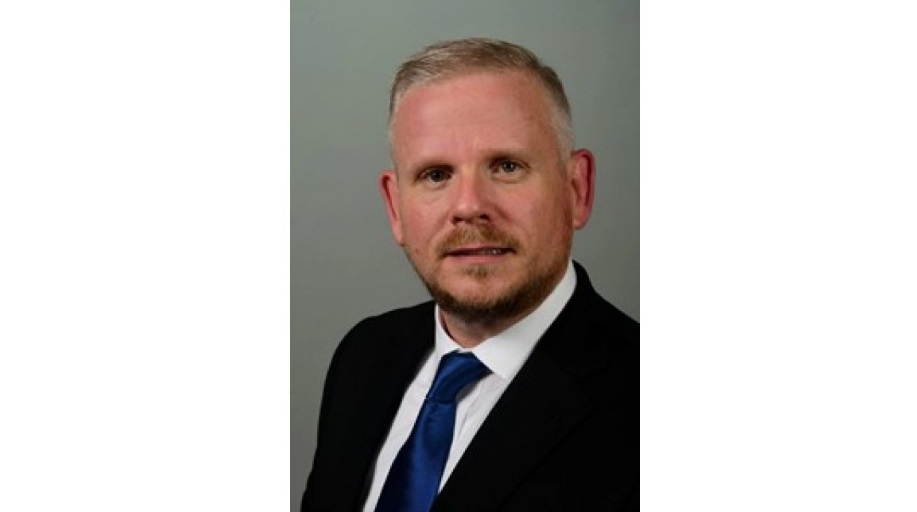
[Photo above: Survivor Charles Nadeau. Photo provided by Charles Nadeau. The original article includes an eleven-minute audio recording of the interview. BishopAccountability.org’s transcription of the interview appears below. See also Charles Nadeau’s letter to the Watertown Daily Times, November 29, 2025; and Survivors describe abuse by priests during Diocese of Ogdensburg’s bankruptcy proceedings, by Alex Gault, Watertown Daily Times, December 1, 2025.]
48-year-old Charles Nadeau was 6 years old when he says he first experienced abuse at the Trinity Catholic School in Massena, New York, in the late 1980s.
He was one of the alleged abuse survivors who had the opportunity this week to share victim impact statements in U.S. Bankruptcy Court in Albany as part of a case involving the Roman Catholic Diocese of Ogdensburg, in New York’s North Country.
The proceeding was similar to one in September involving the Albany Diocese, as the Ogdensburg Catholic church was the second of three diocese in New York state to declare bankruptcy – the Albany and Buffalo dioceses have also filed.
I spoke with Nadeau, who is chair of the Survivors’ Committee – a court-appointed group of survivors that represents the 138 people who have filed lawsuits against the Ogdensburg Diocese.
A warning, this interview contains descriptions of sexual abuse.
[In this complete transcript of the posted interview with Charles Nadeau, ellipsis points … indicate that the speaker has paused, not that anything is missing from the transcript. We have eliminated repetitions of the phrase “you know” and the interjection “right?”]
Nadeau: So, on December 1st, survivors across the North Country, both men and women, abused by clergy some decades ago… so we were able to stand in a federal courtroom and speak publicly during the session, which is the first time a lot of these folks, or even myself, have spoken the truth about what happened. And these survivor impact statements, they’ll allow… from a bankruptcy standpoint, when the diocese files bankruptcy, it kind of takes the person out of the case, and it goes to dollars and cents, it goes to assets and money, rather than focusing on the person, and what actually happened. This was a chance for the committee and the survivors to be able to tell some truth of what happened to the judge, to the bishop, and to whoever was in attendance.
And, you just got to understand that, it was very… sorry, I’m kind of stuttering here… it’s not just about the money, we want… what happened to all those children was a moral injustice and crime, and this was a part of the healing. Survivors want lasting institutional reform, other than just cash. And we want to be able to see… we don’t want this to happen to anybody else again.
So, we want the diocese to be more proactive, to prevent these things from happening again. I mean, there was people who were standing before the judge, that… they’re seventy years old, so… and this is the first time they’re telling their truth. So, it was… you can just imagine how it has impacted their life for so long.
Taylor: And so you’re a survivor yourself. Could you, if you’re willing to, talk a little bit about your experience and your story?
Nadeau: Sure. Yes, I am a survivor, and it took a long time for myself to even come to grips with what happened. I was… fourth, fifth, sixth grade in a Catholic school. I came from a family that was… divorced family, split up a bit, and my family felt that it would be a good thing for me to become an altar boy. It might help with becoming a better Christian and a better man, or a better Catholic. And that’s kind of where it led to. And it, really my abuse started with… my abuse was pretty severe, I feel. It wasn’t just… It was penetration, it was rape, it was violating my body, and my mind and soul, really. And it’s something that has stuck with me for years.
And it wasn’t until, gosh, when the Child Victim Act, I think it was, that was released from New York, was when my father asked me, he goes, “Charlie,” he goes, “that’s never happened to you, right?” And I wasn’t able to answer him. So that to me was a point in my life where I said I need to do something about this and make myself better, ’cause I was very guarded, I didn’t trust anybody. The abuse has given me PTSD from a standpoint of… yeah, I can still taste and smell and feel my aggressor, my… the person that abused me. And to this day I can’t get those feelings and thoughts out of my body…
Which unfortunately has impacted my family as well. I’m very standoffish with my wife: intimacy is a problem. My daughter is very guarded. There’s times where… when she was growing up that I wouldn’t allow her to do sleepovers or be over at a friend’s house, because I didn’t trust the parents. So, it has kind of impacted my life from beginning to end.
So, really, this impact session, it allowed me, just going through the motions of writing my impact statement was healing in itself. And to be able to tell it in front of a judge and the bishop, because I had a… I mean, the bishop needs to hear this, hear these things. What happened to me and how it can’t happen again. And how it has impacted my faith, and my trust, really.
Taylor: And so you had the opportunity to tell your story in court. What was it like to hear other survivors’ stories?
Nadeau: It was chilling. It was chilling. But one thing I noticed is that the story kind of had the same elements in it. Trust was not there. Everybody had the same type of PTSD situations. You couldn’t… you’re raised to respect the collar, or respect nuns, respect clergy… blindly. And that message was almost through every single statement. And these statements weren’t written together, you know what I mean? These statements were all done in different ways and nothing was collaborative about it. So, it was kind of weird to hear that everybody has the same type issues from this. From a PTSD standpoint or from an impact standpoint, it was… It’s scary that the Catholic church can hide behind bankruptcy for these type of crimes, in my mind.
Taylor: So, you grew up Catholic; you went to Catholic school. What was your relationship with Catholicism and God before your abuse, and did the abuse have an impact on that relationship afterwards?
Nadeau: Sure, yes, absolutely. I grew up in a very religious family. We went to church all the time. I mean, every Sunday, my grandfather – I spent a lot of time with him – went to church daily, and it was a cornerstone of my life. Going to Catholic school, it was very… part of my day-to-day. It was, it was… I grew up with it. And after… even during the abuse, I didn’t see the abuse as… I saw the abuse as me doing something wrong, and being punished for it.
And once I was able to…at one point, I left my family, my father’s home, and went to live with my mother in another city, up in Syracuse, and that’s where I stopped going to church. Not really linking it to the abuse at that time, but I stopped. It didn’t get to… probably to my thirties, where it was absolutely, I can’t do this, I can’t trust anybody in a collar. I can’t trust any type of organized religion. My faith was shot. And that’s with any organized religion right now.
’Cause I feel that the organized religion is institutional control, and when you have the wrong people that are in the power, or has the power, the pastors, they can abuse that, and when they abuse that, they have the ultimate control, especially with a child.
But my experience right now is, I don’t trust the religious institution, and I feel that, growing up, I blindly followed, and I feel that that’s what Catholicism wants. They want you to blindly follow, and follow the religious teachings and norms. And that’s something I’m not willing to do anymore because it made me be a… it kind of drove my silence for all these years.
Taylor: Okay, thank you, Charles.
Nadeau: Thank you.