
TOLEDO (OH)
WTOL11 [Toledo, OH]
March 20, 2026
By Brian Dugger and Melissa Andrews
46 years after a nun was killed inside Mercy Hospital’s chapel, the case still shapes Toledo’s reckoning with its past.
On a cool, sunny February morning, Claudia Vercellotti and Lee Pahl walk side by side down North St. Clair Street, past the brick walls of Fifth Third Field, home of the Toledo Mud Hens. They stop at a street sign.
It reads: Msgr Jerome Schmit Way.
For Vercellotti, the founder of Ohio’s Survivors Network of those Abused by Priests, the sign is a provocation. For Lee Pahl, whose aunt was murdered more than four decades ago, it is something closer to a wound that never closes. Monsignor Jerome Schmit, revered by many for his decades of service to the Toledo Diocese and his prominent role with the Catholic Youth Organization, is remembered very differently by those who know what happened in a hospital sacristy in 1980.
“Toledo has the horrible distinction of having the first Roman Catholic priest convicted of killing a nun, and then they honor the person who helped obstruct the entire murder investigation and helped delay justice for over 24 years,” Vercellotti says. “And they want to honor that person on the anniversary of her death? It doesn’t get much worse than that.”
The sign outside Fifth Third Field was dedicated on April 5, 2002, exactly 22 years to the day that Sister Margaret Ann Pahl was stabbed 31 times in the sacristy of Mercy Hospital. Her murder went unsolved for nearly a quarter century, and Vercellotti and Pahl believe that is due in no small part to the actions of church leaders, including Schmit.
“They chose image and self-protection over morality and accountability,” Pahl says.
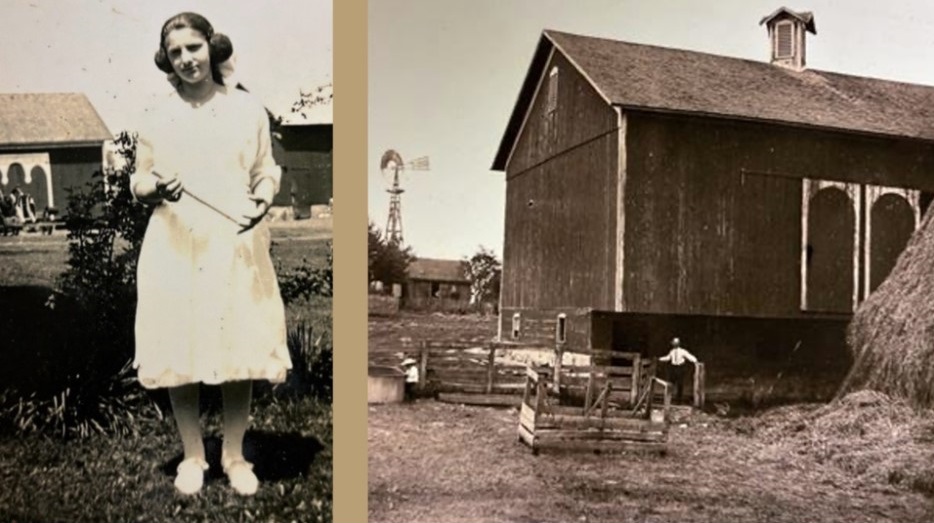
Her Name was Sister Margaret Ann
Margaret Pahl was born on April 9, 1908, in Edgerton, Ohio, and grew up nearby on a 200-acre farm just north of town. Lee Pahl still keeps photo albums of her, and on a winter afternoon in his kitchen, he pulls them out carefully, like they might tear.
“She was a very kind, gentle, caring person,” he says. “She was meticulous, very organized. She just loved people. She always wanted to help people.”
On Sept. 24, 1927, she took her vows, beginning nearly 53 years of service to the church.
Sister Margaret Ann earned her nursing degree from Lima’s St. Rita’s Medical Center and spent years serving Ohio and Michigan hospitals, many as a nursing supervisor and administrator.
By the early 1970s she had shifted from medical care to pastoral care, eventually becoming the head sacristan at Mercy Hospital’s chapel on Jefferson Street. She was the person responsible for preparing the space for Mass, maintaining its sacred objects and keeping its routines.
It was, in every sense, her domain.
And it was where she was killed.
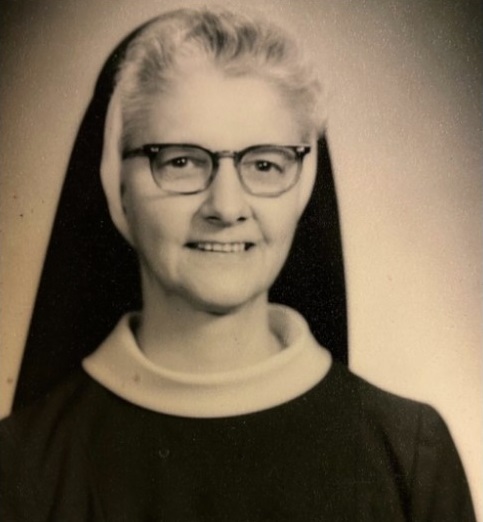
On April 5, 1980, her alarm clock sounded at 5 a.m. Multiple witnesses saw her in the dining room at 6:15. She left with a breakfast tray, then returned minutes later for grapefruit and cereal. Around 7 a.m., a witness reported the sound of arguing near the chapel, followed by someone running upstairs.
A little more than an hour later, Sister Madelyn Marie Gordon walked into the sacristy and found Sister Margaret Ann on the floor, her clothing disturbed. She ran into the hall, screaming.
An autopsy determined she had likely been choked unconscious, then stabbed 31 times. She died on Holy Saturday. It was one day before Easter and one day before her 72nd birthday.
Days later, her family gathered to bury her. Father Gerald Robinson presided over the service at the St. Bernardine chapel in Fremont. In his homily, he told the mourners that he had been “sitting directly over the place where Sister Margaret Ann’s life violently and tragically ended.”
During the service, an unexpected storm erupts. The windows rattle. The back doors blow open. Family members look at one another.
One says what others were already thinking: the priest did it.
A Search for a Killer
Lead detective Art Marx and his team arrived at a scene that told them a great deal. The sacristy was not accessible to most hospital staff at that hour. Nothing had been stolen. There was no evidence of sexual assault, despite the state of Sister Margaret Ann’s clothing. The sheer brutality of 31 stab wounds pointed toward what investigators call a rage killing, typically committed by someone who knew the victim.
The circle of suspicion drew tight quickly, settling on the hospital’s two chaplains: Father Jerome Swiatecki and Father Gerald Robinson.
A hospital employee named Shirley Lucas told police that Sister Margaret Ann had been visibly distressed on Good Friday, the day before her death, because a service had been cut short. She was crying, Lucas said, and asked: “Why did they cheat God out of what was his?”
On April 14, a witness named Wardell Langston told Detective Marx that on the morning of the murder, he had heard rapid footsteps on the second-floor balcony. They were footsteps that seemed to end near Father Robinson’s living quarters.
On April 18, Robinson was brought in for questioning. He told detectives that someone had confessed to him about the murder. It was a lie, which he eventually admitted. He also gave inconsistent accounts of his whereabouts during the time of the killing. That same night, investigators searched his desk drawer and found a saber-shaped letter opener, narrow, pointed and more than three inches long, consistent with the weapon that delivered the fatal wounds.
Police also discovered that Robinson had been prescribed a tranquilizer on the day of Sister Margaret Ann’s killing.
The next day, Robinson was brought back to the safety building. Detective William Kina was an hour into the interview. Investigators believed they might be close to a confession.
Then came a knock at the door.
When the door to the interview room opened, three men walked in: Deputy Police Chief Ray Vetter, diocesan attorney Henry Herschel, and Monsignor Jerome Schmit. Kina was told to leave, an order he later testified had made him “livid.”
“They thought they potentially had him ready to confess,” Pahl says. “Then there’s a knock on the door, and the detectives are made to leave the room.”
“It just seems unheard of,” Vercellotti says. “After some time had elapsed, the door opens and Father Robinson is free to go.”
For nearly 24 years, the case went cold.
A Fresh Set of Eyes
On June 11, 2003, a woman told of decades of abuse by a group of priests to the Toledo Diocese review board.
She told the group her abuse began as a small child and continued into her teenage years. She repeated her claims in a letter obtained by 11 Investigates. Besides the sexual abuse, the most disturbing aspects of the story involved allegations of satanic rituals.
“At the age of 5, a ceremony was performed at Calvary Cemetery. I was put into a coffin-like pine box and cockroaches were released into the box. I was in the box for several minutes and thought I was going crazy. They told me the bugs marked me for Satan.”
But there were other claims of being forced to have sadomasochistic sex with different priests, with one of the most vicious being Father Gerald Robinson.
The letter catches the attention of Julia Bates’ cold case team, including Steve Forrester and Tom Ross. They remember that Father Robinson was the main suspect in the killing of Sister Margaret Ann Pahl.
After being elected as prosecutor, Bates formed the cold case team in the late 1990s.
It’s a group that solved the Cook Brothers serial killings — murders that also began in 1980.
“Then we said how many other cold cases could we do? How many other cases are there that we now could look at with new eyes, not only DNA, but maybe other technology that we didn’t have?” Bates says. “It was amazing. I mean, it truly was. It took off and we solved so many cases and brought closure for so many people. I get the chills talking about it.”
The alleged abuse victim’s letter eventually piqued the interest of Ross and Forrester.
“The accusations in the letter were pretty extreme and some of them hard to accept as being true, but his name just stuck out,” says Judge Dean Mandros, who was a prosecutor on that cold case team in 2004.
The letter’s allegations are extreme, but prosecutors and investigators keep coming back to the same fact: In 1980, Father Robinson wasn’t one suspect among many. He was the suspect.
In interviews with detectives, the letter writer described ritual elements. She told them to look for an upside-down cross.
The guidance resonated with Terry Cousino, the visual whiz on the cold case team.
“They have the altar cloth that was laid over Sister, and Terry Cousino looks at the altar cloth. And what does he see in the altar cloth but the upside-down cross that was mentioned,” Bates said.
Later at trial, Cousino said the pattern on the cloth and Sister Margaret Ann’s chest was so precise that he believed the killer must have used a template.
Besides the altar cloth, detectives also had a key piece of potential evidence from 1980: the saber-like letter opener taken from a desk in Father Robinson’s living quarters. Testing of it showed that it was presumptively positive for blood, meaning it likely had blood on it before being cleaned off. The kite-like shape matched the cuts in the altar cloth.
Robinson conceded to police that no one else had access to his desk.
In late April 2004, Ross confronts Father Robinson.
“You had to have killed Sister with this knife,” Ross says, then admonishes him for not taking the interview seriously.
Robinson denies the characterization of his demeanor and denies being at the scene of the crime.
“Father, how do we explain this knife, causing those puncture wounds and leaving those transfer marks on that altar cloth. She is stabbed through that altar cloth, with a perfect crucifix on the chest upside down, the long part of this under her chin and the short part of the cross toward the middle of her abdomen. What’s that all about?” Ross asks.
Robinson replies, “I don’t know.”
A Shocking Event for the Community
In the newsroom of The Toledo Blade, police reporter Christina Hall is tipped off to the impending arrest of Father Robinson. She asks religion editor David Yonke what he knows about the priest.
“I just barely knew him. I mean, I knew his name,” Yonke says. “I said, ‘Why do you ask?’ And she goes, ‘Well, I think he’s about to be arrested.’ I said, ‘Arrested? For what?’ And she goes, ‘Murder.’ I almost fell out of my chair.”
While on vacation, a 25-year-old Lee Pahl checks in with his mother, who tells him that police believe they have his aunt’s killer.
“We never knew that Father Gerald Robinson was a suspect in my aunt’s murder until he was arrested in 2004,” Pahl says. “We never knew it.”
After spending the day on the golf course, attorney John Thebes gets an unexpected call from a priest. He is asked to meet with Robinson’s family.
“I think he’d been arrested on a Friday. They came over on a Saturday right here at the kitchen table and asked me to take the case,” Thebes says.
He later meets Robinson in the jail.
“He was a very confused man who didn’t have a friend in the world at the jail.”
An hour after returning home, the unlisted phone number for Thebes began ringing nonstop.
“All the big outlets – NBC, CBS, ABC, the Today Show – they’re all calling my unlisted number, that’s when I realized the breadth of this case.”
Weeks later, Bates – with the permission of the family – gives the go-ahead to exhume the body of Sister Margaret Ann after being advised it’s the only way to match the letter opener to the wounds.
“The holes in the altar cloth were made by something that had the same tip as the letter opener, but wouldn’t it be better to have her body? If we could do that, we should do that. This is what our experts were saying. They were the experts so, of course, if we can do that, we should do that and so we did that.”
What happened next was decisive in the case against Father Robinson, but it was also a major point of contention from the defense team.
“We did a secondary autopsy, and that was when Dr. (Diane) Scala-Barnett, the coroner at the time, excised a portion of her mandible and discovered a defect that ultimately was a perfect fit for the tip of the letter opener,” Mandros says. “It fit like a lock and a key. Key in the lock.”
But to the defense, it was problematic that a potential weapon was inserted into decades-old remains.
“What they did, they contaminated their own evidence. They put that thing in there to the point where they put it in and created their own evidence,” Thebes says. “You put your finger in some dough. What’s going to happen? Well, that shape is going to look like your finger. It’s kind of the same thing. They put that letter opener into the mandible, which was not in very good shape, and created their own evidence.”
With the new evidence in hand, the prosecutor’s office turns its attention toward convicting the first Catholic priest accused of killing a Catholic nun.
“If a jury doesn’t buy it, they don’t buy it, but we have to try, and we should,” Bates says. “It’s the right thing to do, and I think we all agreed that it was.”
On the other side, Thebes sets about building a team to defend a man he knows little about, a man the government had been investigating for 24 years.
“The government has had 24 years, at least in this case, to consider the evidence, to test the evidence. You know, we’re running a race where the government is halfway finished by the time we even get the discovery.”
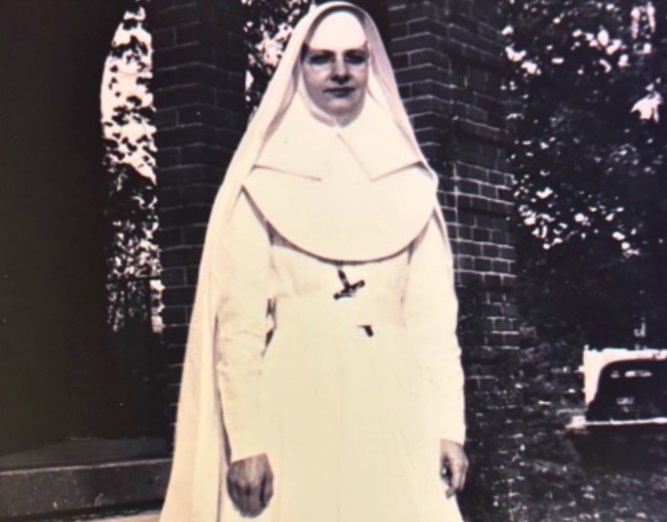
An Unprecedented Event
In late April 2006, Toledo becomes the center of a case unheard of in American history.
“I researched it as much as I could and it had not happened in the United States. I think there was one in Italy, but it was the only case in the U.S. history of a priest arrested and charged with the killing of a nun,” says Yonke, who wrote extensively about the case not only for The Blade but also for a book, titled “Sin, Shame & Secrets: A True Story of the Murder of a Nun, the Conviction of a Priest, and the Cover-up in the Catholic Church.”
For Bates and her team, the legal rarity meant they had to deal with an influx of TV trucks and reporters from around the world.
“It was a circus. When they talk about a circus, there were tents all over the lawn, plus the trucks and Court TV and all of these people,” she says.
The publicity made it difficult to find an impartial jury that wasn’t aware of the case, but also jury members who didn’t have a strong opinion about the Catholic Church.
There had been a dramatic societal shift in the way the church was viewed in 1980 versus how it was viewed in 2006.
“If Gerald Robinson had been a janitor in 1980, he most likely would have been charged, tried, and convicted in 1980. On the other hand, if he had been indicted and was a priest in 1980, it’s probably unlikely you’d get 12 jurors that would have voted guilty, but people’s mindsets and views on the church and religious figures and priests in particular changed after the turn of the millennium,” Mandros says.
The shift was largely caused by a series of stories in early 2002 by the Boston Globe’s Spotlight investigative team, which uncovered widespread abuse among priests in the Archdiocese of Boston. The series focused on Father John Geoghan, who was being transferred from parish to parish over the course of several decades, despite evidence that he was sexually abusing children. Ultimately, the series caused ripples across the country, emboldening survivors to step forward, including in Toledo.
“In 1980, the priests were put on a pedestal and people didn’t believe they could do anything wrong. In fact, a victim told me that he went and told his mom that he had been abused by a priest, and the mom slapped him and said, ‘Don’t you ever talk about father like that,’” Yonke says. “But by 2004, with all the news about the Catholic Church and all the cases of abuse and cover-up, the whole climate had changed.”
Before a single witness testified, both sides faced the same obstacle of finding twelve people who could be fair.
“We certainly had a number of jurors who said they could never convict a priest. I remember one saying, a priest sits on the right hand of God. Another one said he’s the Lord’s messenger here on earth, and another one said, I could never believe a priest was capable of this,” Mandros says.
On the other side, the defense was cognizant of anger against the church.
“That was even a concern of why they even arrested him in the first place. You know, did the government feel that now the time is right because of the scandal to go and arrest him?” Thebes says.
Once the jury is seated, both sides had to decide on a strategy to convince jurors. For the state, there was evidence suggesting the killing was possibly satanic-related, but ultimately, Bates and Mandros decided that narrative would distract jurors from the basic theory: a man got angry at a woman and killed her.
“We’re Toledo, they’re not going to buy this,” Bates says of the satanic angle. “This is just way too crazy. You know, maybe there was satanic stuff going on, but let’s not go there.”
The defense team of Thebes, now-Judge Nicole Khoury and Alan Konop, batted around strategies during late-night sessions. One possibility was to cast suspicion on alternate suspects. Multiple witnesses told police in 1980 that men of various ethnicities were seen near the chapel. The second chaplain, Father Jerome Swiatecki, was a much larger man than Father Robinson. The coroner in 1980 said Sister Margaret Ann was choked by a man with large hands.
In addition, there were dozens of pages reviewed by 11 Investigates in the Toledo Police file that examined the possibility of serial killer Coral Watts being involved.
What made him interesting to police was that he killed more than a dozen women in the Michigan and Texas areas in the late 1970s and early 1980s. He often strangled, then stabbed his victims but would not sexually assault them. But there was never any connection to Toledo and Watts himself, who was not hesitant about admitting to his killings, told police he had never been in Toledo.
Ultimately, the defense focused on creating doubt about the state’s theory, specifically that Sister Margaret Ann was killed by a letter opener. In addition, they wanted to raise questions about unknown male DNA found under the nun’s fingernails.
“Now think about this, we have a nun. She lives at the hospital with other nuns. She gets up in the morning and goes to breakfast at a cafeteria at the hospital,” Thebes says. “She sits by herself and goes to the chapel. There is no interaction with a male whatsoever and we have male DNA underneath their fingernails.”
That DNA couldn’t identify another suspect, but it did rule out Father Robinson as the contributor of the DNA.
“This isn’t an average person who’s going out to the club or going out where she’s around a bunch of people and might run into them and get somebody’s DNA under her fingernails,” Khoury says. “I mean, she’s a nun and she lives her life in Mercy Hospital. How are you going to explain that away? So that was that was what we focused on.”
But during our recent interview with Mandros, he dismisses any concerns about the DNA, blaming how little investigators knew about DNA and evidence collection protocol in 1980.
“There were dozens of people that went into that sacristy. There were doctors. There were nurses. There were EKG techs. There were police officers. There were detectives. There were the people that took the body out, and none of these people were gloved,” Mandros says. “And even at the start of using DNA, we didn’t understand about trace DNA. We didn’t understand how the human body sheds skin cells like snowflakes.”
The defense also challenged the murder weapon. Prosecutors firmly believed the weapon was Father Robinson’s distinctive letter opener. But early in the investigation, it was discovered that Sister Margaret Ann’s scissors were missing.
“We had an expert who said that it was very possible that it was a pair of scissors. The one thing that was missing from the scene was Sister Margaret’s scissors that she used to cut the wicks for services. That was something that was missing,” Khoury says, “and that was an ‘a-ha’ moment that John Thebes had one late night.”
While talking on the phone to his mom, he dropped a blood transfer report prepared by an expert.
“The report fell from my lap onto the floor, and I looked at that picture differently when it was on the floor than I did when it was either at my desk or on my lap,” Thebes says. “It’s kind of like how you see things in a cloud that maybe you didn’t originally. And when it fell on the floor, but I saw a pair of scissors. I saw a unique long blade.”
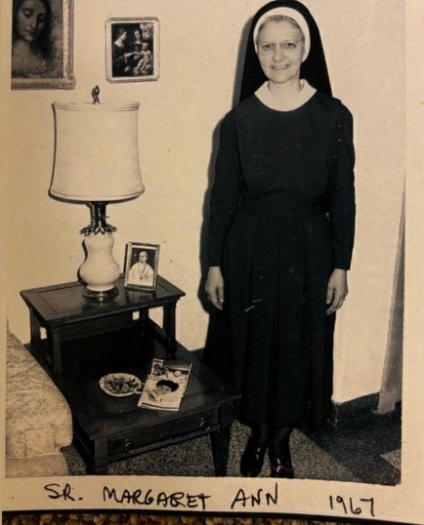
But those theories could not overcome the findings of the 2004 exhumation of Sister Margaret Ann.
For jurors, that visual evidence carried weight, notably a picture of the letter opener fitting into a wound in the nun’s jaw. Two jurors later told 11 Investigates the letter opener was central to their decision. One shared his notes, which made it clear that jurors were convinced that the letter opener was the weapon. The notes also said that many jurors had made their decision within minutes of deliberations.
Ultimately, they took six hours over two days to decide that Father Robinson killed Sister Margaret Ann.
Both sides met with the media after the grueling trial.
“All the media was assembled and we made statements and took their questions and the prosecutors went next,” Thebes says. “And after that, we went to the jail to see him and talk to him about the next steps and what had happened. I told him I was sorry.”
After being in the prosecutorial bubble for weeks, Dean Mandros was at home about a week later, flipping through the various global headlines about the trial.
“And my eldest daughter walks by my computer screen and sees what I’m doing, and she turned and looked at me and said, ‘Dad, the trial is over.’ So, I moved on to the next case.”
Most people believe the trial answered who. But for some, it never answered why.
“Whoever is responsible, whether it’s Father Robinson or whether it’s not, I would love to know the truth,” Khoury says. “Everybody always asks, is there one day in history you’d go back to? It’s not the birth of Christ. It’s not the day JFK got shot. It’s April 5, 1980. I want to know what happened that day exactly.”
Closing the Book
After his 2006 conviction, Father Robinson filed multiple appeals, mostly centered on missing police reports that surfaced after the trial. The reports included multiple reports of a sighting of a suspicious black man near the chapel on the morning of April 5, 1980.
Cold case detectives were forced to deal with a series of reports that had disappeared or were misplaced. Detective Steve Forrester testified at a post-conviction hearing that he would have explored the mysterious stranger angle had he been aware of those reports. Though appellate attorneys honed in on the possibility of Coral Watts being the killer, Forrester said he knew of those reports and had ruled Watts out, mainly because the serial killer stalked much younger victims before killing them.
Appellate attorney Rich Kerger is convinced of Father Robinson’s innocence, but he could never get a court to agree before Robinson’s death on July 4, 2014.
In late summer of 2014, Kerger visited Robinson in the hospice wing of Franklin Medical Center.
“He was resigned. He had his Catholic beliefs firmly in his hand as he’s passing on. He’s ready to get to the good side. He wasn’t resentful,” Kerger says. “He felt, I think, that having been down in the hospice section, it was good that he had a chance to talk to some of the other dying prisoners.”
When he was buried days later, he received a full funeral Mass. His title has never been stripped away.
“I’m not Roman Catholic and they want to give him a full priestly sendoff, so be it, but it just seems like another indignation and slap at this poor woman,” Mandros says.
The woman’s name is Sister Margaret Ann. Lee Pahl hopes no one ever forgets and hopes that one day, city and Mud Hens officials will recognize the involvement of Monsignor Schmit in the case, but also his aunt’s service to the church.
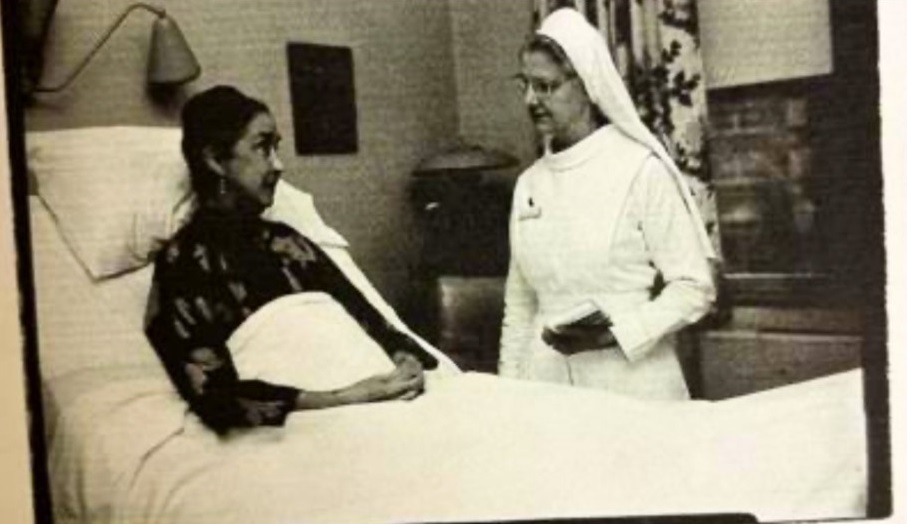
“She was a registered nurse. She taught and was a science teacher. She had many supervisory positions in different hospitals over the years. She was the administrator of Mercy Hospital in Tiffin. She was the administrator of Saint Charles Hospital in Toledo,” Pahl says.
And in 1971, she assumed her final position, overseeing the chapel and sacristy at Mercy Hospital in Toledo.
“Sister Margaret Ann Pahl devoted her life to Christ. That’s the vow that she took. That’s all she did,” Vercellotti says. “She gave her life to Jesus and, and was murdered in, in a very violent, graphic horrific way.”