
NEW ORLEANS (LA)
The Guardian [London, England]
March 1, 2026
By Jason Berry
A reporter ponders on how to repair a religious structure long thought of as good but supported by an evil underside
In 1965, just shy of my junior year at the Jesuit high school of New Orleans, with good potential as an offensive end, I had an epiphany in the muddy slog of August football practice: Why are you doing something you don’t like?
Soon after, I quit, and was trailed by guilt for a dereliction of duty. Jesuit vaunted student achievements of all kinds. I played on the golf team and did some pieces for the school paper. Jesuit fostered a fraternal culture, molding friendships I carry to this day.
For a writer, the Jesuits’ stress on Socratic thinking was a gift. Question seeks answer, answer sparks new questions, yielding synthesis as the wheel of learning turns. Picture cerebral basketball coach Kevin Trower, a layperson teaching Latin, pacing the floor with furrowed brow, book in hand on Caesar’s Gallic wars. “Alea iacta est. The die is cast! What does this tell us? Think, boys! Think!”
The priests encouraged us to be “men for others”, with responsibility to those on the margins, emulating Jesus. Francis, the first Jesuit pope, emphasized embracing dignity of the dispossessed, clashing with a creed of wealth as virtue. I had no idea how “men for others” would color my spiritual odyssey, nor how that ethos bears on the surfacing world of abuse survivors.
In 1966, on certain nights, I sat in a school parlor with my religion teacher, troubled by a loving father who, after work, downed a few stiff ones, watched Vietnam war protests on TV, then drifted off to bed. I was ashamed to tell Father Pat Koch how Dad was there-but-not-there. I brooded over quitting football.
“Think of yourself in five years, Jason,” he said. “What difference will football make?”
Koch (pronounced Coke) entreated me to pray for a closeness with Jesus. He blessed me when we finished. I left feeling clean, a burden lifted. A few years later, Dad got sober, bounced back as a benevolent paterfamilias. By then, Koch had gone to the Jesuit College Preparatory School of Dallas.
Today, I wince on reading about Koch in a 2021 deposition of Father Philip Postell, the Dallas Jesuit Prep president from 1992 to 2011. Nine men alleged they were sexually abused as teenagers, with the cases involving five priests in the 70s and 80s. Four men accused Koch, who died in 2006 at 78. His Legacy obituary is full of praise from people with memories like mine.
Postell, 10 years younger than Koch, testified they were not close. I recall Postell, who taught at my high school: a not-yet-ordained scholastic, easy-going with a wry sense of humor. Postell in testimony was 83, questioned by Brent Walker, an adroit attorney among several lawyers suing Dallas’s Catholic diocese, Jesuit Prep and the Jesuits’ regional province, or chapter, among others.
Walker reads from a 1965 letter by an official at the Corpus Christi Minor Seminary: teenage students complained of Koch, recently ordained, coming on to them. “If you had heard,” Walker asks Postell, who had no role in that conflict, “that a priest got a boy drunk, took off his clothes and got in bed with him, and kissing him, that would have been an automatic dismissal, correct?”
Postell replies: “It would have been a red flag. I would have talked to the offending priest immediately, reported that to the provincial for further action.”
“The problem with Father Koch is an old one,” a seminary priest wrote the Jesuit provincial, or regional leader, in 1965. “Every year I have had to speak with Father Koch about demonstrations of affection … His response was that he resented people spying on him.”
The seminary rector worried about “a very bad source of public relations” if boys quit and told people about Koch.
Why, Walker asks, wasn’t Koch expelled from the order?
Postell said that on such a report today, “We would act pell-mell to dismiss … the priest or at least get him out of that particular venue. In those days, we were a little more cautious in moving a guy for many reasons. Abusing a kid sexually was very rare. We didn’t have a vocabulary for it. But knowing what I know now, no one would get that far in the pipeline.”
On 12 January 1966, Koch arrived at the Jesuit high school in New Orleans, with all that tortured correspondence to surface half a century later. I sat across from the young priest exiled from Texas for abusing seminarians my age. How vulnerable I was! He never made a move on me.
Reading about Koch’s abuses threw me into a strange zone between appreciating his influence on me and revulsion at what he did to those others.
For senior retreat, Koch asked me to share a room with one of seven “Negroes” (the word used then) in our class of 160. Jesuit was among New Orleans’ first white schools to integrate; still, one heard sotto voce racism by some classmates and the N-word at the homes of a few friends. My parents weren’t activists, but they supported integration and forbade any language like that in our house.
Donald Soniat was the son of the local NAACP leader. As we sat on separate beds, he recounted his father’s civil rights activism (events I’d followed like foreign news) – his dad arrested for sitting in the wrong part of a city hall cafeteria. My dad was vice-president of an unrelated cafeteria chain. Donald opened my eyes to Black struggle.
A few years later, as a Georgetown undergraduate, I followed the Washington Post coverage of the south’s racial conflicts, embarrassed about where I was from. A week after graduation in 1971, I went to Mississippi and joined Charles Evers’ long-shot run for governor. Seeing events through a prism of Black people changed me. But if not for Koch and Soniat, where would life have taken me? In 1973, I published a book on the campaign and became a freelance writer.
Declamations in Dallas
The 2018 Pennsylvania grand jury report investigating the state’s Catholic church found 1,000 victims of priests and long-secret documents exposing bishops’ deceitful strategies protecting predators. The report spurred 26 state attorneys general across the US to conduct investigations; Texas was among them. Dioceses began releasing perpetrator lists.
On 31 January 2019, the Dallas diocese issued a list naming Koch, who had not been on the Dallas Jesuits’ list.
The news hit Mike Pedevilla like an electrical charge. An executive with a national healthcare services company, Pedevilla was a 1983 Jesuit Prep graduate from a prominent northern Dallas family. He told me about his freshman year, when Koch began abusing him, and how it continued. With too much pot smoking and getting into fights, he still made it to graduation “because my mother kept meeting with the young assistant principal Mike Earsing, who saw some good in me”.
Pedevilla told no one for decades. Now there was TV coverage of Koch’s name on the list in Dallas, and a list by the diocese of Corpus Christi, Texas.
Pedevilla met with high-profile plaintiff lawyers Charla Aldous and Walker. They knew a lawsuit against Jesuit Prep would be explosive. File as a John Doe, Walker advised. Pedevilla agreed, but from the lawsuit’s description of him, five friends quickly called, in sympathy – but warning that he was in for the fight of his life. He told Walker to make his name public.
After all the years of bottled trauma, Pedevilla sat in a preliminary meeting with his lawyers and the school attorneys. Earsing, now the school president, whom he recalled from many years before, approached him. Pedevilla said: “I don’t want to hurt Jesuit Prep.”
Earsing, he says, replied: “I’m the one who’s sorry. Thank you for doing this,” as the two men embraced, fighting back tears.
Separate from that, David Finn, a former judge, spoke for Koch’s family and friends, aghast and threatening a protest at the Vatican. “Father Koch is revered by many Dallas Jesuit students, myself included,” Finn stated. “His picture used to hang up, until this allegation came out a week ago, at Dallas Jesuit and at St Rita’s Church where he was a priest for years … The family’s position is that, by erring on the side of caution you might have some collateral damage here. Maybe the bishop made – and I’m not saying it was intentional – but maybe he made a mistake in including Father Koch on the list.”
After meeting with Koch’s family and Finn, then bishop Edward Burns stated that the process to compile a list of priests “credibly accused” of child sexual abuse “began with an outside group of former state and federal law enforcement officers who went through all of our priest files and identified those which contained allegations of the sexual abuse of minors”. The diocesan review board with professional lay experts made final recommendations for disclosure.
Brendan Higgins, a former reporter-anchorman at KTVT, the CBS station in Dallas-Fort Worth, filed suit against Jesuit Prep and the Jesuit province, alleging abuse by Koch. Higgins filed suit under a pseudonym but soon went public, too. Two other plaintiffs sued with pseudonyms, saying Koch had abused them.
“We never wanted to sue the school,” Higgins said. “We were not angry with Jesuit Prep because of what one pervert did to us. But we didn’t want the Vatican to clear him.” The Vatican appeal fizzled. Two more men filed cases as Koch victims.
As news of the lawsuits spread, Pedevilla attended a funeral where one of the school’s biggest benefactors pulled him aside, saying: “Mike, my wife and I are behind you 100%.” The donor told him to call Lee Taft, a lawyer who had left a lucrative Texas practice to earn a master’s of divinity at Harvard, and now, back in Dallas, specialized in conflict resolutions.
“We wanted to spare the school as much of the loss as possible,” Pedevilla told me, “and force accountability directly on the Jesuits. Lee Taft was absolutely pivotal; he was the architect of this reconciliation model.”
Taft declined an interview request for this article.
As negotiating sessions quickened after the Covid-19 shutdown, Pedevilla sensed a breakthrough with the arrival of a new Jesuit provincial, Father Thomas Greene, a product of Jesuit New Orleans, and an attorney before entering the Society of Jesus. Greene, said Pedevilla, was “apologetic, open-armed, ashamed of what he said his fellow Jesuits did”.
Greene asked if the survivors would agree to interviews with a Houston investigator for the Jesuits. They agreed.
Higgins also came from North Dallas’ affluent Catholic society; he was adopted. His father was a corporate lawyer, his mother a local anti-abortion leader. “On paper, it looked like I won the lottery. But my dad was a violent binge drinker, the victim of an Irish Catholic upbringing in the north-east, that cycle where his dad beat him and he beat the shit out of my brother and me, maybe not as bad. My mom took me to protests at abortion clinics. I had a detached upbringing.”
His parents insisted he enroll freshman year, 1983, at the prestigious Jesuit Prep. “My friends were going to other schools. I was sullen, walking around with my shoulders slumped, sad-looking, I’m sure. Koch had been to my house when I was growing up. He was my freshman theology teacher. He told me, ‘I know your dad’s kind of brutal.’ He kept talking to me; in retrospect I think he saw me as a target.”
Things brightened his sophomore year. Higgins was a standout on the tennis team, “one of the best in the country at the time, and I had a girlfriend”.
In the fall of 1984, Koch told Higgins’ mom he was headed to New Orleans for a funeral. Would Brendan like to go and visit the Louisiana World Exposition? Higgins resisted. His mother urged him to see the world’s fair.
“We were staying in a dormitory with some empty rooms at Loyola. Koch told the [nun] when we arrived that we’d stay in the same room. She was stone-cold: Oh, no, he’ll have his own room. I had a creepy feeling. At bedtime, he wanted me to sit on the bed as he lay down, wanting to talk. I said, ‘No.’ I went to bed.
“I woke up with him standing over me, stroking my head and his other hand stroking his penis. I ran out of the room to a bathroom in the guest suite area and sat against the door, looking at a mirror, thinking, ‘You’re by yourself. Nobody’s going to help.’ I sat there for hours.”
The next day, he deflected more advances by Koch, says Higgins, adding: “It was pretty horrific.”
Back home, he told no one. As spring semester ebbed, he defiantly told his parents he would not go back to Jesuit Prep. Junior year he transferred to Hillcrest, a public high school. He went on to University of North Texas, graduating with a degree in broadcast journalism. By the time he was 30, he was an NBC reporter in New York.
After his father died, he moved back to Dallas to help his mother, landing at the CBS affiliate. Today, with two sons who have graduated from college, he is an independent producer. Despite his contempt for Koch, Higgins says he donated to Jesuit Prep in later years, regretting he’d had to leave.
Postell’s pretrial testimony was a turning point. At the end of the long deposition, Postell said of the reassignment history of Koch and four other priests: “I’m embarrassed, I am ashamed. I apologize for the harm it has done, for what the school has done to these young men. I see some of the long-range damage done.”
On 31 March 2022, the Dallas Morning News reported that a settlement reached by the parties “calls for reforms in how the school, the diocese and the religious order handle abuse reports. Details about the financial compensation for victims remain undisclosed.”
Two additional Koch survivors, represented by other attorneys, participated in the negotiated settlement – totaling six men accusing Koch of abuse at Jesuit Prep.
Postell’s name was removed from the school’s stadium, which Pedevilla insisted be part of the agreement.
Higgins, without disclosing specifics, said the Jesuit order paid most of the claims: “Nobody in our group wanted to hurt the school. The school went toe to toe with the province.”
Earsing, the school president, said in a statement: “Rather than turning away from our past, we will memorialize it by creating a special space in our chapel where our community may pray for all people who have been abused by priests or anyone in religious authority.
“We live in a time where we are confronting anew painful facts about our country, our fellow citizens, and our church … In coming forward, these men have exemplified our school’s motto of being ‘men for others.’ For that, I am forever grateful. Because yesterday we were apart, and today we are reunited.”
Greene, the provincial, officiated at a mass of hope and healing for clergy abuse survivors and families, held at Jesuit Prep.
On 19 May 2022, Higgins and another Koch survivor who had left for another school received honorary Jesuit Prep degrees. The night before, Higgins dreamed he was stuck in a meeting with his parents and Koch, coaxing him to stay at the school. As Earsing placed a medal of St Ignatius, founder of the Jesuit order, around his neck, Higgins choked up.
“Some really great people there went out of the way to do the right thing,” Higgins told me. “The Catholic experience was a big problem for me, but culturally, I’m a longtime [church] volunteer. I go to church but it depends – sometimes an Episcopal church, sometimes a Catholic.
“Dogmatically I’ve never bought into the full Christian teaching, but I do like the ethical barometer.”
‘These things must be known’
Of my teachers at the Jesuit high school in New Orleans, Father Frank Coco was special. Balding, animated and jovial, Coco guided us through The Canterbury Tales, reading Old English aloud to show how language evolved.
Coco also played jazz clarinet. During carnival season, he invited us to seek him out with jazz legend Pete Fountain’s Half-Fast Walking Club. Come Mardi Gras morning, Coco – dressed as an American Indian, bedecked with plastic beads, clarinet aloft – ambled along St Charles Avenue with Fountain’s band.
A few of us approached. He put his hand in a sack, saying, “Who-hooo: something for you!” and palmed us doubloons. Then he rejoined the band, wending jubilantly through the crowds.
Jump cut to the summer of 1985. I was getting slammed in the Daily Advertiser of Lafayette, hub city of Cajun country in Louisiana, for my reporting in the weekly Times of Acadiana on the diocese’s cover-up of pedophile priests, which led to similar reporting in communities across the US. An Advertiser editorialist sneered at “vultures of yellow journalism”.
My first child, Simonette, was seven months old and the center of celebratory visits at the home of my mother-in-law in nearby Abbeville. My Cajun extended family was supportive of, if a bit baffled at, my reporting. The blowback had me depressed.
The Times was getting favorable mail, as the publishers, Steve and Cherry May, stood their ground to the daily paper’s attacks. As all of that intensified, I got a letter at the Times from the Jesuit retreat center in an outlying village, Grand Coteau. Coco complimented me on “unity, coherence and emphasis” – the traits for good prose stressed at my high school alma mater.
The next day, I drove out to the center where he led retreats. We walked along a path shaded by ancient oaks. I let it all out, the betrayal I felt at the church, confiding that Lafayette bishop Gerard Frey was an alcoholic, absent for long stretches from the chancery. Coco nodded. “He’s not a bad man,” he said. “But he failed on this, clearly.”
We went inside to a parlor. He kept listening, then said: “Your articles are fair. These things must be known.”
He asked about my spiritual life. I remember fulminating on the violation of innocents, and the larger issue of human suffering versus a loving god. Free will was itself a mystery, he said at one point. We solved no metaphysical problems but after several hours, a soothing calm settled over me. At the end, he blessed me. “Keep praying, son,” he said. “You’re on the right road.”
Coco performed with a jazz quartet in Lafayette. I saw him several times after that. He shared fragments of a memoir he was writing (Blessed Be Jazz, published in 2009). I felt boosted as the reporting continued.
In early 1986, my last major report ran in the Times of Acadiana, pinpointing seven priests who were shuffled from town to town after abusing children. Just before publication, editor Richard Baudouin and I had dinner. Richard graduated from Jesuit a few years after me. Over wine, we stewed on how much we did not know. I suggested he write an editorial calling on Frey and the vicar general, Monsignor Alexandre Larroque, to resign. He nodded and said, “I’ve never written an editorial like that.”
“Richard,” I rejoined, “no one has ever written an editorial like that.”
Publisher Steve May fully supported the editorial. “Who are they to think they’re above the law?” May fumed in his office. “This is outrageous!”
The editorial provoked a call to May from Edmund Reggie, a retired judge in nearby Crowley. Reggie demanded a retraction. May asked Reggie if the article had mistakes. No, said Reggie, but you can’t run an editorial calling on the bishop to step down. Well, said May, the issue is out. Can’t change the editorial.
“Boy,” May said Reggie told him, “you just shit in your mess kit.”
Reggie and a prominent monsignor fomented an advertisers’ boycott that cost the paper – then billing about $1m a year – roughly $20,000. That was the cost of an ad salesperson’s base salary before commissions. Cooler heads later prevailed. The boycott stopped. The paper kept on. And I moved on, tracking cases in other states.
I had not heard from Pat Koch in many years when his letter came, dated 1 August 1991, on the stationery of the Jesuit College Preparatory School of Dallas, to say he had a new assignment. I had just received a contract for Lead Us Not Into Temptation, my book on clergy abuse. It includes Koch and Coco among Jesuits thanked in the acknowledgments.
Koch wrote of a transfer to a Lake Dallas retreat house: “I felt God nudging me in that direction. I will of course miss the young people I have been accustomed to dealing with for most of my life. I have many, many happy memories from my years of teaching at Jesuit of Dallas, Spring Hill College, Corpus Christi Minor Seminary and Jesuit of New Orleans.” He concludes: “I cherish your continuing friendship and love.”
I see now that he left Jesuit Prep not by God’s nudging – but more likely forced out by Jesuit superiors. He had had a seven-year period as principal of the school, a brief one-year term as president, and several secondary positions from which abuse allegations subsequently arose, according to Pedevilla, one of the former students who accuse Koch of sexual abuse.
After the settlement in Dallas with the school and the Jesuit province, survivors called Pedevilla, and he learned that Jesuit Prep had made at least four secret payments predicated on victims’ silence.
How does one assess a disparity so gigantic of Koch’s “happy memories” and his destructive impact on youths that exploded more than a generation later?
Before those revelations, Koch officiated at the wedding of a lawyer who sued the Lafayette diocese on behalf of victims of its priest Gilbert Gauthe, the notorious serial child molester.
Blessed be jazz
Across the years, I have written about the church crisis, intercut with other books and projects on New Orleans. I followed jazz, an art form spawned by Black cultural memory and polyrhythms, as a stream of hope. Sometimes I went for stretches unable to attend mass. I go back for reasons I keep trying to explain.
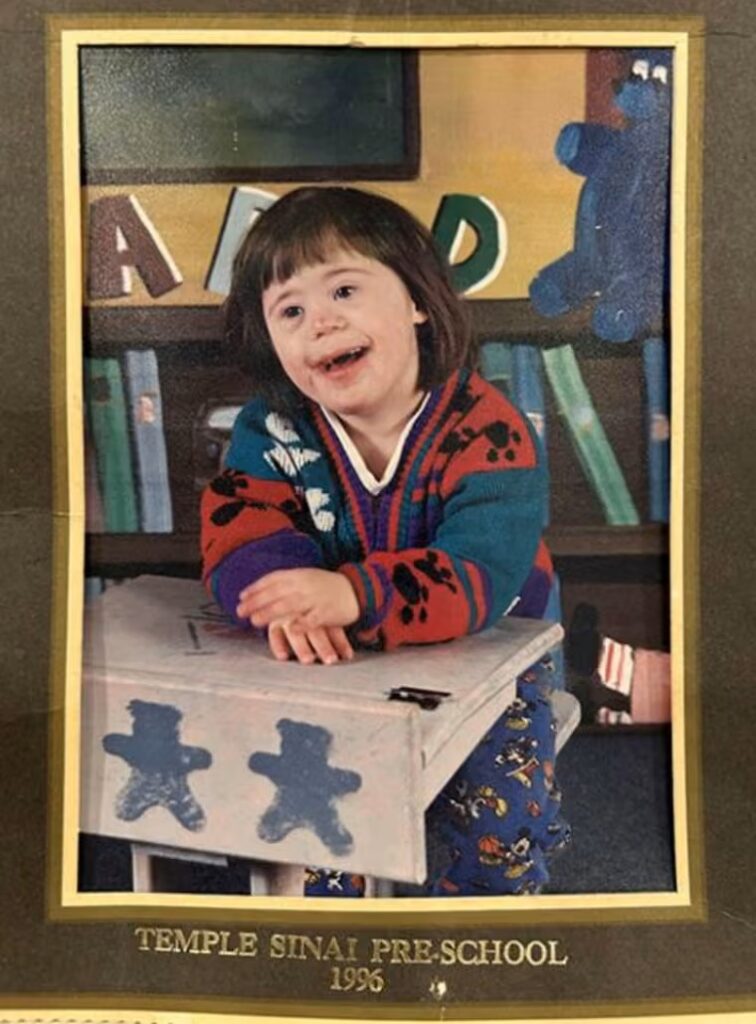
In 1991, my second child arrived: Ariel, a girl with Down’s syndrome. Soon thereafter, an anger attack hit me. I was furious – after so much struggle on the book, a disabled child! And then I centered myself as we faced the task of dealing with Ariel’s limitations.
Her slow-budding discovery of language in ritual word games we shared gave me hope despite the sadness of knowing she would never be robust. At two, she survived open heart surgery. We soon learned her lungs were compromised. As Ariel showed resilience, pressures built on my wife and me. In 1996, we divorced, with a shared custody agreement.
Ariel settled in at St Michael Special School, founded by nuns in New Orleans’ Irish Channel neighborhood; her religion lessons came home. I began a nightly prayer ritual as she lay in bed, call-and-response, saying, “Thank you, Jesus.” And she would run down the litany of her mom, Lisa; her sister, Simonette; Aunt Mimi; grandmothers in both homes; adding pets and Disney cartoon characters. The dawning of her tiny cosmos gave me hope beyond the darkness of my reporting. I kept praying for her to live.
In 2004, after the long waltz of a midlife courtship, I was about to marry again. I had no intention of getting an annulment, answering personal questions about a failed marriage to canon lawyers in a chancery I knew had sheltered pedophiles. My former wife wanted no annulment either. So I was ineligible for a church wedding.
My erudite mother, who had given me books by Thomas Merton, Walker Percy and Dorothy Day in high school, wondered if a priest might bless the union. One priest told me canon law forbade it. I called Coco, whom I hadn’t seen in several years, and gave him the facts. His Socratic approach was consoling.
“Well, I think we must ask, what is the greater good? Is it better for Jason and Melanie to marry before the state, without the church’s spiritual comfort? Or should the church play a role?” he said. “I think we can say yes for the greater good.”
We married in the Audubon Golf Club before 80 people. After the judge pronounced us wedded, Coco stood and said: “The state has spoken. Jason and Melanie are married.” He then read the rite of Christian marriage. We said “I do” again – probably violating canon law – and he blessed us. Then he pulled out the clarinet and played Love Is a Many Splendored Thing to some misty eyes.
‘Sand shifting under your feet’
In 2018, Pope Francis made a dramatic shift on the abuse crisis after a trip to Chile, where people protested the cover-up of a powerful priest in Santiago. The pope soon met with survivors, ordered an investigation of the Chilean hierarchy and accepted resignations from one-third of the country’s bishops, including a prelate he had previously defended. “I was part of the problem,” the pope told the survivors he met with in Rome.
“Those of us journalists who were younger had a particularly hard time,” Colleen Dulle, a Vatican correspondent for America Media, the Jesuit news organization, writes in her book Struck Down, Not Destroyed.
“Now, we were having to confront the evil within the church as employees and representatives of the institution,” Dulle notes. “We all believed that for the church to move forward in any credible way, it first had to confront the whole truth.”
Meanwhile, nonreligious elite east coast private schools like Choate, Deerfield, Phillips and Horace Mann had also paid negotiated settlements to abuse survivors.
Catholic religious orders have a different asset profile than dioceses. A bishop can close parishes, sell churches or liquidate other holdings to cover settlements. Religious order schools often have generous alumni support and property off-limits to a diocese. In New Orleans, a suburban street leading to the Louis Armstrong international airport is called Loyola Drive, much of the land once owned by the Jesuits. But few religious orders have assets to rival the diocese they serve.
The Jesuit high school of New Orleans has a distinguished history of National Merit finalists. Its notable alumni include Mitch Landrieu, the former New Orleans mayor and Joe Biden White House infrastructure czar; Marc Morial, a former mayor and now head of the National Urban League; jazz singer and actor Harry Connick Jr; retired baseball star Will Clark; and novelist John Gregory Brown. The $12,600 tuition is near the lowest of Jesuit schools nationwide. Its full cost per student is $17,454, the balance covered by donations. The school has need-based scholarships.
Jesuit Prep in Dallas charges $26,300. Georgetown Prep in the suburbs of Washington DC has a tuition of $46,065. Alumni donations are pivotal to most Jesuit schools.
Of the more than 40 church bankruptcies, the Jesuits’ Oregon province took federal chapter 11 protection in 2009 and resolved it in 2011 with a $166m settlement to victims from the Pacific north-west and Alaska, where the order sent missionary priests known to be serial sex offenders. The 500 claims “were primarily from Alaska natives and Native Americans who said they were abused as children by priests at the order’s schools in remote Alaskan villages and US Indian reservations”, the Catholic News Service reported.
Starting about 2015, New Orleans’s Jesuit high school settled several cases that centered in part on the late Pete Modica, a school custodian and former minor league baseball player. In the early 1960s, Modica had received a suspended sentence from a suburban court after admitting he had oral sex with two 13-year-olds. Somehow, he got hired at Jesuit in the 1970s and began grooming neighborhood kids he then abused.
Jesuit father Cornelius Carr was accused but not convicted of participating in the abuse against one youth, Richard Windmann, who lived nearby. Windmann received a $450,000 settlement “after the Jesuit order had settled other 1970s-era abuse claims, implicating other employees at the Mid-City campus, such as Donald Dickerson – a teacher who was studying to be a priest – and a religious brother named Claude Ory,” Ramon Antonio Vargas, a 2005 Jesuit grad, reported in 2019.
Dickerson, now deceased, was frequently reassigned, as revealed in the documents from Dallas, where he had victims, too. The Jesuits face a lawsuit against Loyola University New Orleans over allegations that Dickerson years ago raped a freshman, age 17.
The Jesuit high school faces three lawsuits outside the archdiocese’s long-dragging litigation. Settlement attempts collapsed, says attorney Richard Trahant, a 1985 graduate of the school, after a Jesuit high school attorney turned the discussion over an agreement into a harsh cross-examination of his client.
The school has filed motions seeking to dismiss the cases, a strategy Trahant derides “as playing for time”, having already lost key court decisions. “It’s a real Hail Mary pass.”
In response to an interview request for this report, Father Thomas Greene, the Jesuit provincial and former attorney who was central to the Dallas agreement, replied: “We [the province] do not comment on litigation, but I would refer you to the submissions made by our counsel in the cases you mention.”
On 19 May, law firms representing the high school and the Jesuits’ regional province asked the Louisiana state supreme court to review a law which allowed survivors of decades-old sexual abuse to pursue civil court damages.
The court, which upheld that law as constitutional in June 2024, denied the request, sending the Jesuits back into litigation with the survivors.
Meanwhile, a sign of shifting attitudes in Catholic south Louisiana came in June when attorney Kristi Schubert tried a case on behalf of a 68-year-old man abused decades ago by a now-deceased Holy Cross brother. The jury verdict of $2.4m was a warning flare to institutions like Jesuit, and at least three other high schools that also face such claims, according to Trahant.
Trahant’s frequent abuse survivors’ litigation collaborator Soren Gisleson graduated from Jesuit in 1988, three years after Trahant. He also graduated in 1999 from New Orleans’s Loyola law school. The Jesuit cases have made Gisleson revisit the geography of his youth.
A prominent Uptown lawyer’s son, he rode his bicycle as a boy on the Loyola campus and leafy Audubon Park nearby. Years later, as the abuse lawsuits made news, Gisleson got emails from out-of-touch high school friends that, he says, he never opened.
“These cases track other abuse survivors’ claims, but they tend to demystify my upbringing, the idea that New Orleans was this magical place where great things happen and we were the best and brightest at Jesuit; your experience will elevate you as leaders of men,” he said. “The older I get, I realize how complicated it is looking back. The past is different things to different people. Some rely on the past to pat themselves on the back: Hey, see how well I’ve done! Others seek a truer grasp on reality. When you confront the experiences that people unlike you had – not the past you remember – it’s like sand shifting under your feet.”
That reality of a changing past, breaking the terrain of common memory, is the Roman Catholic church’s epic task as the aching crisis wears on.
‘Trying to forgive’
“What monetary figure applies when a figure of God has raped someone?” Jesuit father Gerard McGlone, a psychotherapist with long experience treating victims and religious perpetrators, said to me. “It’s a spiritual wound difficult to comprehend, much less heal.”
A clergy abuse survivor himself, McGlone is a research fellow at Georgetown University’s Berkley Center for Religion, Peace and World Affairs.
“The huge challenge we face, as a religious order and the larger church, is how do we put reparation figures in the light of restorative justice? I have often thought of a parent who loses a child, the pain that never goes away. It’s our sacramental being as a church, our duty as Christians to acknowledge sins of the past, to see them as crimes of history, and give traumatized people a road to healing. The settlement in Dallas met the survivor and tended to the wounds.”
On 10 December 2018, the Jesuit chapter for the region including New Orleans released a list of credibly accused priests. The late Father Donald Pearce was on it.
In my high school years, Pearce was the prefect of discipline and later president. An imposing figure who smoked cigarettes in his office, he once complimented me on an article for the school paper. I avoided him so as not to land in penance hall, which was what Jesuit called detention. Many years later, a man who was ahead of me in school said Pearce had paddled him so hard for some infraction he thought Pearce was “getting erotic kicks” out of it.
With capsule summaries of Koch, Pearce, Dickerson and others, the updated Jesuit website evinces tortured logic.
It says: “A finding of credibility of an allegation of sexual abuse of a minor or vulnerable adult is based on a belief, with moral certitude, after careful investigation and review by professionals, that an incident of sexual abuse of a minor or vulnerable adult occurred, or probably occurred, with the possibility that it did not occur being highly unlikely. ‘Moral certitude’ in this context means a high degree of probability, but short of absolute certainty.
“As such, inclusion on this list does not imply the allegations are true and correct or that the accused individual has been found guilty of a crime or liable for civil claims.”
Pearce’s capsule bio says, “Estimated Timeframe of Abuse: 1960s.” He retired in 2003 “due to poor health” and died in 2016. The capsule on Koch is terse: “deceased when allegation established”.
In March 2022 in Dallas at the final negotiation with the lawyers, survivors and Jesuit provincial Greene, Pedevilla said he had heard from 140 men claiming abuse at the school, though many of them would never file suit for fear of personal or professional repercussions if their identities were known. Pedevilla asked that the Jesuits establish a reparations fund and a path for survivors to find reconciliation outside the legal process. Greene said nothing, but his attorneys vetoed it.
In response to the crisis, the Jesuits’ Fordham University in New York began a sweeping study of how Jesuit institutions should respond to clergy abuse within the ranks. It was inspired in part by an investigation that Georgetown University began of the long-term impact from its early Jesuit slaveholders, who sold 272 enslaved people to Louisiana plantations. The Georgetown Memory Project is a template for universities facing these issues.
Historic sex abuse is more challenging. Fordham’s Taking Responsibility initiative has recommendations by various scholars, some of which spotlight specific cases as symptomatic of the larger crisis. From page 33:
“One of the most publicized cases of clerical sexual abuse in the US concerned the late former Jesuit priest Donald McGuire. McGuire not only received his Ph.D. from Loyola [of Chicago] in 1976, he also taught at Loyola Academy and developed mission and retreat programs in Chicago and numerous other locations.
“His official posting and address, however, was always Chicago. He officially lived here during the years 2002-2005, when criminal charges were brought against him, and well-publicized lawsuits followed. McGuire was arrested in 2005, and subsequently sentenced to seven years of prison time in 2006. His sentence was increased to twenty-five years in 2009 after he was additionally convicted of a federal crime. McGuire died in federal prison in 2017. But as recently as 2019, a new victim has come forward.”
Profiling a sexual criminal associated with a university, or school, right there for anyone to read, is part of the painful road toward restorative justice, doing right by victims of the past. Failure to confront that hidden past invites it to betray us again.
And yet, defenders of my high school might argue, why the hell should we give some public declaration or website space to priests or laymen who betrayed the Ignatian ideals by plundering young lives, tearing up fragile families? Particularly dead priests who stand now like narcissistic ghosts hungry for attention at being profiled? If we have to make settlements, pay, apologize, move on.
A part of me, proud of my Jesuit education, gets that. Why invite more bad publicity? The Dallas resolution suggests another path. But there is no guarantee it will be used again in Dallas, where Pedevilla keeps hearing from victims.
The survivors in their quest for justice, and a measure of healing, function like the chorus of a Greek tragedy, warning us that a moral order has been broken. In Greek drama, the chorus is on the side of the gods, however jaded or meddlesome they may be. In our day, the survivors occupy a zone between God and the church.
How do we repair a structure that long seemed good, as we witness its evil underside? Gisleson’s notion of a changing past invites a reckoning. The Jesuit high school encouraged its students to be “men for others”. How should men for others respond to wounded brethren, hidden in shame?
Over many years of reporting on this crisis, I have met dozens of survivors and read the testimonies of countless others. Along the way I became friends with Father Bruce Teague, a Massachusetts priest who allied himself with survivors after the Pulitzer-winning 2002 Boston Globe Spotlight series on Catholic clergy abuse in that city. Teague announced that he, too, in his youth was abused by a priest.
Teague and I share an appreciation of Flannery O’Connor’s Christ-haunted characters. Teague visited the grave of the priest who abused him as a boy. “I’m in the process of trying to forgive him,” he told a reporter in 2003.
I make regular visits to a cemetery near my home where Ariel is buried. She died in late 2008, just past 17, after a long struggle with heart failure. The beauty of her radical innocence is a light ever bright for me.
After Hurricane Katrina in 2005, she spent stretches with me while her mother was dealing with adjustors over her flooded house. My house did not take water. At Ariel’s insistence, trying to understand the “her-cane”, we went driving through some of the devastation Katrina left in its wake. As we drove along streets with the waterline etched on empty houses, I played gospel music for uplift, telling her how the houses would slowly get rebuilt.
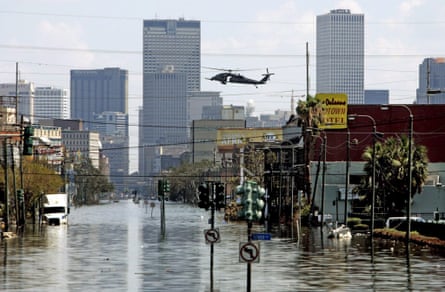
Before the flood, at a corner of Claiborne Avenue near her mom’s house, a homeless Black man had stood begging. Each time we approached, Ariel tugged my elbow, and I stopped, giving the man money. She waved to him, he waved back.
After the flood, he was no longer there.
“Man gone,” she said. I tried explaining how many people left to find safer places, slowly repeating the information as she repeated, “Man gone.” This went on for a while.
Months later, as I left a convenience store on Claiborne, a raggedy voice said: “How’s that lul girl?” There he was. I handed him a fiver. I said, “She’s OK; she asks about you.” He nodded, adding: “Tell her I came through.” I shared this small tale of elation with Ariel as the city limped along.
Sometime later, as the recovery from Katrina took hold in New Orleans, I went to mass with Ariel and my mother, Mary Frances. Ariel loved the liturgy, without grasping the sermons. She swayed to songs she could not sing and relished the exchange of peace, shaking hands and waving to people. One Sunday, retired district attorney Harry Connick Sr, the famous singer’s father who has since died, entered the pew to Ariel’s left. He was unaware that I sat a few feet away.
Connick detested me for what I had written about his botched prosecution of a notorious predator priest, Dino Cinel, whose cache of pornography – including videos of his young victims, discovered by another priest – was transferred by church attorneys to the DA’s office. There it sat, until a staff investigator leaked dubs to a TV reporter, who surprised Connick on camera, asking if he had stalled because the case involved “Holy Mother the church?”
Connick blurted: “That was an absolute consideration.” Cinel was eventually tried, and acquitted. He was murdered in Colombia in 2018. The church paid civil settlements. Sometime later, on a satellite interview with Connick and broadcaster Geraldo Rivera, I ripped into Connick.
When the handshake of peace began, my little girl turned to the aging pol and said, “My name Ariel Berry.” He smiled, and she took his hand and pulled it over, saying, “This my dad, Jason Berry.” Connick blushed, taking my hand.
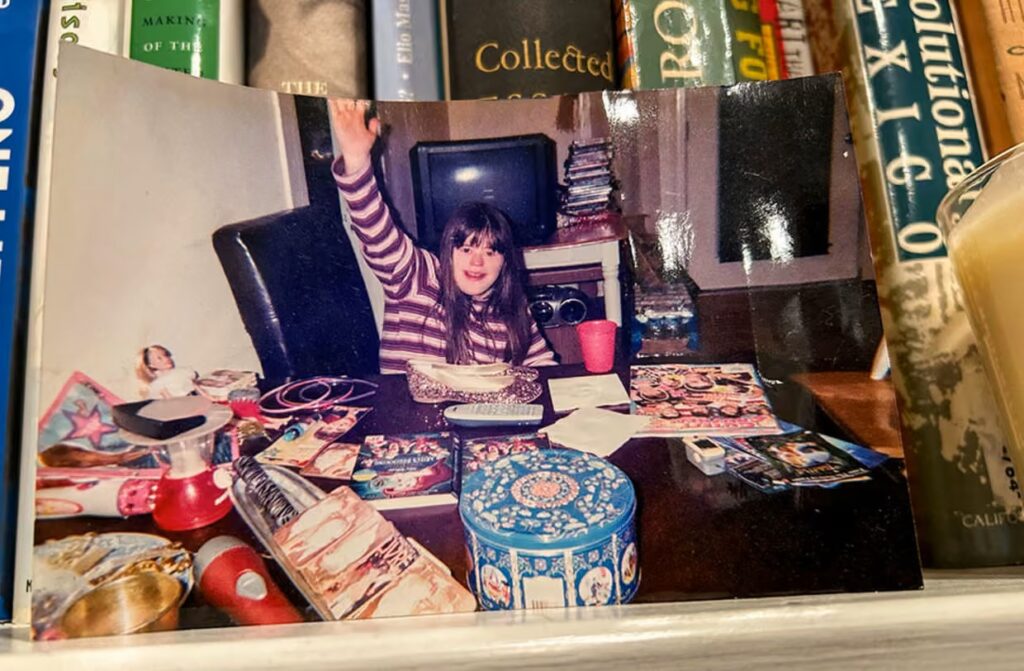
In driving around the city, thinking of my child as a person for others, I give money to people begging on street corners. Some of them sleep on benches at a park near my grocery store. On visits to Ariel’s grave, I pray for a visitation of her spirit – that happens occasionally in dreams whose messages are not altogether clear. I wonder what the radical innocence she radiated means in a world so broken and corrupted as ours.
Two or three times a month I go to mass, seeking a connection to my daughter’s spirit, searching for liturgies that occasionally lift me, more often not. I say prayers of thanks for the family that shaped me, the relatives and friends among the beloved dead, and the priests like Frank Coco who taught me. I suspect it is a prompting of Ariel that has me, at times, praying for the soul of Patrick Koch.
Editor’s note: This concludes a miniseries exploring the lives of some of the survivors of clergy sexual abuse in New Orleans. Here are parts one and two. The series was supported by the Fund for Investigative Journalism and was published by the Guardian in partnership with the National Catholic Reporter.
This article was amended on 1 March 2026. An earlier version said Philip Postell was 20 years younger than Pat Koch; this should have said 10 years.