
EL PASO (TX)
El Paso Matters [El Paso, TX]
March 22, 2026
By Robert Moore
El Paso Catholic Diocese officials confirmed more than 30 years ago that a priest sexually abused Isaac Melendrez Jr. and others boys, but never shared findings with him, or offered him help. Now, he’s speaking out.
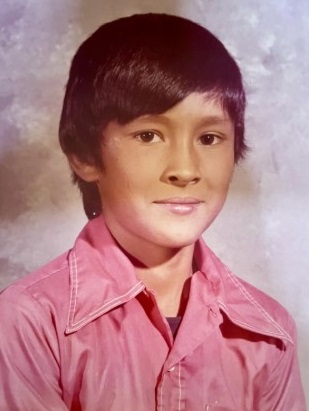
In 1981, 14-year-old Isaac Melendrez Jr. was sexually abused by a man he now refers to as “a monster” – his parish priest in Doña Ana, New Mexico.
The boy told his mother, who didn’t take any action and later sent him on out-of-town trips with the priest. He said he told a Catholic Church official in Las Cruces in 1982, then never heard back. In 1985, El Paso’s bishop sent the priest to a California facility that diagnosed and treated clergy for sexual misconduct and other mental health disorders. In 1994, officials in the El Paso diocese interviewed Melendrez and other abuse victims and found that the priest’s actions were “consistent with the behaviors of a pedophile” – but never shared that finding with Melendrez.
He battled depression, anxiety and thoughts of suicide throughout his life. Now 59 and living in Las Cruces, Melendrez is angry and frustrated that the El Paso diocese is seeking bankruptcy protection in the wake of lawsuits filed in New Mexico by him and 17 others who were abused by priests as children.
“They basically get to throw a blanket over a mass group of people and our voices are squashed. We were never afforded, once again, that opportunity to have them defend or to tell the public why they did what they did,” Melendrez said in an interview with El Paso Matters. “They can issue all the statements on how terribly they feel about it now, how this ‘alleged’ abuse occurred, how this is in the interest of the victims. It’s not in the interest of the victims.”
The El Paso Catholic Diocese sought reorganization under the federal Bankruptcy Code on March 6, saying it was the best way to ensure that victims of clerical sex abuse are compensated while allowing the diocese to continue operating. El Paso is the 38th Catholic diocese or archdiocese in the country to seek bankruptcy protection as a result of lawsuits brought by victims of decades of sexual abuse by priests.
Melendrez said he is speaking out to ensure that the voices of victims are heard as the bankruptcy process moves forward. He is the only one among 18 clerical sexual abuse victims who’ve filed suit in Las Cruces to do so under his actual name. The others are named as John Doe or Jane Doe in their lawsuits to protect their privacy.
“If something wrong is done to you, you have the right to speak up and stand up for yourself,” he said.
“And I also felt very strongly that I’m not a John Doe, I’m not a Jane Doe, I’m Isaac Melendrez. What happened to me, number one, was no fault of mine. Number two, I had no control over it. And in order for me to feel that I was doing justice to myself and other victims, I felt like I needed to put a person behind the story, not just a pseudonym.”
In a statement to El Paso Matters, the El Paso diocese acknowledged the bankruptcy reorganization filing “has reopened memories of terrible wounds that have inflicted great suffering to all abuse survivors.”
The diocese didn’t respond to El Paso Matters’ questions about Melendrez’s abuse.
“We have turned our tragic past into a continued commitment to keep policies that prevent these abuses against the God-given dignity of the person from ever happening again,” Bishop Mark Seitz said in the statement. “My prayer is that, as this reorganization process moves forward, the church will have an opportunity to make amends and that we will be a place where survivors can find healing.”
The amount of damages to be paid to the 18 plaintiffs who sued the El Paso diocese in New Mexico will be determined by the federal Bankruptcy Court in El Paso. El Paso Bishop Mark Seitz said the diocese expects most of the money will come from insurance policies, but it also expects to have to use some of its own assets to compensate the plaintiffs.
The bankruptcy process doesn’t include extensive testimony from people with legal claims against the diocese. The amount of payments to individuals will be decided by a process overseen by an independent trustee.
A horrific betrayal of trust
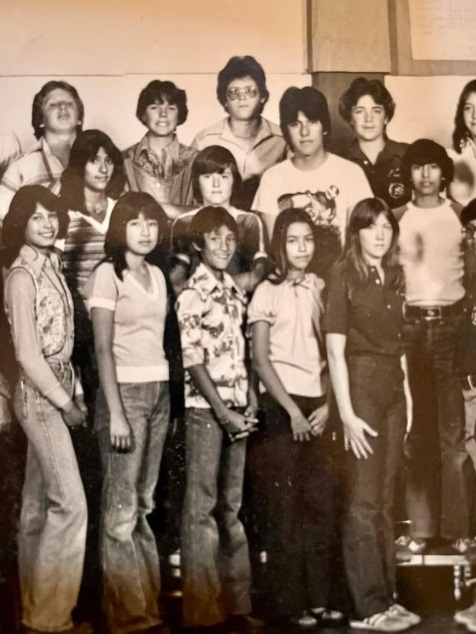
About to turn 15 in August 1981, Melendrez was small for his age, weighing about 70 pounds, he recalled. His family lived in Doña Ana, a rural enclave near Las Cruces. At his parents’ urging, he volunteered to do groundskeeping work at their parish, Our Lady of Purification Catholic Church.
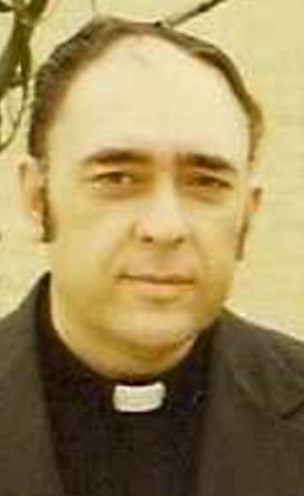
A new priest, the Rev. Richard Nesom Jr., had arrived at the parish in January of that year. A Mississippi native, he was ordained as a priest by the El Paso diocese two years earlier, shortly before his 40th birthday.
In a March 1979 investigation that was required for candidates for ordination, priests at El Paso’s St. Patrick Cathedral, where Nesom had been assigned as a deacon, said he was not a good candidate for the priesthood. Melendrez’s attorneys obtained Nesom’s employment records from the diocese as part of the lawsuit discovery process, and shared some of the records with El Paso Matters.
The Rev. Stephen Gotwals, who was then the pastor at St. Patrick Cathedral, said Nesom “seems proud and arrogant,” and “has sought money in ways which smack of a ‘con’ job.” Gotwals said: “I don’t feel he has the humility requisite for any priest.”
He said he reached those conclusions in consultation with other priests at St. Patrick Cathedral.
Gotwals acknowledged the investigation was “pro forma” because the then-bishop of El Paso, Patrick Flores, had already issued what are known as dimissorial letters clearing the way for ordination for Nesom and other priest candidates.
He said “we feel strongly that the ordination of Richard Nesom at this time with his attitudes would be a source of grief in the future for the diocese, for the people and, most probably, for himself.”
The Rev. Joseph Alexander, rector of St. Mark’s Seminary in Kentucky, where Nesom prepared for the priesthood, pushed back on Gotwals’ findings and suggested in April 1979 that Nesom be initially assigned to a “small parish” to test his sincerity about being a priest. In 2002, Alexander was removed from the ministry after acknowledging that he had sexually abused a teenage boy at the seminary 40 years earlier.
Nesom was ordained by Flores in August 1979 and was assigned to a parish in Monahans, a West Texas town of 8,000, before being assigned to Our Lady of Purification in January 1981.
One day, which Melendrez estimates was in July 1981, Father Nesom invited him into the rectory – the priest’s home at the parish. This is how the lawsuit describes what happened next:
“Fr. Nesom initially made small talk and then suddenly swooped down and accosted Plaintiff. Fr. Nesom, who was considerably larger than Plaintiff, put his hand down Plaintiff’s pants, grabbed Plaintiff’s penis, and kissed Plaintiff. Plaintiff hit Fr. Nesom on the chin/throat area with his fist. Fr. Nesom recoiled. Plaintiff warned him that if he ever touched him again, Plaintiff would kill him.”
“I ran home, and I told my mom right away, and that’s the role you take as a child in your household,” Melendrez told El Paso Matters. “And I assumed that something would come of it, perhaps maybe there would be some type of conversation with the priest.”
His mother did nothing.
“And that had a profound effect on me,” he said.
Melendrez’s lawsuit says that Nesom provided money and a car to his parents.
The parents are both deceased. Melendrez said he wasn’t close to his father, and never was able to talk to his mother about what happened to him after he initially told her.
“My mother unfortunately had this ability to just sweep things under the rug, per se, so it was not a topic that we had much conversation, if any conversation, moving forward in my life,” he said.
After the sexual abuse, Melendrez’s parents sent him on a trip to Mississippi and Louisiana with Nesom, according to the lawsuit. In Mississippi, Melendrez said he barred his door with a chair to protect himself from the priest.
The priest continued to pursue Melendrez with innuendos and advances, he said. Nesom bought him tennis shoes and would sometimes show up at Court Junior High School in Las Cruces and offer the boy a ride home, which he refused.
When Nesom was transferred to Marfa, Texas, later in 1981, Melendrez’s parents had him and his brother help the priest move.
“This man made my life a living hell for the eight or nine months he was assigned to our parish. … I was mocked at school. He told other altar boys I was gay. He used the derogatory term for it that we don’t use nowadays, called me fag,” Melendrez said.
After a few years in Marfa, Nesom moved to El Paso around 1986, and was assigned to St. Joseph Parish and St. Patrick Cathedral. He took out advertisements in El Paso and Albuquerque newspapers in the 1980s promoting tours of Europe and the Holy Land under his “spiritual direction.”
He appears to have left El Paso in the spring of 1989, according to newspaper archives reviewed by El Paso Matters, and returned to his native southern Mississippi by 1991. Newspaper archives from that region show him performing funeral rites until the spring of 1994; a 1998 article in the Hattiesburg American described him as “a priest on disability.”
Nesom died in 2002 at age 63.
Informing the church
Melendrez said he first told a church official about the abuse in the summer of 1982, about a year after it started.
He was spending a couple of weeks with his aunt, who lived near the offices of the new Las Cruces diocese, which was created earlier that year by Pope John Paul II. Las Cruces and other parts of southern New Mexico had been in the El Paso diocese before that.
“I garnered the strength one day, and said I was going to walk in there and I was going to tell somebody what had happened to me,” Melendrez said. He had not yet turned 16.
“I remember that a lady came out and grabbed a yellow note pad and jotted down some of what I said. And I asked her what she can do, should we take it to higher ups and then kind of see where it went. I assumed that maybe something would be done, that I might be contacted, something of it, and nothing ever came of it.”
Melendrez said he felt betrayed.
“I felt like everything that had ever been given to me had been turned on me, and I was by myself having to defend myself against this predator,” he said.
Melendrez now owns a construction company in Las Cruces. He and his wife, Olivia, were married in 1986, and have two daughters and a son. He has battled mental health issues that he attributes to Nesom’s sexual abuse.
“It’s been a very, very stressful life. It’s been very filled with a lot of anxiety, a lot of depression. I’ve been suicidal at times. I was an alcoholic at one time,” he said. “There was no recourse for what I was going through – the era, the ethnicity of what I am. A Hispanic man is supposed to be machismo and stuff just kind of stays in you.”
‘Consistent with the actions of a pedophile’
In 1994, the El Paso Catholic Diocese reached out to Melendrez.
“I was contacted by the diocese because another victim had come forward and shared their story and mentioned that they believed that I was also a victim,” he said.
After the diocese contacted him, Melendrez told his wife for the first time that he was a survivor of sexual abuse. He was interviewed by two diocese social workers on Oct. 13, 1994, according to records obtained by his attorneys and provided to El Paso Matters.
El Paso Matters isn’t identifying the social workers, who continue to practice in El Paso, because they can’t respond to questions about confidential interviews.
“They were very businesslike. They had a lady and gentleman in there. They listened to my story, but they kept wanting me to sign some papers, and they kept wanting me to accept their offer of counseling and they promised that they could make this go away if I would just sign these papers and then follow their path of guidance and counseling,” Melendrez recalled in his interview with El Paso Matters.
“They were both very adamant about it, and I refused. And I said, ‘No, I’m not signing anything. You’re not going to magically make this just go away.’”
The 1994 investigation focused on another man who said he was raped by Nesom when he was a boy and Nesom was the priest at Our Lady of Purification Church. As with Melendrez, Nesom’s first attack on the boy occurred in the parish rectory, according to the Letter of Determination from the diocese investigation that outlined its findings.
The man told the social workers that Nesom sexually abused him at least one other time at a hotel in Las Cruces.
The social workers interviewed Melendrez and another man who said he’d been sexually abused as a child by Nesom at Our Lady of Purification.
They also interviewed Nesom, then a priest in Mississippi, at the diocese Pastoral Center.
Nesom denied everything. The social workers said in their report that the priest told them that then-Bishop Raymundo Peña had told him “that anonymous calls had been received accusing (Nesom) of other incidents of sexual misconduct.”
The report doesn’t include any mention of Peña being questioned as part of the investigation. He was El Paso’s bishop from 1980 to 1995, when he became bishop of Brownsville. He retired in 2009 and died in 2021.
The social workers believed the victims. Nesom’s actions – including providing gifts to teenage boys and taking them on out-of-town trips – “raise questions as to Fr. Nesom’s motives,” their report said.
The rape victim’s “description of Fr. Nesom’s actions was very credible and consistent with the actions of a pedophile, as currently described in the literature,” the social workers wrote.
The report recommended that the diocese pay $19,000 for mental health care for the rape victim, who had filed a claim with the diocese. The payment could increase to $35,000 if the man needed in-patient treatment.
The report makes no mention of helping Melendrez and the other sexual abuse victim interviewed as part of the investigation.
Melendrez said the diocese never informed him about the findings of the 1994 investigation. He learned about it only after he filed his lawsuit in 2024, and his attorneys obtained records as part of the discovery process.
He said the October 1994 interview lasted between 90 minutes and two hours. Melendrez said he never felt the social workers were concerned about him.
“I think their interest was more in trying to stop anything, stop anything further” damaging to the church, he said.
‘Never be allowed access to children’
The report was clear on recommendations for Nesom’s future.
“We recommend that in the event that Fr. Nesom remains a priest, he never be allowed access to children, adolescents or young adult males.”
Nesom was stripped of his faculties in the El Paso diocese, or ability to exercise his duties of ministries, after the investigation, Nesom said in a 1996 letter to the Rev. John Peters, then the pastor of St. Luke Catholic Church in West El Paso. The letter was obtained by Melendrez’s attorneys, who provided it to El Paso Matters.
It’s not clear what impact the El Paso determination had in Mississippi’s Biloxi diocese, where Nesom went after leaving El Paso. But there are no mentions of him performing church functions in southern Mississippi newspaper archives after April 1994, at a time when priests were routinely listed in newspaper announcements as participants at weddings and funerals.
In a January 1999 letter to the Rev. Rick Matty, then the chancellor for the El Paso diocese, Nesom sought help in getting permission from then-El Paso Bishop Armando Ochoa to perform a baptism for his nephew’s child in Mississippi. He said Ochoa hadn’t responded to him.
“With the permission of the Bishop in this Diocese (in Mississippi), would this one event be permitted?” he asked.
Melendrez’s attorneys did not receive a record of Matty responding in discovery material provided by the El Paso diocese.
Other documents show that Nesom was barred from performing Masses or sacraments in public, but asked several times for permission to do so.
In one 1999 letter, responding to a note in which Nesom said he was performing a monthly Spanish Mass in Mississippi, Matty reminded him that he could only celebrate Mass privately, and not with other people.
Both the 1994 diocese investigation report and Nesom’s letter to Matty say that Bishop Peña sent Nesom in 1985 to the House of Affirmation, a Catholic facility in California that treated priests for mental health issues, including sexual disorders.
Nesom told Matty he was sent for “testing and evaluation as to pedophia,” misspelling pedophilia. He told diocese social workers and Matty that nothing negative was found, but no records of his evaluation have been provided by the El Paso diocese.
Other documents obtained by Melendrez’s attorneys and shared with El Paso Matters show that Peña sent Nesom to the California facility after another boy said the priest had sexually abused him in 1984 in Marfa.
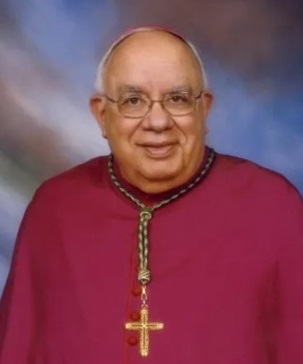
Peña determined that the Marfa boy’s complaints weren’t credible, in part because the diocese wasn’t aware of any similar complaints against Nesom. However, Melendrez said he told the Las Cruces diocese in 1982 that he had been sexually abused by Nesom.
The House of Affirmation, a network of Catholic treatment facilities, was founded by the Rev. Thomas A. Kane, a priest in Worcester, Massachusetts. The facilities closed in 1990 after Kane was accused of financial improprieties.
The Worcester diocese later settled a lawsuit that accused Kane of sexually abusing a boy from 1968 to 1979, starting when the boy was 9. The lawsuit said Kane offered the boy for sex to other priests.
In the letter to Matty, Nesom – then 59 – said his health was poor.
“I have some difficulties; more attributable to diabetes than to HIV. I am still AIDS free. I don’t get around well and do not leave my little apartment,” Nesom wrote.
In a 1997 memo to the Catholic Diocese of Jackson, Mississippi, Father Michael Flannery said Nesom “is in denial that he has AIDS.” He also said Nesom had been involved in an incident in Florida where he walked out of a restaurant without paying his bill, then drove over the manager who followed him into the parking lot.
Documents provided to Melendrez’s attorneys show that the El Paso diocese continued $850 monthly payments to Nesom for the remainder of his life.
Nesom died Nov. 25, 2002. His tombstone in Sharon, Mississippi, reads: “Rev. Richard Nesom Jr. Catholic Priest.”
‘There’s no more calling it alleged’
Melendrez would like to see the Catholic institutions that failed him held accountable. It’s hard for him to define what that looks like.
“It’s changed 100 times now, because our justice system is not a perfectly written essay. Our justice system is very flawed,” he said.
It may be easier for him to define what accountability is not – what he sees as half-hearted admissions, or evasions of responsibility.
Melendrez’s path to the courthouse began in 2019, with a statement from the interim bishop of the Las Cruces diocese.
Like other U.S. dioceses, Las Cruces had published a list of priests found to be “credibly accused” of sexual abuse. Las Cruces updated its list a few months later to add 13 priests who served in southern New Mexico parishes and had been listed by other dioceses as credibly accused of abuse.
One of the added names was Nesom, who was identified as credibly accused of sexual abuse by the El Paso diocese.
“These priests did not abuse here while they were serving in the Diocese of Las Cruces,” interim Bishop Gerald Kicanas said in announcing the 13 additions. “However, they have been listed on the credible lists of other dioceses.”
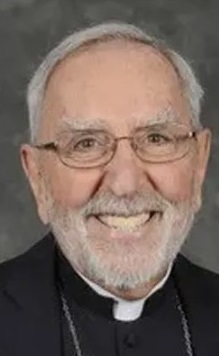
That didn’t look like accepting accountability to Melendrez.
Technically, Nesom sexually abused Melendrez and other Our Lady of Purification boys when the parish was in its last months in the El Paso diocese. But Kicanas’ diocese office was a 15-minute drive from Nesom’s former parish. And Melendrez said he had alerted the Las Cruces diocese to the abuse in 1982, without result.
Melendrez said he reached out after Kicanas’ statement to Margarita Martinez, the victims’ assistance coordinator at the Las Cruces diocese. He said he wanted a retraction of the statement, which sounded to him like the diocese was saying Nesom “wasn’t our problem, that was somebody else’s problem.”
He met with Kicanas, the former bishop of the Tucson diocese, a few weeks later.
“There was never any interest in our conversation with him doing any of that. He wanted to just talk about healing, and that he was sorry to me, and wanted to pray with me. And I lost my cool, and I just said, ‘You know, this is ridiculous. You people are not going to ever help us victims,’” Melendrez said.
The Las Cruces diocese didn’t respond to questions from El Paso Matters regarding its interactions with Melendrez.
The Las Cruces diocese is among the defendants in Melendrez’s lawsuit. The New Mexico lawsuits have been put on hold as a result of the El Paso diocese bankruptcy reorganization.
When the El Paso diocese announced its bankruptcy reorganization plans March 6, its news release referred to “allegations” of sexual abuse in the lawsuits brought by Melendrez and 17 others. In a video message issued to explain the bankruptcy filing, El Paso Bishop Seitz referred to “18 claimants alleging that they were sexually abused as minors” and “allegations that some clergy” harmed children in their care.
To Melendrez, that sounded like the diocese was trying to cast doubt on his story, even though it had found that testimony from him and other victims of Nesom was credible.
“The word alleged needs to be taken away. There’s no more calling it alleged,” he said. “If they want to argue that this was alleged, then they should have let us go to court and in the court of law, I could have told my story, my alleged story. Then a jury could determine whether my story was alleged or that my story was fact.”
In a news conference about the bankruptcy filing March 6, Seitz said the lawsuits by 18 people describing sexual abuse by Catholic clergy “appear to be credible. We’re not questioning that reality.”
As part of the lawsuit process, Melendrez wrote a letter of demand to the defendants – the dioceses of El Paso and Las Cruces, and Our Lady of Purification. He asked his son, Isaac Anthony Melendrez, to review it before it was submitted.
They cried together for several minutes. “And he said to me, ‘I had no idea how this affected you, because you never told us. And we grew up thinking that your problems with your emotions and being so broken, depression, anxiety and suicide, were because you weren’t happy with us as children.’ And that hurt me,” the elder Melendrez recalled.
Melendrez said he didn’t want to burden his children with his pain as they were growing up.
“So they have suffered right by my side immensely in this. And they are a great support system in seeing me through this. And they worry about me, and they stand behind me. But they know the profound impact that this has had on me, and how much it’s changed the course of my life, and how painful it’s been, and it’ll be for the rest of my life.”
Robert Moore is the founder and CEO of El Paso Matters. He has been a journalist in the Texas Borderlands since 1986. More by Robert Moore