
FALL RIVER (MA)
Boston Globe
October 3, 2026
By Janelle Nanos
A victim of Father James Porter, Fitzpatrick helped to uncover countless cases of abuse. This week’s state report was validation.
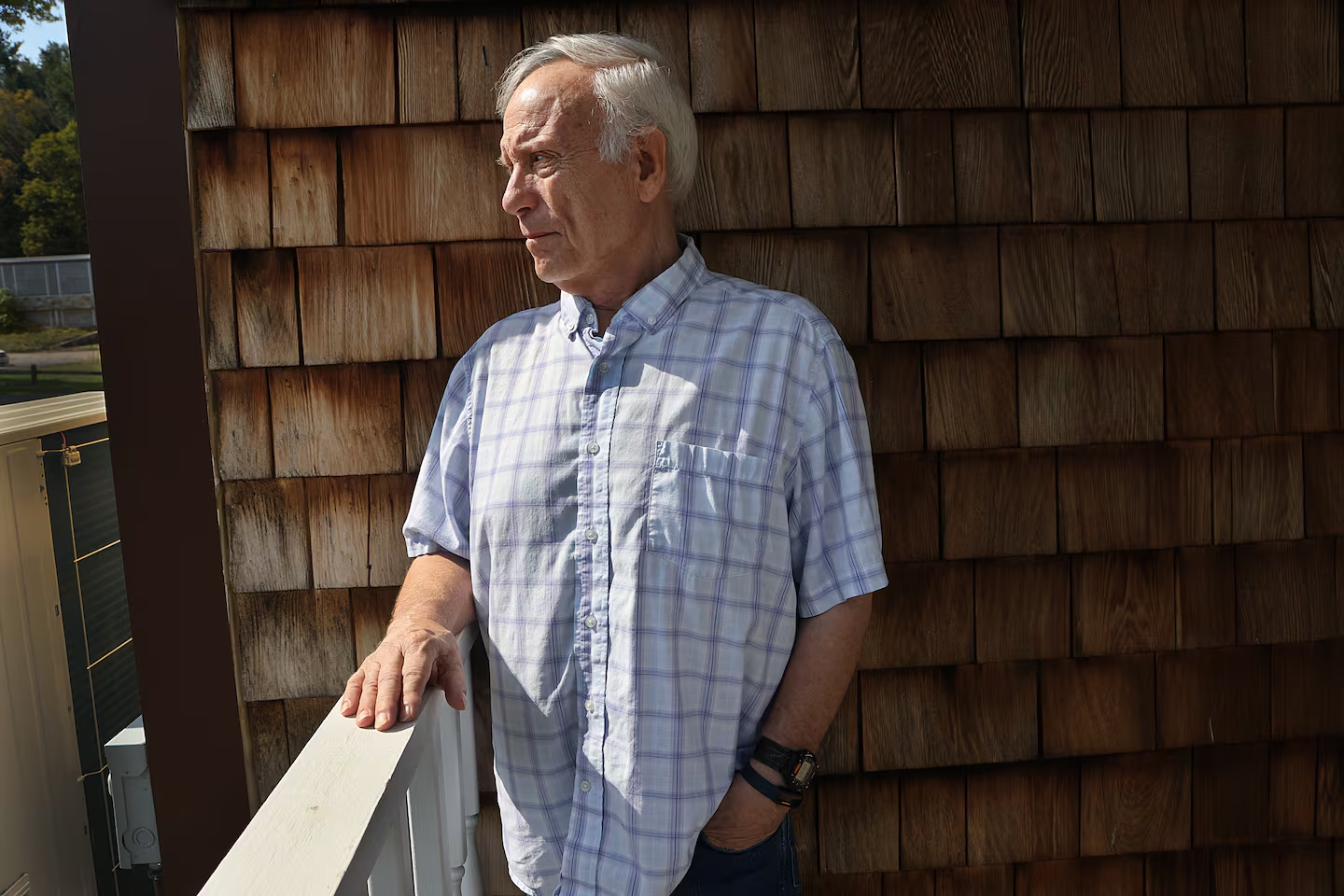
Frank Fitzpatrick was on his couch in Pascoag, R.I., on Wednesday when the memories came barreling back, just as they have every day since they first surfaced in 1989.
This time, the prompt was Massachusetts Attorney General Andrea Campbell and her press conference that unveiled devastating findings from a seven-year-long state probe into abuse within the Catholic dioceses of Fall River, Springfield, and Worcester. After years of interviews, her office found more than 270 abusive clerics who had harmed nearly 1,000 victims, and a deep-seated culture of institutional corruption that allowed abusive priests to be shuffled among parishes for a half century.
It was one of the most comprehensive looks yet in the decades-long examination of how the Catholic Church failed to protect children in Massachusetts. Yet due to various “legal constraints,” as Campbell put it, no one is likely to be charged with any crimes.
None of this was news to Fitzpatrick, himself a victim of a notorious priest while growing up in North Attleborough, and a longtime advocate for survivors.
It has been more than three decades since Fitzpatrick became the first person to disclose the crimes of the Rev. James R. Porter, a serial abuser who served parishes in North Attleborough, Fall River, and New Bedford. A decade before the Globe’s groundbreaking 2002 Spotlight investigation into the Boston archdiocese, Fitzpatrick’s disclosure to the Globe led to Porter’s conviction. Some 34 years later, he’s still grappling with the scope of the harm.
“I knew it was that big. People have been calling me for 20 years,” he said on Thursday, a hint of frustration evident in his voice. “It gets me worked up a little bit about it, and there’s a little bit of anger. But you know, the anger’s been there for a long time.”
It began in 1989, when Fitzpatrick began experiencing what he’d later describe as a “great mental pain.”
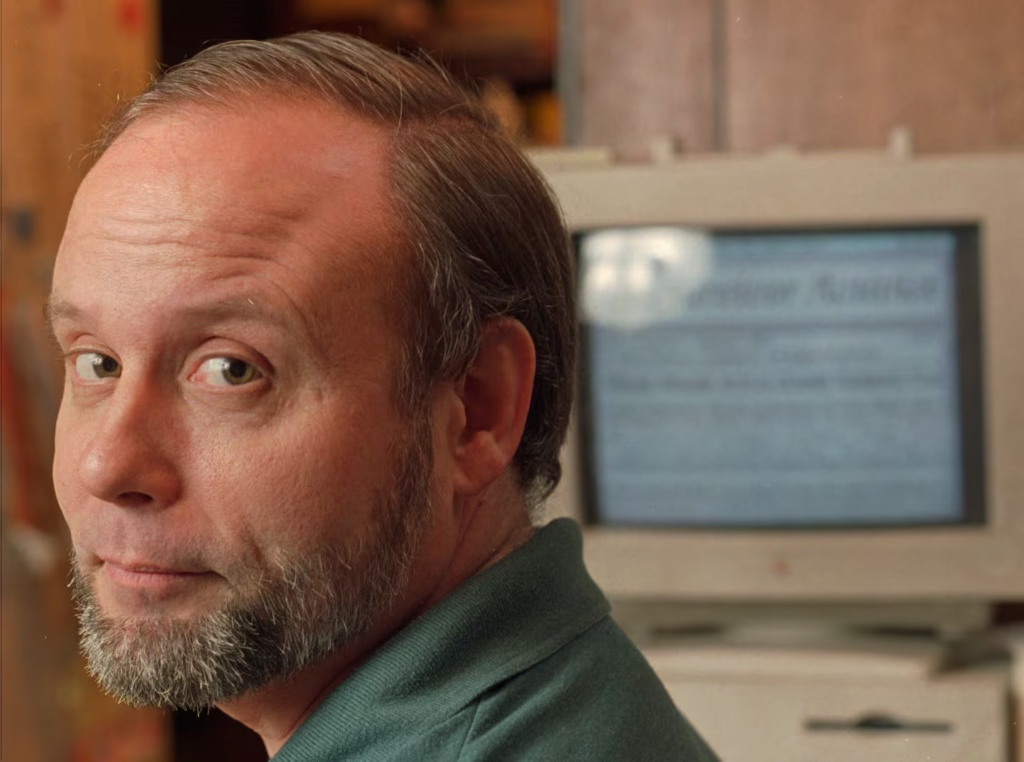
He was 39, happily married with two sons and living in Cranston, R.I., but he felt consumed by a puzzling mix of sadness, anger, and a bitter sense of betrayal.
“I really felt like everything was good in my life,” he recalled. “I was saying to myself: ‘Why do I feel so crappy all the time?’”
As Fitzpatrick told the Globe in 1992, and recounted again recently, he tried to linger in those uncomfortable feelings. Lying in bed one day, he began to remember the sounds of heavy breathing and the experience of being sexually molested as 12-year-old altar boy in North Attleborough. In time, he’d come to realize that his abuser had been the priest at St. Mary’s Church: Father Porter.
Fitzpatrick had loved Porter and hoped to enter the priesthood himself one day. One evening, Fitzpatrick recalled, Porter promised to take him to a ballgame. Instead, Fitzpatrick told the Globe that Porter took him back to his home, fed him mincemeat pie spiked with rum, and raped him.
Troubled by these memories, Fitzpatrick wondered what had become of Porter. He contacted the head of the Fall River Diocese, who told him they didn’t know where Porter was, and that it was “best to leave it in the hands of the Lord.”
Undeterred, Fitzpatrick began calling his former Catholic school classmates and was shocked at what he found: The first person he called revealed he, too, had been abused by Porter. Fitzpatrick had started his quest hoping to find his abuser; he ended up finding Porter’s victims instead. A 1993 Globe magazine story identified 68 victims in North Attleborough alone.
“I think it was because I did not confront people with the big question” — did Porter abuse you? — “that they opened up to me,” he’d write later. “The extent of the abuse by Father Porter was so great that for a long time every single classmate that I contacted from St. Mary’s confided they too had been victimized.”
Fitzpatrick was himself a private investigator, but back before Google, it was still remarkably difficult to find someone who didn’t want to be found. So he placed local newspaper ads asking: “Remember Father Porter? Contact Frank Fitzpatrick” and quickly heard from over a dozen victims. Yet Porter himself proved elusive.
Eventually, Fitzpatrick found a newspaper obituary for Porter’s father, and learned the former priest was married and living just outside St. Paul, Minn. Next, Fitzpatrick tracked down his phone number.
On Feb. 19, 1990, Fitzpatrick finally got up the nerve to call Porter.
Porter’s wife answered the phone,Fitzpatrick recalled. He asked her if the couple had children — they had four — and if she knew that Porter had sexually abused boys. She told him she didn’t believe him. Then she handed Porter the phone.
AsFitzpatrick told Porter what he knew, he said,Porter acknowledged the abuse, telling him “how fortunate” he was that he didn’t get caught, “by parents, the law, anything else.”
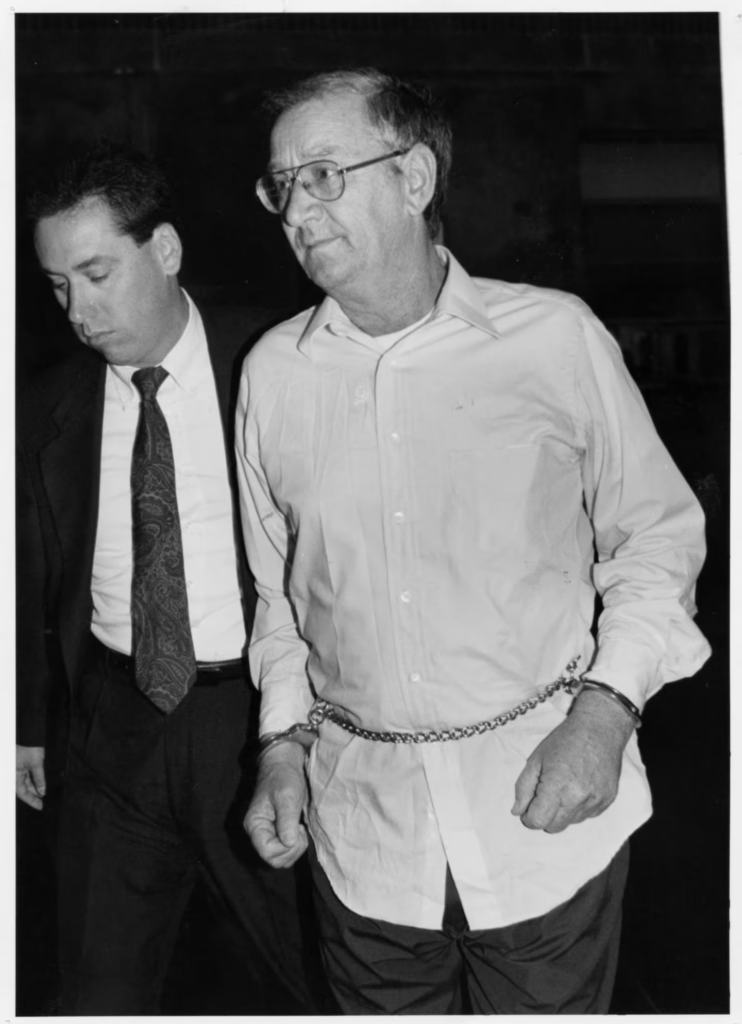
Unbeknownst to Porter, Fitzpatrick was recording the call, using a portable tape recorder, he had suction-cupped to his phone. They spoke another three times. Fitzpatrick took the tapes to the media in 1992. And in May of that year, Frank Fitzpatrick’s story landed on the front page of the Globe, where he recounted his experiences alongside eight other victims. The recordings aired on WBZ, with Porter admitting to molesting 50 to 100 children.
“Once the story broke in the national news, I started to get hundreds and hundreds of phone calls from survivors of priests from all over the country,” Fitzpatrick said this week.
Although cases of clergy abuse were beginning to crop up around the nation, the Porter case was,at the time, viewed locally as a nefarious one-off. In his first public statement, Cardinal Bernard Law called Porter a “rare exception.” Yet the scope of Porter’s abuse — and the possibility of the church’s awareness — became clearer over time.
Eventually, 77 men and 22 women came forward to report Porter’s abuse. He was indicted in September 1992 for dozens of crimes in five differentparishes in Massachusetts and pled guilty in 1993 to 41 counts of abuse. He was sentenced to 18 to 20 years, and completed his sentence in 2004, but continued to be committed.Porter died a year later, while awaiting the results of a sexual dangerousness hearing.
After Porter was sent to prison, Fitzpatrick continued his work, creating a nonprofit called Survivor Connections to support victims in gathering evidence and seeking justice against their abusers.
He built a database on his home computer allowing victims to share information about their abusers. In newsletters, Fitzpatrick outlined the nuances of recording phone calls and navigating civil and criminal charges. While other advocacy groups had offered survivors support for living with their trauma, Fitzpatrick had tapped into something different: a network effect.
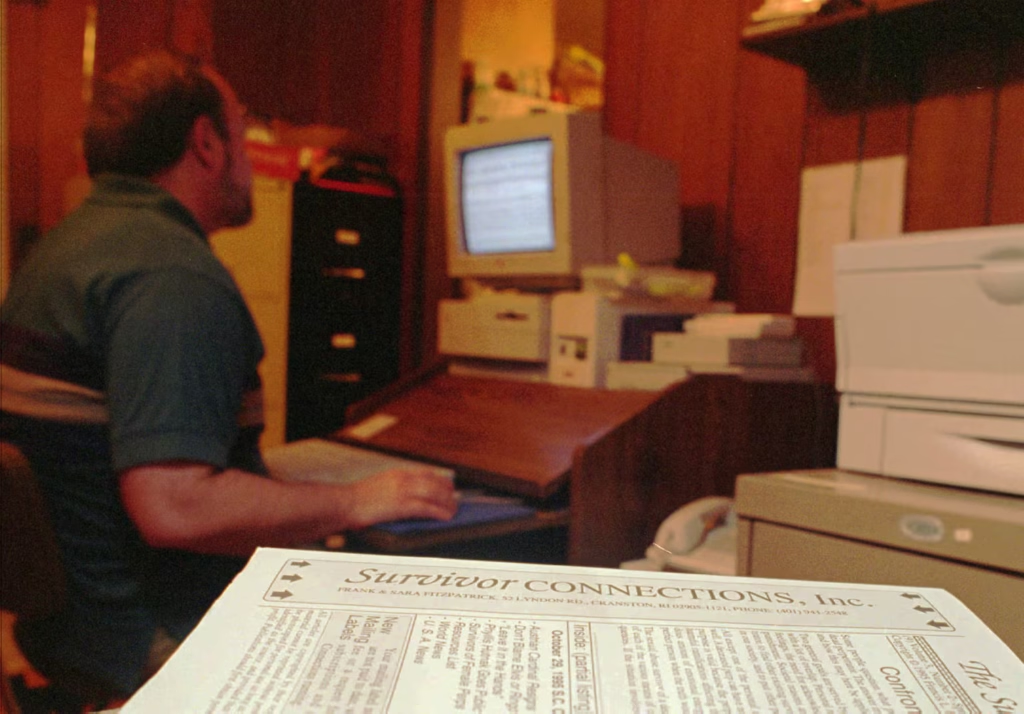
– Mark E. Johnson/AP Photo
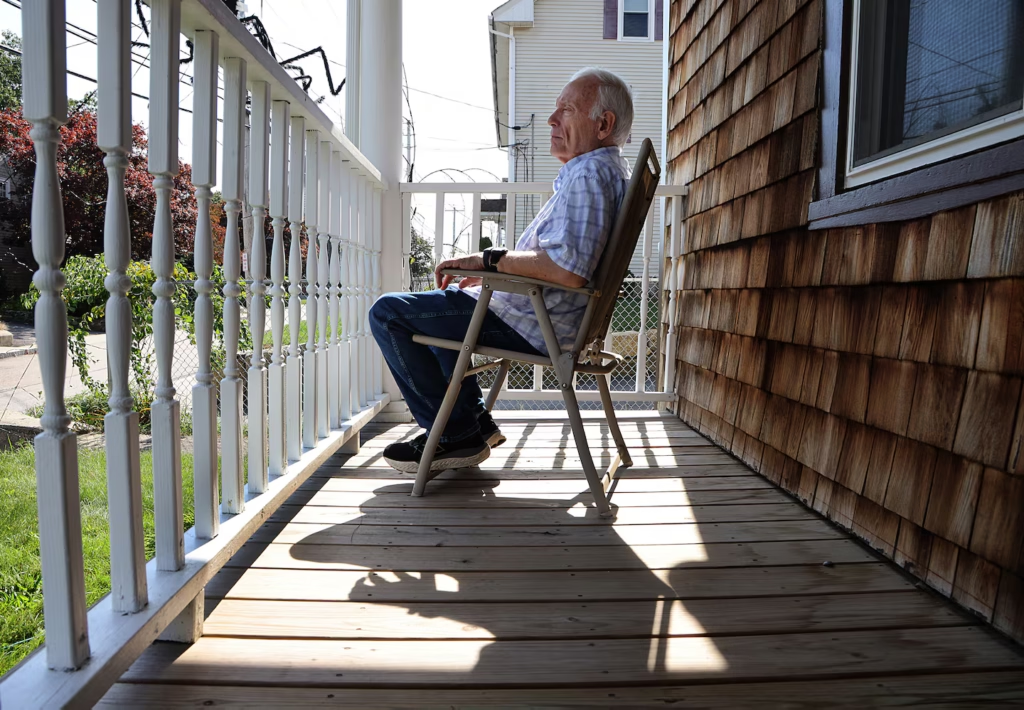
Today, Fitzpatrick is 76, retired in small-town Rhode Island. He’s not as active in advocacy these days,though he still occasionally gets phone calls from survivors. This week, when his phone rang once more, he told a reporter this current probe felt “really important.”
Campbell’s report included a section about Porter. It noted how “each time Porter was returned to ministry after a hospitalization, he quickly re-engaged in past actions, molesting the children of his parish.” It was validating, Fitzpatrick said, to see the state’s top lawyer backing things that survivors like him have claimed for decades.
“I’m glad the attorney general finally got around to investigating it,” he said. “I mean, they started this investigation in 2019 — I wish they had started it in 1992.”
– Suzanne Kreiter/Globe Staff
Janelle Nanos can be reached at janelle.nanos@globe.com. Follow her @janellenanos.