 |
History
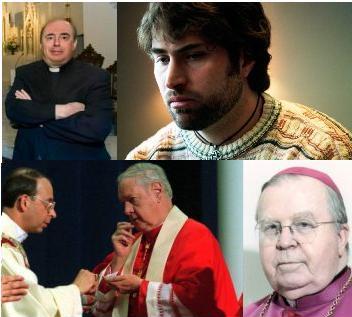
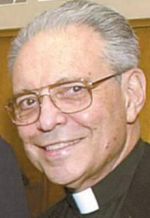
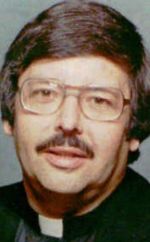
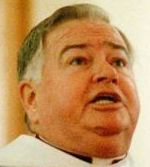
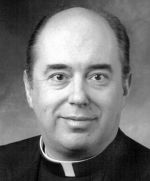
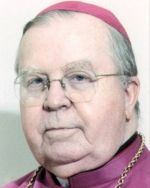
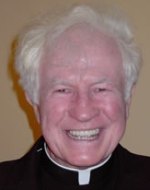
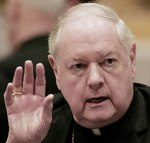
of Clergy Sexual Misconduct In the photographs to the left, Mr. Fleetwood is in the upper right. Reading clockwise, Bishop Walter Curtis led the diocese when Rev. Charles Carr, whom Fleetwood and many others have accused of abuse, was ordained, and Curtis was bishop for the first seven years of Carr's career, including the years when Fleetwood was an altar boy in Carr's parish. Edward Egan, now cardinal and archbishop emeritus of New York, left Carr in ministry for five years after his staff discerned a "developing pattern of accusations" (see Exhibit 38, PDF p. 4). Bishop Lori battled to keep these files secret. And Msgr. Lawrence Bronkiewicz is one of a series of managers who have handled abuse allegations for Curtis, Egan, and Lori. |
In addition to Carr, this history discusses and provides documents relating to accused priests Brett, Federici, Gregory Smith, Moore, Pcolka, Coleman, Stubbs, Grimes, and O'Connor. It also contains useful discussions of episcopal control, methods of managing abuse cases under Curtis and Egan, the destruction of documents, diocesan secrecy, the Martinelli and Fleetwood cases, the relevance of prior and subsequent cases, and constitutional issues. This history is organized for ease of use. We have scanned the original PDF and created a webpage that is linked to the 55 documents offered by plaintiffs' attorney Cindy Robinson as exhibits. We have provided a succinct list of exhibits at the top of the history. We have also included photographs of some of the survivors, accused priests, managers, and bishops who are mentioned in these pages. The text of the history and of the exhibits is as it was released. but we have redacted the names of survivors who are not public, as well as certain personal information of survivors and accused priests. Please consult our redaction guide for a description of our principles of redaction and a table of all the redactions. If we have missed a redaction, or redacted where we should not, please let us know.
MEMORANDUM OF LAW IN SUPPORT OF We need only review the allegations of the plaintiff's claims of negligence and claims for relief in order to appreciate the materiality and relevance of evidence or information regarding the defendant Diocese's knowledge or awareness of clergy sexual misconduct at any time during the history of the Diocese of Bridgeport. On January 14, 1999, the plaintiff filed a revised and amended complaint with the Court. These amendments further detail the nature of the claims that the plaintiff intends to prove at the time of trial. Therein, the plaintiff alleges that the defendants Diocese of Bridgeport and the late Bishop Curtis were careless and negligent in that they:
Practice Book Section 10-60 provides that any adverse party may within fifteen (15) days of the filing raise objection to the proposed amendments. The defendants did not do so; instead, on January 26, 1999, the defendants filed an answer. Further, Practice Book Section 10-35 provides that whenever a party desires to obtain . . .(2) the deletion of any unnecessary, repetitious, scandalous, impertinent, immaterial or otherwise improper [page 3 / Bates page 7437 begins] allegations in an adverse party's pleading, the party may file a timely Request to Revise . The defendants did not avail themselves of this practice. The plaintiff here is left to prove the allegations of his complaint at the time of trial. To do so, the plaintiff will necessarily introduce evidence and information regarding the Diocese's awareness or knowledge of prior and subsequent clergy sexual misconduct. At the onset, counsel for the plaintiff emphasizes that the arguments made in connection with this case may differ and/or be further strengthened by production of court-ordered clergy sexual misconduct evidence or information not yet produced by the defendants. A. HISTORY OF CLERGY SEXUAL MISCONDUCT WITHIN THE DIOCESE OF BRIDGEPORT
It must be noted that the plaintiff has not yet been given access to all records, memos and documentation regarding claims of sexual impropriety, sexual misbehavior, sexual suggestion and/or sexual abuse as they relate to present or former Bridgeport Diocesan priests. He is, therefore, at a clear disadvantage in detailing the involved history of sexual abuse by the clergy. Still, despite the defendants' best efforts to conceal this information, the following is an account of the sexual misconduct and abuse that involved Bridgeport Diocesan priests:
Sometime during 1978 or 1979, a priest of the Diocese, Joseph P. Moore of the Assumption Parish in Westport, Connecticut, sexually abuses and attempts to sodomize [page 8 / Bates page 7442 begins] two young parishioners who were formerly altar boys and whom he brings to a vacation spot on Block Island. Both boys dramatically jump out of a bedroom window to escape Moore's sexual advances and immediately report the incidents to their parents. The parents and the boys meet with Msgr. Cusack who at the time is "in charge of the sexual abuse policy for the Diocese" and are told by Cusack that Moore has been previously evaluated and it was determined that he was not a homosexual. ([M-021] affidavit dated 12/4/96, attached as Exhibit 16). Cusack denies that there is ever such a complaint nor does he have any record whatsoever of this meeting. (Exhibit 3 at 45-46). Parenthetically, it is interesting that Msgr. Cusack's definition of a predator who sexually abuses a minor boy under the age of 18 but after the boy is capable of having an erection is characterized as a homosexual encounter. (Exhibit 3 at 288-289). Msgr. Cusack does, however, admit that there are complaints against Father Moore, but they are in regard to alcoholism (Exhibit 3 at 298-302, 313-314) and that Moore is diagnosed by a psychiatrist as having "psychosexual confusion". (Exhibit 3 at 320).
On November 17, 1976, Monsignor Toomey receives a complaint indicating that Father Walter Coleman has rented an apartment in New Canaan "visited by teenagers - nuisance" (Diocesan memo dated 11/17/76, attached as Exhibit 24). For two (2) months during 1976, Father Coleman is able to take leave of his priestly duties in order to travel across country with a minor, James Harding. (Harding deposition at 72-74, attached as Exhibit 25). During the months of January and April of 1977, Mrs. Kathleen Harding [page 11 / Bates page 7445 begins] makes an appointment to see the Bishop in order to lodge a complaint against Father Walter Coleman in connection with the abuse of her two sons. (Diocesan hand-written notes dated 1/6/77 and 4/11/77, attached as Exhibit 26). In April of 1985, the Diocese is advised that Father Coleman had purchased a home with a single mother that is now being foreclosed. The woman's attorney advises the Diocese that a lawsuit has been commenced against Coleman seeking financial assistance in resolving the situation. (Attorney Keenan's letter dated 4/19/85, attached as Exhibit 27).
In 1982, the Diocese appoints Coleman as spiritual director of Immaculate High School in Danbury. (Bishop Curtis affidavit dated 5/30/97, attached as Exhibit 28). In March 1994, [M-020] advises the Diocese that Father Coleman sexually abused him when he was a child. ([M-020] letter dated 3/8/94 and Diocesan memo dated 3/23/94, attached as Exhibit 29). The Diocese pays Mr. [M-020] a settlement under a confidentiality agreement but allows Coleman continue to serve as a priest. (Court (Skolnick, J) transcript dated 9/2/98 and redacted confidentiality agreement attached as Exhibit 30). [page 12 / Bates page 7446 begins] Father Coleman is only suspended after James Harding brings a lawsuit in November of 1995. (Diocesan memo dated 11/29/95, attached as Exhibit 31). Yet, the Diocese neglects to advise the Archdiocese of Miami, where it knows Coleman is serving as a priest, of his suspension until September 1996, only after receiving a specific inquiry from the Miami office. (Msgr. Bronkiewicz letter dated 9/11/96, attached as Exhibit 32). In 1984, [M-023] reports to the Diocese his sexual encounters with Father Mark Grimes of the Diocese of Bridgeport. ([M-023] letter dated 4/17/97, attached as Exhibit 34). In 1985, Monsignor Cusack is made aware that Father Gavin O'Connor sexually molested three teenage boys. (Dr. Kabir's report dated 5/29/86, attached as Exhibit 36). A lawsuit is eventually brought in Hartford Superior Court and the case settles soon after Judge Rittenband orders that the Diocese produce all clergy sexual misconduct evidence or information within their files. (Court (Rittenband, 1.) transcript attached as Exhibit 37).
This history reveals that the Diocese had no rules preventing priests from having unchaperoned contact with children. Nor did it prohibit priests from inviting children into rectory bedrooms. It shows a pattern of the Diocese's failure to warn parishioners of a priest's propensities to sexually molest children. Camille Fleetwood, the mother of the plaintiff, testified that if she had known that Father Carr had been previously accused of sexually molesting a minor, she would not have allowed her son Jon to be involved with the church or with Father Carr. (Camille Fleetwood deposition at 64, attached as Exhibit 44). The defendants' position that they did not exercise control over the priests because they were staff employees of particular parishes is ludicrous. Moreover, their technical reliance on Section 317 of the Restatement of the Law of Torts (2d ed.) is incorrect. That the property listed as 203 East Avenue, Norwalk, CT is owned by St. Thomas The Apostle Roman Catholic Church is not dispositive on the issues of possession and control. Bishop Egan, and his predecessor the late Bishop Curtis, are the only "masters" of the Bridgeport Diocesan priests. It is well established that owners of the property may not, in fact, be in control or possession of the property. Farlow v. Andrews Corp., 154 Conn. 220, 225 (1966); Corvo v. Waterbury, 141 Conn. 719, 725; Ziulkowski v. Kolodziej, 119 Conn. 230, 232. All of the priests of the Diocese of [page 15 / Bates page 7449 begins] Bridgeport are "servants" of the Bishop and are only "privileged to enter" the Roman Catholic parishes within Fairfield County in order to serve as priests by virtue of the fact that the Bishop has given them authority to do so. See Restatement of Law of Torts (2d. Ed.) Section 317 (a). When we examine the documentation produced by the Diocese in connection with clergy sexual misconduct complaints we see:
A review of the Diocese of Bridgeport's Pastoral Book illustrates the complete and ultimate control that the Bishop exercises over all priests incardinated in the Diocese of [page 16 / Bates page 7450 begins] Bridgeport. The Pastoral Book of the Diocese of Bridgeport contains all directives that must be followed by Bridgeport Diocesan priests and includes directives for their clergy lives, personnel policies and specific faculties of the Diocese. (Pastoral Book, pertinent portions, attached as Exhibit 47). All clerics of the Diocese of Bridgeport are given copies of these policies and must follow them in their pastoral service and a copy of the book must be available in every church, rectory, religious house, and ecclesiastical institution of the Diocese. (Exhibit 47 at 100) In outlining the faculties for clergy authorized to exercise the sacred ministry of the Diocese of Bridgeport, Bishop Curtis states:
(Exhibit 47 at 201). Monsignor Blasé Gintoli, an employee of the Diocese of Bridgeport, indicates that the pastoral book contains all of the guidelines written by the Diocese where "everything is spelled out". (Gintoli deposition at 24, attached as Exhibit 48). The Pastoral Book covers all faculties that can be exercised by priests of the Diocese, i.e. to administer sacraments, to admit adults to baptism, to offer mass outside a sacred place, to celebrate mass at any hour of the day. (Exhibit 47 at 200-201.19). An entire section is devoted to General Norms for priests that requires the priest to make an annual retreat, keep his personal [page 17 / Bates page 7451 begins] finances in good order, make a will and testament within three months after ordination and prohibits the priest from instituting a civil or criminal action or voluntarily giving testimony without consulting the Bishop. (Exhibit 47 at 301-310.1). It goes on to outline the role specifications of priests in parish ministry (Exhibit 47 at 302-302.4), the way in which the pastor can make sick calls (Exhibit 47 at 303), the manner in which the priest can furnish the rectory (dignified but simple), the way in which meals should be prepared (nourishing and balanced but not wasteful or expensive) (Exhibit 47 at 305) and the manner in which the telephone and door should be answered (Exhibit 47 at 305.2). It further addresses priests' leaves of absence (Exhibit 47 at 312), sabbaticals (Exhibit 47 at 311) and time off (Exhibit 47 at 313) as well as the procedure that must be followed when transferring or assigning a priest to a parish (Exhibit 47 at 310). It is plain that if a priest is incardinated in the Diocese of Bridgeport, the Bishop controls all aspects of his existence, from how he dresses and eats and including the preparation of his last will and testament. The plaintiff also intends to present expert testimony from Father Thomas Doyle and W. Richard Sipe, both ordained Catholic priests. Father Doyle is a Dominican and is a doctor of Canon law. He was the Canonist for the Vatican Embassy in Washington, D.C. for over five years. Doyle will testify that it is the Bishop who is control of the priests. (Father Thomas Doyle affidavit attached as Exhibit 49). Mr. Sipe, who was involved in programs of psychiatry and mental health for clergy who have problems regarding sexual celibate practices within the Roman Catholic Church, will also testify that it is the Bishop [page 18 / Bates page 7452 begins] who dictates all aspects of the priest's daily life. (W. Richard Sipe affidavit attached as Exhibit 50). The defendants are hiding behind a diaphanous veil in arguing that by the mere fact that they did not hold title to the premises upon which the abuse occurred, they could not be held responsible for the claim. Most importantly, these defendants actually "possessed", in the true sense of that word, the "servant" or priest, dictating what he wore, when he took vacation, where he lived and worked. The relationship between the priest and his Bishop is entirely different than the relationship of an ordinary employer to an employee as illustrated by the Pastoral Book. The defendant Carr testified that the Diocese provided him his sleeping quarters and food. He received his salary from the Diocese. He was required to be available to minister to Bridgeport Diocesan parishioners twenty-four (24) hours a day, day or night, and would make house calls and hospital calls. (Exhibit 39 at 83-84). The priest must always obey the Bishop and must live in a facility and in a manner authorized by the Bishop. As Bishop of the Diocese of Bridgeport, Curtis was the Ordinary of Father Carr and all priests within the bounds of the Diocese. The Bishop and Diocese did make rules in regard to living conditions within the rectories of the parishes (Exhibit 3 at 131), but never made any rules which prohibited the clergy from having children in bedrooms or private apartments of the rectories (Exhibit 1 at 31-33) until Bishop Egan's tenure. It is the Bishop and Diocese, which control the parish buildings and the living conditions of the persons within. (Exhibit 1 at 31). They had the power, authority, knowledge and duty [page 19 / Bates page 7453 begins] to prevent children from being sexually abused by priests. They had the power, authority, knowledge and duty to identify victims of clergy sexual abuse in order to render assistance. They failed to act as reasonable people would act knowing what they knew about clergy sexual abuse. Their failure to act resulted in the sexual molestation of Jon Fleetwood, sexual misconduct that was entirely preventable.
The plaintiff must prove that the Diocese and the late Bishop Curtis were negligent in the supervision of Father Carr. He must prove that they knew or should have known of the risk that priests may pose to children who are left unsupervised with them especially in such places as rectory bedrooms. In the Court's (Thim, J.) Memorandum of Decision dated July 31, 1997 (attached as Exhibit 51 at 22-23), Judge Thim specifically commented on the known complaints against Father Brett, Father Federici and Father Moore between the years 1964 through 1978. (Exhibit 51 at 22-23) The Court concluded that these complaints involving non-party priests were relevant as they created questions of fact as to whether the Diocese was negligent in failing to create adequate policies to deal with the sexual abuse of minors. (Exhibit 51 at 23) Judge Rittenband reached the same conclusion when he ordered the Diocese of Bridgeport to produce all complaints of non-party priests in the context of that clergy sex abuse case. (Exhibit 37). The conclusions reached by these courts are based upon the test set forth in [page 20 / Bates page 7454 begins] Martins v. Connecticut Light & Power, 35 Conn. App. 212 (1994 ) cert. denied 231 Conn. 915 (1994). In Martins, a claim was brought by a man for injuries sustained when the excavator he was operating struck an overhead, uninsulated wire owned by CL& P. The issue on appeal was whether the trial court had improperly excluded evidence of nine (9) other electrocutions that had occurred between 1960 and 1981 at other CL& P locations. The Court found reversible error. Justice Dupont, in a clearly reasoned opinion, held that prior accidents are admissible to prove the existence of particular physical conditions, situations or defects or to prove notice of a dangerous characteristic even though the accident or the condition is not involving the same mechanism or place at which the plaintiff in the present case was injured. "Such evidence is admissible to show that the defendant knew or should have known of the hazards created by the particular condition or danger", said the Court at page 216. "The requirement of a substantially similar condition is lessened when the evidence is offered to show notice of a dangerous condition. In such a case the prior accidents need only be such as would call defendant's attention to the dangerous situation that resulted in the litigated accident." Id. at 217 (emphasis supplied). More recently, the Massachusetts Supreme Court ruled in a similar fashion in the context of a product liability action in which the plaintiff claimed injury causally related to premature rear lockup of his Chrysler minivan. Santos v. Chrysler Corporation, 430 Mass. 198, 715 N.E. 2d 47 (1999). The Court held that there was no error in the trial judge's admitting the testimony of six Chrysler minivan owners regarding other incidents [page 21 / Bates page 7455 begins] involving their own minivans. Id. at 204. The defendant Chrysler claimed that other incidents were not "substantially similar". Id. at 202. However, the high court ruled that the evidence was admissible to establish notice, to corroborate the alleged defect and to refute evidence that the minivan was designed without safety hazards. Id. at 205. The plaintiff claims that the fact that there were numerous instances of known sexual abuse of children by priests within the Diocese of Bridgeport beginning in the early 1960's (although the plaintiff is aware of victims in the 1950's) and continuing through 1993, all of which involved parishioners whose families entrusted their children to the priests because they had a right to expect that there children were safe as the priests were held out to be celibate (Exhibit 3 at 438), would be adequate notice to require that proper supervision and rules be set into place to preclude other priests from engaging in that same activity. The Diocese and the late Bishop Curtis had a duty to use care to the plaintiff. "A duty to use care may arise from circumstances under which a reasonable person, knowing what he knew or should have known would anticipate that harm of the general nature that was suffered was likely to result from his act or failure to act." Id. at 219. Put another way, in 1985, given the prior history of what had already occurred in the context of clergy sexual misconduct, should the Diocese and the late Bishop Curtis have anticipated that harm might come to Jon Fleetwood who was left alone with Father Carr in his rectory bedroom and in his car? Based on the extensive history of sexual misconduct, the defendant Father Carr's conduct was entirely foreseeable. [page 22 / Bates page 7456 begins]
All of the evidence of prior complaints of clergy sexual abuse as well as the Diocesan procedure in handling the same serves as a basis for the expert opinions to be offered by Father Doyle and Mr. Sipe. Father Doyle states that it is the Bishop who must investigate any complaints regarding sexual abuse whether the complaints are truthful or not. It is his opinion, after reading the various depositions in these cases that the defendant Diocese and the late Bishop Curtis were negligent and that negligence was the cause of the abuse suffered by the plaintiff. (Exhibit 49). Mr. Sipe concludes that one of the dramatic violations of the standard was Msgr. Cusack's failure to take any kind of supervisory action. The evidence reveals that Msgr. Cusack was aware of the fact that sexual abuse of children by priests was occurring from the early 1970's. (Exhibit 3 at 144-145). He believed, however, that only a small number of priests were involved, so he refused to "generalize from the marginal population to the general population" and therefore, did nothing and refused to set up any rules of supervision over the priests of the Diocese. (Exhibit 3 at 148-149 and Exhibit 50). Bishop Curtis as well refused to face reality. Despite the sexual abuse which was going on and of which he had actual knowledge, he took no steps to see that children were not abused because "he presumed it was not going on" (Exhibit 1 at 28-29). In addition, Sipe indicates after reviewing the deposition transcripts it is his opinion that Bishop failed to teach and monitor celibate observance, [page 24 / Bates page 7458 begins] which constituted negligence and resulted in the specific sexual abuse of the plaintiffs. (Exhibit 50). Evidence of prior sexual misconduct complaints will be used to test the validity and effectiveness of the sexual misconduct policy in use at the time that Mr. Fleetwood was molested. It is our position that there was no policy other than perhaps an unwritten one not to investigate, document or react to these claims. This is demonstrated by the defendants' claim that Father Palmer, a senior pastor, never advised the Diocese of the sexual misconduct complaint reported by Mrs. Surran in 1982, until 1990. While we take issue with the claim, it is evident that to the extent there was a policy, it was not enforced nor clearly disseminated to the priests of the Diocese. Bishop Curtis, who was the Ordinary of the Bridgeport Diocese from November of 1961 through December of 1988, the period covered in the Fleetwood complaint, clearly testified that there was no policy or instruction that pastors were to report priest sexual misconduct. (Exhibit 1 at 44-45, 67). Monsignor Genuario, who was Vice Chancellor, Chancellor and Vicar General of the Diocese of the Diocese from 1959 through 1987, (Genuario affidavit attached as Exhibit 52) indicates via affidavit that Msgr. John J. Toomey was the Diocesan official responsible for this policy through 1972 and that Msgr. Andrew Cusack, Vicar of Religious and Clergy, enforced that policy from 1972 through 1987. (Exhibit 52). A review of the depositions of Bishop Curtis and Msgr. Cusack make a mockery of the statements in the affidavit. Bishop Curtis testified that he set up no policy regarding sexual abuse regarding his priests despite a sodomization of a [page 25 / Bates page 7459 begins] student in 1964. (Exhibit 1 at 167). In later years his policy was "practical" and not promulgated. (Exhibit 1 at 9). After a priest was treated for pedophilia, the Bridgeport Diocese had no policy of monitoring the priest or his activities in a new parish. (Exhibit 1 at 76,77). If a priest was involved in subsequent complaints after receiving treatment, the Diocese had no policies regarding these multiple sexual offenders. (Exhibit 1 at 77). Cusack testified that when he became Vicar he was never told by Bishop Curtis or his predecessor, Msgr. Toomey, about any sexual misconduct complaints against priests in the Diocese of Bridgeport. (Exhibit 3 at 135, 140). He indicated that there were no records, files or reports, which were ever given to him. He indicated that Toomey either kept no files or presented him with no files. (Exhibit 3 at 215-216). He indicated that the Bishop had secret files, which he never asked to see, were never shown by the Bishop; and which contained allegations of sexual misconduct. (Exhibit 3 at 218, 221). Cusack himself stated that it was his policy and the Bishop's never to reveal the facts of any sexual complaint—even those allegations proven—to anyone including the personnel board which assigned the priests (Exhibit 3 at 81, 105), to various positions. After several allegations were confirmed the priest would be reassigned and not even the Pastor in the new assignment would be advised of the sexual abuse problem. (Exhibit 3 at 81). Cusack himself kept absolutely no written records of sexual abuse claims against priests and any correspondence or psychiatric reports regarding such conduct would be given to the Bishop to place in his secret file. (Exhibit 3 at 305-309). [page 26 / Bates page 7460 begins] Bishop Curtis himself testified that he maintained the Secret Archives of the Church, which required a two-key arrangement (Exhibit 1 at 57). He would review these files and destroy records of abuse complaints against priests in order to give them a "fresh start". (Exhibit 1 at 47, 54-56). Although it is difficult to prove a negative, in this case there are two clear omissions from the "complete" file of the Diocese regarding defendant Pcolka as presented in discovery material which are letters regarding sexual abuse claims written upon Diocesan stationary and given to the Bishop by Msgr. Cusack (Exhibit 3 at 396; Letter to [F-006] dated 7/7/83, part of Exhibit 19), and the notations which the Bishop would make in his own hand regarding sexual abuse cases that he placed within his secret file. (Exhibit 3 at 235-236). These items were obviously destroyed. The last sentence of Exhibit 2 which states that "A recurrence of hepatitis was to be feigned should anyone ask" clearly and unambiguously expresses the policy that the Diocese followed. It would suppress any discussion of sexual abuse; it would move the priest from his assignment and lie regarding the priest's reassignment. Msgr. Genuario, despite high positions he held in the Diocese, states that he never spoke of the Brett matter to Bishop Curtis nor to Msgr. Toomey nor Msgr. Cusack, all of whom were supposedly in charge of the sexual abuse program for the Diocese. (Monsignor Genuario deposition at 42-43, attached as Exhibit 53). Msgr. Cusack was never told about the Brett matter nor that such an incident ever occurred (Exhibit 3 at 136). As a matter of fact, neither Cusack nor Genuario ever inquired nor were aware of the other complaints which [page 27 / Bates page 7461 begins] clearly had been brought to the attention of the Diocese against Father Brett. When asked about this lack of communication, Msgr. Genuario candidly answered, "No I wouldn't—we just don't talk about these things." (Exhibit 53 at 58). The defendants present Msgr. Genuario by affidavit as the individual who was aware of the sexual abuse policy in the Diocese, but in his deposition (Exhibit 53 at 73-74) he says that there was in effect no stated policy:
The weight of the evidence as it relates to the Diocese's knowledge of clergy sexual misconduct complaints is also relevant in terms of defining the degree of care and diligence required. In circumstances of greater danger there is a higher degree of care required. Geoghegan v. Fox & Co., 104 Conn. 129, 134 (1926). The care required is to be proportioned to the danger and is to be reasonable and adequate under the circumstances to prevent injury to those rightfully on the premises. Barrett v. Central Vermont Railway, Inc., 2 Conn. App. 530, 534 (1984); Pompano v. New York H.H. & H.R. Co., 66 Conn. 528, 541 (1895). Here, based on the history and knowledge of prior complaints, the Diocese's duty of care was greater because the potential for significant danger was well known.
The plaintiff grew up in an extremely religious family which practiced Roman Catholicism was practiced. He and his family were members of the St. Thomas The Apostle Parish in Norwalk, CT which was part of the Diocese of Bridgeport. His mother, Camille Fleetwood and his grandmother, Johanna Oliveri, were highly visible and well respected within the church, always very involved in church affairs for many years. His mother was a lector during mass and she was also involved in retreat weekends for young people and adults, the bereavement committee and the rosary society. His grandmother served as a Eucharistic minister and she would often cook meals for Monsignor Toomey and other priests affiliated with St. Thomas. His family was the first family to make a family mass at St. Thomas. During Mr. Fleetwood's childhood years, he carried the cross in the Processional and served as an altar boy. He also went on Church retreats. It was through his affiliation with the Diocese of Bridgeport that he received all the sacraments, was confirmed and went to catechism through Sunday school after mass. (Jon Fleetwood affidavit attached as Exhibit 55). During every mass that he attended, he recalled always being reminded to worship and respect the Bishop. Through his dealings with the Diocese of Bridgeport, he [page 30 / Bates page 7464 begins] was always taught by the church to trust and respect the Bishop of the Diocese who he considered to be his caretaker and moral authority. The plaintiff met Father Charles Carr, a priest incardinated in the Diocese of Bridgeport, soon after he was assigned to St. Thomas The Apostle Church. After Father Carr's arrival at St. Thomas, the plaintiff recalls that his grandmother would invite Carr to her home for dinner. The plaintiff specifically remembers having dinner at his grandmother's home with Father Carr as a guest. When the plaintiff was about 14 years of age, he got an after school job helping out at the St. Thomas rectory, answering the phone and door. At the time, Father Carr lived at the rectory. (Exhibit 55). It was during this point in time that Father Carr invited the plaintiff to his bedroom, under the pretense of watching movies, in order to sexually molest him. The plaintiff's family always encouraged and allowed him to participate in church activities including his job at the rectory. They trusted all priests, including Father Carr, because these men were priests with the Diocese of Bridgeport. All of the priests at St. Thomas knew that the plaintiff worked there. At the time that Father Carr sexually abused the plaintiff in the rectory, there was other Bridgeport Diocesan priests who lived at the rectory and who were present in the rectory. (Exhibit 55). As a result of the special relationship between the plaintiff and the Diocese, evidence of subsequent knowledge and awareness of sexual misconduct complaints is pertinent in establishing the defendants' duty to investigate and warn in order to prevent or alleviate harm. [page 31 / Bates page 7465 begins] Furthermore, evidence of subsequent complaints, policy and conduct would be admissible in accordance with Section 407 of the Connecticut Code of Evidence. Effective January 1, 2000, Connecticut has enacted a Code of Evidence that controls the admissibility of subsequent remedial measures in a negligence action. The Code of Evidence was adopted to place common law rules of evidence and certain statutory rules into an accessible body of rules. Section 407 provides that in negligence actions evidence of measures taken after an event is admissible when offered to prove controverted issues of ownership, control or feasibility of precautionary measures. Id.; Williams v. Milner Hotels Co., 130 Conn. 507, 509-10 (1934) (evidence of subsequent structural changes admissible for purposes of control); Quinn v. New York, New Haven & Hartford R.R., 56 Conn. 44, 53-54 (1887) (evidence of subsequent change in policy admissible). The commentary also suggests that the list of purposes for which subsequent remedial measures are admissible is illustrative not exhaustive. Therefore, this information would be admissible with respect to all non-negligence issues. See Baldwin v. Norwalk, 96 Conn. 1, 8 (1921) (holding that subsequent remedial measures evidence may also be offered for impeachment purposes); Quinn v. New York, New Haven & Hartford R.R., Id. at 54. Evidence of subsequent measure taken by the Diocese in its handling of sexual abuse cases is admissible in order to show control, feasibility and for impeachment purposes. On December 14, 1990, the defendant Diocese issued a written policy with respect to sexual misconduct and abuse. (Exhibit 45). It is controverted as to whether or [page 32 / Bates page 7466 begins] not this written policy was in effect in an oral form at the time of the plaintiff's abuse . Therefore the actual policy is admissible on the basis of feasibility. It demonstrates the Diocese's ability to institute a policy with respect to sexual misconduct of its priests. In other words, it will demonstrate what the Diocese could have done to control and supervise priests in order to prevent clergy sexual misconduct. It is further admissible on the issue of control as it relates to priests. For instance, while the defendants argue that the Diocese did not have control because the parish corporation owned the parish building, the policy establishes, that, indeed, the Diocese did exercise control. Here the plaintiff asks the Court to recall the testimony of Father Pcolka wherein he states that Bishop Egan issued a prohibition against having children off the first floor of the rectory buildings. (Exhibit 20 at 529-530). It will further be used for impeachment purposes as to whether the policy was in effect at the time of Jon Fleetwood's abuse. Finally, the plaintiff claims that evidence of the Diocese's handling of prior and subsequent clergy sexual misconduct is relevant and admissible because it will be used to support the plaintiff's claim for punitive damages. Punitive damages are awarded when the evidence shows a reckless indifference to the rights of others or intentional and wanton violation of those rights. Collens v. New Canaan Water Co., 155 Conn. 477, 489 (1967) citing Hall v. Smedley Co., 112 Conn. 115, 119. In arriving at a determination regarding punitive damages, the court or jury may inquire into all circumstances surrounding the act in determining the question of damages. Connecticut Law of Torts, Section 174. The weight of evidence, as it relates to the historical account of the [page 33 / Bates page 7467 begins] Diocese's handling of clergy sex abuse claims, illustrates a reckless disregard for the rights of others, including the plaintiff Jon Fleetwood. This account is a proper consideration for the trier of fact when assessing punitive damages. In closing, the plaintiff submits that any prejudice suffered by the defendants as a result of admission of this kind of evidence or information is far outweighed by the probative value of the admission. In this regard, we ask this Court to be mindful of the nature of the damages claimed—permanent damage to the plaintiffs soul and spirit. The preclusion of this weighty evidence would result in a miscarriage of justice.
The second basis asserted by the Diocese in support of its Motion in Limine is that the First and Fourteenth Amendments to the United States Constitution restrict the power of this court to act upon the "specifications of alleged negligence of the plaintiff s complaint in this case, which are predicated on the alleged reasonableness or appropriateness of the Diocese's internal priest personnel policies and practices." Therefore, the Diocese argues that evidence of misconduct involving other priests should not be allowed in this case to evaluate the conduct or response of the Diocese when dealing with complaints of sexual abuse of children. Essentially, the Diocese is making the bald assertion that it is immune from any type of negligence action where the claim [page 34 / Bates page 7468 begins] involves the response of the Diocese to the misconduct of its priests, even where the misconduct involves the sexual abuse of children. On February 14, 1997, the Diocese of Bridgeport raised this First Amendment argument as part of a Motion for Summary Judgment it filed in the George Rosado v. Bridgeport Roman Catholic Diocesan Corporation matter. Specifically, the Diocese briefed the issue at pages five through six and pages thirty-five through thirty-seven of its Memorandum of Law. On July 31,1997, the court, Thim, J. denied the Motion for Summary Judgment in its entirety including the First Amendment arguments. On November 6, 1997, the defendant Diocese, in the George Rosado matter filed a pleading which it uniquely entitled, "Renewed Motion for Summary Judgment". While entitled a "Renewed Motion" it would have been more appropriately entitled, "Motion to Reargue" as it did nothing more than reassert the same First Amendment arguments, previously made to Judge Thim, now to Judge Skolnick who was assigned to the cases in November 1997. On February 12, 1998, the plaintiff fully briefed the First Amendment issue in its opposition papers to the Renewed Motion for Summary Judgment and the plaintiff herein incorporates by reference the arguments raised therein. After oral argument, on June 2, 1998, the court, Skolnick, J. denied the "Renewed Motion" of the Diocese. In doing so, the Court rejected the argument of the Diocese that allowing the lawsuits to continue would result in the unnecessary entanglement of the courts in the [page 35 / Bates page 7469 begins] internal affairs of the church by requiring a jury to evaluate the conduct of the Diocese when responding to complaints of sexual misconduct of priests with children. Rather,
(Skolnick decision dated June 2, 1998, pages 5 through 17). In this respect, the Motion in Limine attempts to raise the entanglement issue for yet a third time in these series of cases. Judge Skolnick's decision provided a thorough analysis as to why the motion was being denied on both substantive and procedural grounds. Judge Skolnick held that [page 36 / Bates page 7470 begins] Judge Thim had set the law of these cases when he had previously denied the motions on July 31, 1997. Citing CFM of Connecticut. Inc. v. Chowdhury, 239 Conn. 375, 403 (1996), Judge Skolnick held that it is the law of the case that the negligence counts against the Diocese of Bridgeport must be decided by a jury and that decision making process should not be further stalled by the repeated requests of the Diocese. These prior court rulings do not stand in a vacuum. In fact, every judge in Connecticut who has been faced with an argument of First Amendment entanglement, as raised by a religious institutional defendant, has rejected the same. Judge Arterton also provided a most thorough analysis when denying the Diocese of Bridgeport's Motion for Summary Judgment in Martinelli, supra in a March 31, 1998 decision subsequently affirmed by the Second Circuit Court of Appeals. Likewise, Judge Covello in Nutt v. Norwich Roman Catholic Diocese, 921 F. Supp. 66 (D. Conn. 1995); Judge Rittenband in Doe v. Diocese of Bridgeport, supra; and Judge Aurigemma in Reynolds v. Zizka, 4 Conn. Ops. 396 (March 30, 1998) (case involving the Diocese of Hartford) all rejected arguments of First Amendment entanglement. The decisions of these Connecticut jurists are in line with the vast majority of decisions across the country that have held that there is no First Amendment entanglement when a negligence action is brought against a religious institution where the claim is that the institution was negligent in supervising its ministry. See Smith v . O'Connell, 1997 U.S. Dist. LEXIS 18957 (D. of R.I. November 25, 1997) (previously provided); Bear Valley Church of Christ v. DeRose 928 P.2d 1315 (Colo. 1996) (after [page 37 / Bates page 7471 begins] trial on the merits of claims brought on behalf of a child alleging improper touching by a minister during course of counseling sessions, the court sustained verdicts in favor of the child against the church, holding that courts may review an injured third party's claim that a religious institution negligently supervised one of its employees without implicating or running afoul of the First Amendment); Moses v. Diocese of Colorado, 863 P.2d. 318 (Colo. 1993) (First Amendment does not grant religious organizations immunity from breach of a fiduciary duty, negligent hiring or negligent supervision of a priest); Konkle v. Henson, 672 N.E. 2d 450 (Ind. App. 1996) (First Amendment did not bar claims for negligent hiring and retention based on minister's sexual molestation of plaintiff); Isley v. Capuchin Province, 880 F Supp. 1138 (E.D. Mich 1995) (First Amendment does not bar negligent supervision claim against institutional defendants where priest allegedly sexually abused plaintiff); Erikson v. Christenson, 781 P.2d. 383 (Or. App. 1989), rev allowed, 787 P.2d. 887 (1990), appeal dismissed, 817 P.2d 758 (1991) (First Amendment does not bar claim for clerical malpractice); Kenneth R. v. Roman Catholic Diocese, 654 N.Y. S. 2d 791 (A.D. 2 Dept 1997), cert denied, 118 S. Ct. 913 (1997) (denying Diocese's motion to dismiss claims of negligent supervision after child was allegedly sexually abused); F.G. v. MacDonell, 696 A. 2d 697 (N.I 1997); Sanders v. Baucum, 929 F. Supp. 1028 (N.D. Texas 1996); Doe v. Dorsey, 683 So. 2d. 614 (FL Dist. C. App. 1996), review denied, 695 So. 2d 699 (FL 1996) (First Amendment does not protect Church from negligent supervision claims based on criminal conduct); Smith v. Privette, 1998 WL 67650 (N.C. App. Feb 3, 1998, previously [page 38 / Bates page 7472 begins] provided) (Appellate Court reversed, finding that Church may be held liable in negligence without First Amendment entanglement where church knew or should have known of minister's propensity). WHEREFORE, the plaintiff requests that this Court deny the Motions in Limine in their entirety and, thus, permit the admission of prior and subsequent clergy sexual misconduct evidence and information at the time of trial.
|


Any original material on these pages is copyright © BishopAccountability.org 2004. Reproduce freely with attribution.