NEW YORK
The Village Voice
by Wayne Barrett
June 26th, 2007 5:24 PM
When Pope Benedict XVI attacked Catholic politicians in Mexico who supported abortion rights last month, Rudy Giuliani was asked for his opinion. The presidential candidate replied in the language of the church: "Issues like that are for me and my confessor. I'm a Catholic, and that's the way I resolve those issues, personally and privately."
Giuliani has invoked his Catholic heritage on Larry King; he's been described by The Washington Post as a "devout Catholic"; he's appeared on Fox News with the label "Catholic" floating on-screen; and he's handled a CNN debate question about a bishop who denounced him with a declaration unfamiliar to those who covered him as mayor. "I respect the opinion of Catholic and religious leaders of all kinds," he said. "Religion is very important to me. It's a very important part of my life." ...
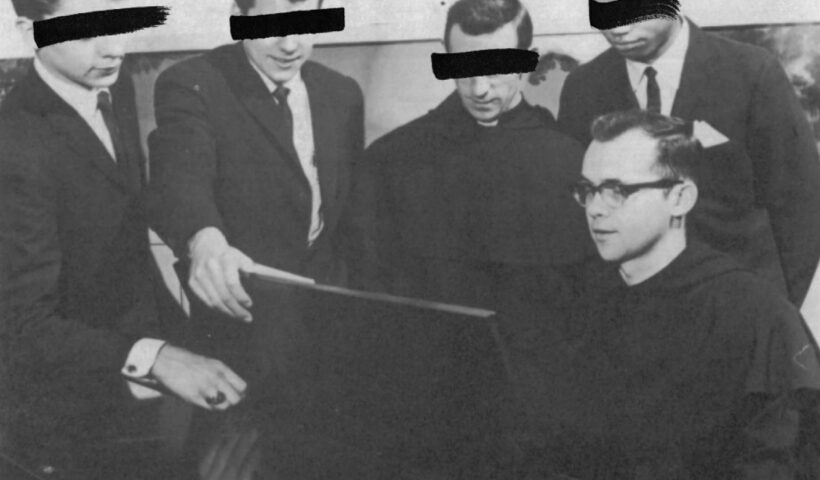
Alan Placa is not just a major figure in Giuliani's marital life: He baptized both of Giuliani's children, and though already stripped of his priestly powers, he was given special dispensation from his bishop in Long Island to preside at Helen Giuliani's September 2002 funeral. A month earlier—despite still-pending allegations that he'd groped four minors in Long Island's Diocese of Rockville Center—he was hired as a three-day-a-week consultant at Giuliani Partners, where he remains today. Michael Hess, the managing partner of Giuliani's firm and the city's former top lawyer, represents Placa in the ongoing cases. When first reached by a reporter at Giuliani Partners, Placa claimed that he was only visiting—a falsehood quickly reversed by a firm spokeswoman.
Giuliani's friends cite the awkward hiring as an example of his loyalty, though he has long been known to jettison people close to him. His best-selling memoir, Leadership, included his dog Goalie in the acknowledgement list of the major people in his life, but not the mother of his two children. He forced out Police Commissioner Bill Bratton for appearing on the cover of Time, and also his dear friend and schools chancellor, Rudy Crew, because Crew tried to hold him to his word to never fund a voucher program. And he trashed them on their way out the door, smearing Crew the day he eulogized his ex-wife. On the other hand, in Giuliani's categorical mind, Placa is forever a good guy, no matter the facts.
Indeed, even if one assumes that America won't be offended by the contradiction between Giuliani's marital choices and his professed Catholicism, that will almost certainly change as the country learns more about his best friend, business associate, and lifelong link to the church. New York papers have reported some devastating details, drawn largely from a Suffolk County grand jury report issued in 2003. One of his accusers, Richard Tollner, a mortgage broker who claims he was repeatedly groped by Placa while in high school, says the priest stopped only after Placa approached him at his father's funeral and Tollner threatened him. Tollner and two others testified against Placa before the grand jury, though the statute of limitations had run out on their decades-old allegations, making prosecution impossible. Placa was described in the report as "cautious but relentless in pursuing his victims," groping the boys under cover of a newspaper, book, or poster. One victim testified that he was fondled behind a banner made for a march protesting the Roe v. Wade decision.
But the grand jury found Placa's decade of systemic cover-up far more disturbing than his alleged abuse. Often the first person contacted by a victim because of his role as the bishop's top attorney and head of a three-member "intervention team," Placa wrote a memo to other diocesan officials asking them not to identify him as an attorney. "Priests who were civil attorneys," the report found, clearly referring to Placa, "portrayed themselves as interested in the concerns of victims and pretended to be acting for their benefit while they only acted to protect the diocese. These officials boldly bragged about their success." Victims were "ignored, belittled, and re-victimized," with Placa and his colleagues procrastinating "for the purpose of making sure that the civil and criminal statutes of limitation were no longer applicable."